


Faced with intensifying repression and state violence, there is an understandable inclination to seek safety by avoiding confrontation. But this is not always the most effective strategy.
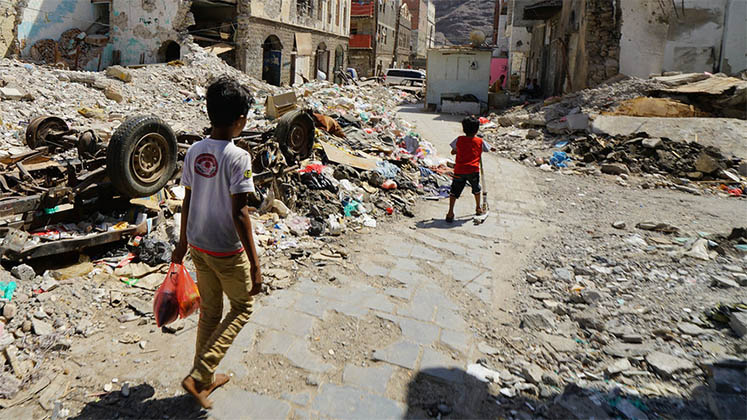
Opportunities to Improve Military Policies and Practices to Reduce Civilian Harm From Explosive Weapons in Urban Conflict
This research paper seeks to contribute to further thinking and dialogue among States and their militaries that conduct operations in urbanized environments on what more can be done to reduce civilian harm by proposing practical measures in the form of options for consideration. UNIDIR seeks to enhance knowledge on ways to reduce risks and mitigate harm to civilians from the effects of explosive weapons in urbanized environments. This research frames the issue of explosive weapons in the broader context of protection of civilians in urban conflict and focuses on multilateral operations. The research takes a comprehensive approach to civilian protection from a ‘risk reduction’ perspective—that is, seeking to understand where the risks and uncertainties lie in the entire ‘civilian protection life cycle’, recognizing that civilian harm is the cumulative effect of numerous risks and decisions made from formulating mandates, planning, execution, assessment and response to lessons learned and institutional learning. Particular focus is placed on the targeting and weaponeering processes. Citation: Roger Lane, Larry Lewis and Himayu Shiotani (2019) "Opportunities to Improve Military Policies and Practices to Reduce Civilian Harm From Explosive Weapons in Urban Conflict", UNIDIR, Geneva, Switzerland. https://doi.org/10.37559/CAAP/19/PACAV/11 TRANSLATIONS To read the report in French, click here.
When is Political Violence Justified
What the Liberal Tradition Says on the Subject

A big-tent or small-tent AI safety movement?
The unstated disagreement that underpins safety debates

Political Violence Is Never Acceptable
Nor is the threat or implication of violence.
How to Protest Safely in the Age of Surveillance
Law enforcement has more tools than ever to track your movements and access your communications. Here’s how to protect your privacy if you plan to protest.

Election Defense Scenarios - Freedom Trainers
Election Defense Scenarios is a field guide for protecting democracy. This resource walks readers through eighteen detailed scenarios — from voter roll purges and redistricting attacks to armed intimidation at polling places and post-election certification battles — giving organizers, poll workers, community leaders, and everyday citizens the knowledge they need before a crisis hits. Each […]

We’re running out of reasons to ignore AI safety
In the aftermath of OpenAI’s attack on Hugging Face, experts say it’s time for everyone to take security far more seriously.

How to safely evacuate a wildfire
Evacuating a wildfire area can be scary, but experts say people can significantly improve their own safety with a little preparation and situational awareness.
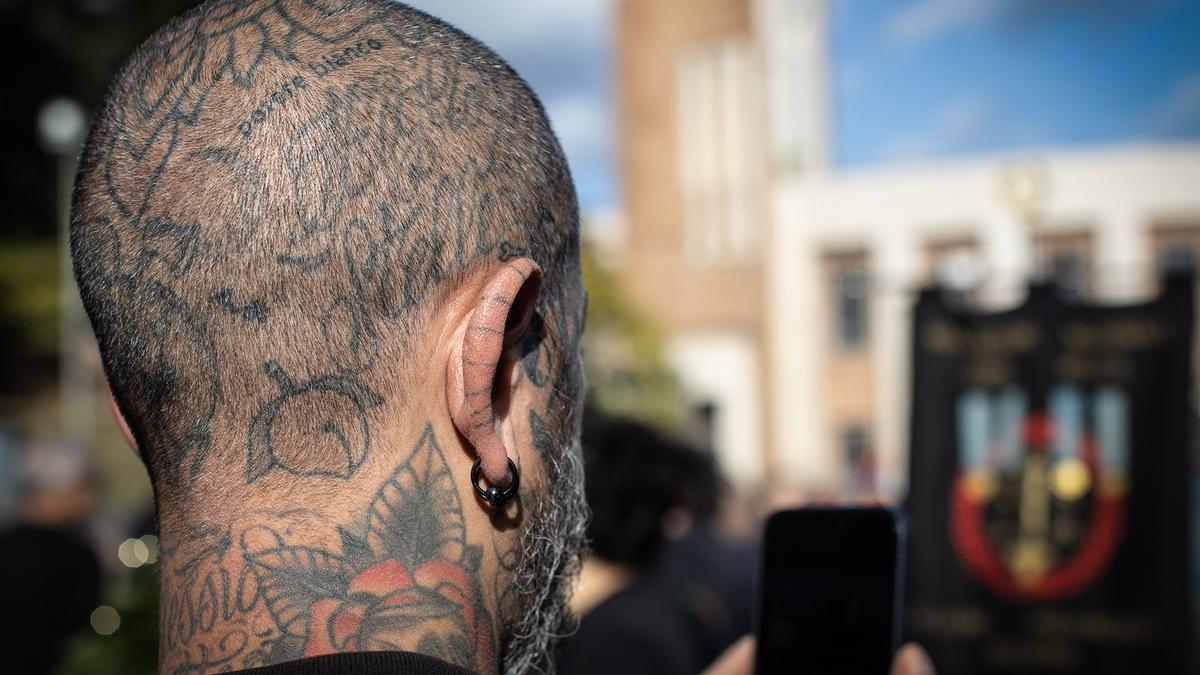
The thinking style that makes people vulnerable to extremism | Psyche Ideas
The people most drawn to ideological thinking and authoritarianism aren’t aware of what makes them so susceptible
The Safety Levers
A framework to move your subculture from the Anxiety Zone to the Learning Zone
Safety isn’t safety without a social model (or: dispelling the myth of per se technical safety) — AI Alignment Forum
As an AI researcher who wants to do technical work that helps humanity, there is a strong drive to find a research area that is definitely helpful so…
Since 9/11, Fear Has Driven Our Politics. Don’t Let It Drive The Next 25 Years.
Twenty-five years ago today I was woken up by a phone call from a close friend, who, like me, grew up in New York and, like me, was now living in California. She told me that something horrible had…

State Capacity of Secret Surveillance
The state capacity-civil society tradeoff model tends to treat the “state” and “civil society” as separate entities who move to constrain one another. However, this modeling technique leaves out the nuances of individual action within a collective setting by treating each as a relative black box. This article explores this balance in the context of the surveillance state that has arisen in the 20th and 21st century. As state capacity in surveillance increases it better allows the state to respond to threats to citizens from citizens. However, the increased capacity also lessens the ability of societal pressure to check authoritarian advances even in a nation with a thriving civil society presence.
State Capacity of Secret Surveillance
The state capacity-civil society tradeoff model tends to treat the “state” and “civil society” as separate entities who move to constrain one another. However, this modeling technique leaves out the nuances of individual action within a collective setting by treating each as a relative black box. This article explores this balance in the context of the surveillance state that has arisen in the 20th and 21st century. As state capacity in surveillance increases it better allows the state to respond to threats to citizens from citizens. However, the increased capacity also lessens the ability of societal pressure to check authoritarian advances even in a nation with a thriving civil society presence.