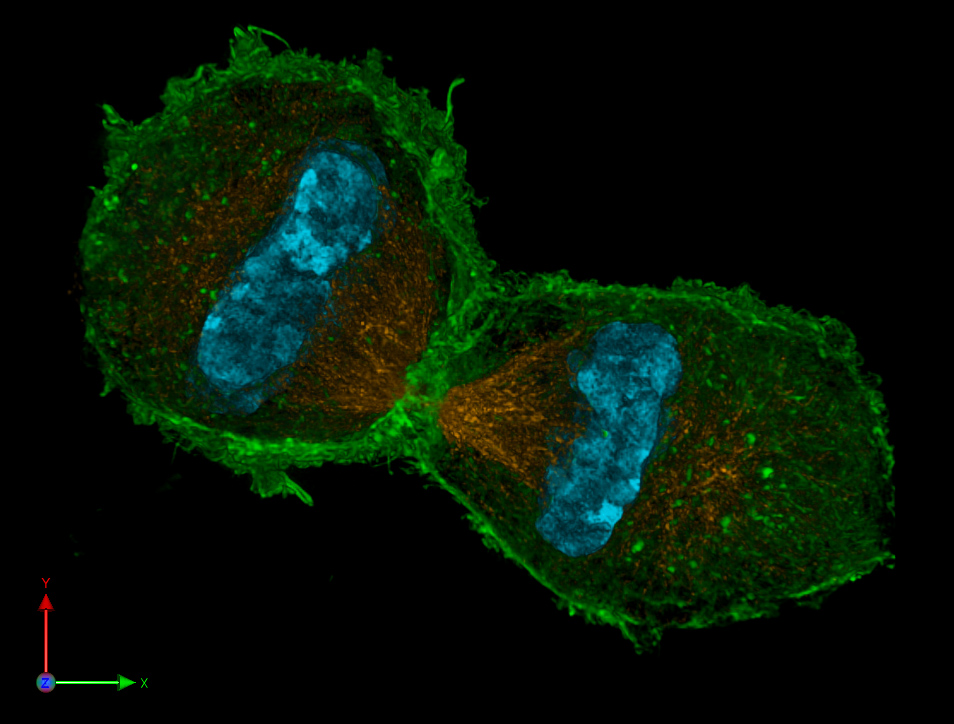
The term autopoiesis (self-creation) is a neologism coined in 1972 by Varela and Maturana, Chilean cellular biologists and systems theorists, to describe the capacity of living cells to reproduce and organise themselves. The term was picked up and deployed by Niklas Luhmann (1927 – 1998), a German sociologist and philosopher, to capture his…
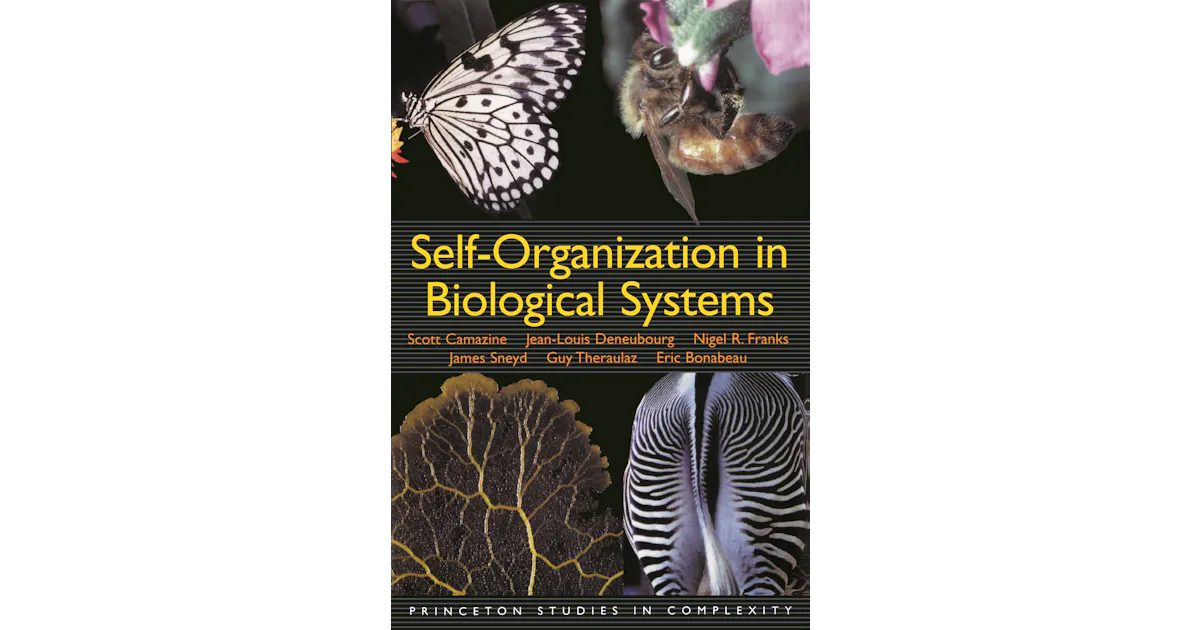
Self-Organization in Biological Systems
The synchronized flashing of fireflies at night. The spiraling patterns of an aggregating slime mold. The anastomosing network of army-ant trails. The coordinated movements of a school of fish. Researchers are finding in such patterns—phenomena that have fascinated naturalists for centuries—a fertile new approach to understanding biological systems: the study of self-organization. This book, a primer on self-organization in biological systems for students and other enthusiasts, introduces readers to the basic concepts and tools for studying self-organization and then examines numerous examples of self-organization in the natural world. Self-organization refers to diverse pattern formation processes in the physical and biological world, from sand grains assembling into rippled dunes to cells combining to create highly structured tissues to individual insects working to create sophisticated societies. What these diverse systems hold in common is the proximate means by which they acquire order and structure. In self-organizing systems, pattern at the global level emerges solely from interactions among lower-level components. Remarkably, even very complex structures result from the iteration of surprisingly simple behaviors performed by individuals relying on only local information. This striking conclusion suggests important lines of inquiry: To what degree is environmental rather than individual complexity responsible for group complexity? To what extent have widely differing organisms adopted similar, convergent strategies of pattern formation? How, specifically, has natural selection determined the rules governing interactions within biological systems? Broad in scope, thorough yet accessible, this book is a self-contained introduction to self-organization and complexity in biology—a field of study at the forefront of life sciences research.
The Care of the Self within a Biopolitical Paradigm: Integrating Cognitive Psychology to resist Subjectification
Contemporary theories of resistance to biopolitical subjectification often reify unfreedom by lacking a plausible model of agency. This thesis resolves this by establishing an ontological foundation for the agent as fundamentally autopoietic and semiotic, drawing on contemporary cognitive science. It then proposes a new foundation for resistance by synthesizing Michel Foucault’s later work on the care of the self with the 4P/5E model of embodied cognition. I show how this interdisciplinary approach establishes Foucault’s ethical techniques as a systematic ecology of practices for cultivating a free, self-determining agent and by reframing resistance as a practical, embodied ethics of self-formation, it inherently fosters two vital skills: the gain of self-knowledge and self-mastery.
We speak often of AI as if it were a future event. But it is already here in the fabric of our being. What Karl Ove Knausgaard captures with devastating clarity in his recent essay ‘The Reenchanted… | Kenneth Mikkelsen | 19 comments
We speak often of AI as if it were a future event. But it is already here in the fabric of our being. What Karl Ove Knausgaard captures with devastating clarity in his recent essay ‘The Reenchanted World’ is the departure of the real. “We live in a virtual world, as if the world had been lifted out of itself, into the air, like a giant roof suspended above the ground,” he writes. It is an existential condition. Across philosophy, from Heidegger to Baudrillard, from Don DeLillo to Debord, a singular thread weaves: the world, once our shelter from the self, has become self-referential. Where once we encountered beings in our Zuhandensein—ready-to-hand, intimate, meaningful—we now face a procession of Vorhandensein: inert, objectified, mediated. Simulation replaces encounter. Perception is swallowed by spectacle. And the digital era, in Knausgaard’s terms, “distances culture from the body”. “It is not just the body that disappears—it is the awareness that we are dying,” he writes. What we face is not merely technological change, but what I would call existential dissonance: the erosion of resonance between our inner world, our social world, and the material world. It is the tension that arises when the way one lives, acts, and relates is misaligned with one’s deeper sense of meaning, reality, and value. It manifests itself as a disturbance in being — an unease that is not merely emotional, but rooted in a felt gap between one’s existence as it is and as it could or should be. It is the voice of the self calling from within the noise of the world. This is why Knausgaard’s essay matters for anyone working in, with, or around AI. Because the question isn’t: What can these systems do? It is: What do they undo? “We can explain everything. But we understand nothing,” he writes. Manipulated constructions of truth, in such a time, becomes a currency. As shown in recent events—from Francesca Gino’s research fraud at Harvard to Bezos’ all-female crew venture into space, and Trump’s detention camp —truth is no longer that which corresponds with reality, but that which performs and sells. As Baudrillard warned, the simulation no longer hides the real—it becomes it. And yet, something remains. Knausgaard writes not to despair, but to stay. In the body. In death. In silence. In the concrete. If you seek to understand what is happening—not just in AI, but in the very metaphysics of modern life—I suggest we begin not with data, but with dissonance. With the feeling that something vital is slipping from view, and that “being in the world” now requires resistance. “We are surrounded by mystery. And yet we act as if everything were known,” he writes. AI will never understand this. But we must. Knausgaard’s full essay from Harper’s Magazine can be read via link in comments. | 19 comments on LinkedIn

The biogenic approach to cognition
After half a century of cognitive revolution we remain far from agreement about what cognition is and what cognition does. It was once thought that these questions could wait until the data were in. Today there is a mountain of data, but no way of making sense of it. The time for tackling the fundamental issues has arrived. The biogenic approach to cognition is introduced not as a solution but as a means of approaching the issues. The traditional, and still predominant, methodological stance in cognitive inquiry is what I call the anthropogenic approach: assume human cognition as the paradigm and work ‘down’ to a more general explanatory concept. The biogenic approach, on the other hand, starts with the facts of biology as the basis for theorizing and works ‘up’ to the human case by asking psychological questions as if they were biological questions. Biogenic explanations of cognition are currently clustered around two main frameworks for understanding biology: self-organizing complex systems and autopoiesis. The paper describes the frameworks and infers from them ten empirical principles—the biogenic ‘family traits’—that constitute constraints on biogenic theorizing. Because the anthropogenic approach to cognition is not constrained empirically to the same degree, I argue that the biogenic approach is superior for approaching a general theory of cognition as a natural phenomenon.
Use of generative artificial intelligence | ÉPICBiodiversity
An alternative version of this document was initially drafted by Timothée Poisot with input from members of the Viral Emergence Research Initiative, and further revised based on a conversation with group members. For this reason, it is excluded from the CC BY-NC-SA license under which the rest of the website is published, and may not be reproduced without permission.
Self-organizing systems: what, how, and why?
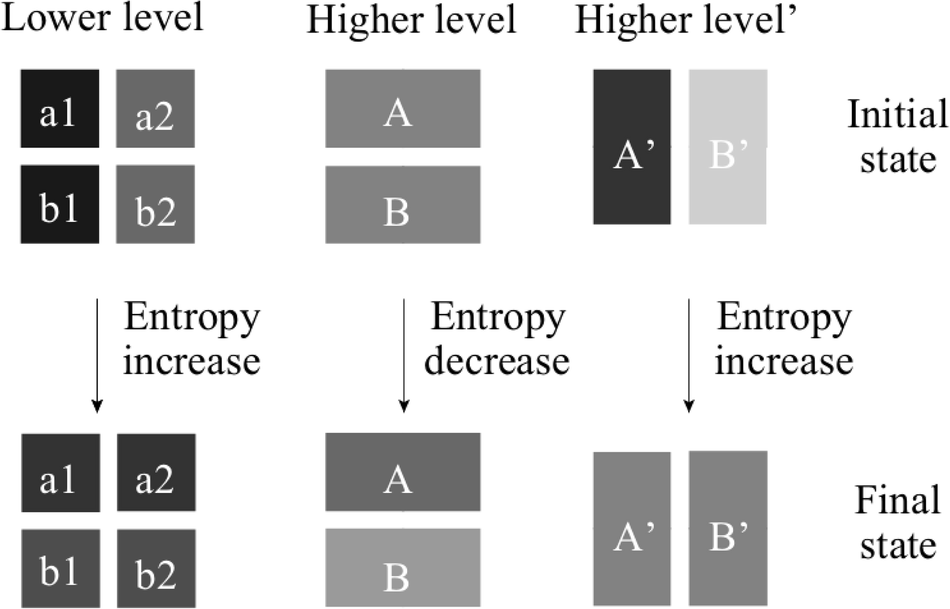
I present a personal account of self-organizing systems, framing relevant questions to better understand self-organization, information, complexity, and emergence. With this aim, I start with a notion and examples of self-organizing systems (what?), continue with their properties and related concepts (how?), and close with applications (why?) in physics, chemistry, biology, collective behavior, ecology, communication networks, robotics, artificial intelligence, linguistics, social science, urbanism, philosophy, and engineering.
Co-Creation: Systems Thinking Beyond the Machine
Complexity thinking is all the rage — in the arts and sciences. Yet, there are two different strands of thinking about complexity, which are often confounded. The first comes from cybernetics, focussing on control in complex situations. The second is ecological, aiming at sustainable participation in a reality beyond control. Their difference rests on a fundamental distinction: is complexity rooted in feedback regulation or collective co-creation? While feedback remains mechanistic, co-creation generates new spaces of possibilities. We need it to understand life and its evolution. And it empowers us to rewrite our future, to escape our mechanistic cage without abandoning scientific rigor. In this paper, we illustrate how we implement these powerful yet abstract principles through our artistic and philosophical practice.
Eryk Salvaggio: Critical AI & Culture | Glossary — Cybernetic Forests.
Stochastic Flocks, Systems From Nowhere and other citable terms for describing AI systems without borrowing from cognition, by Eryk Salvaggio.

Beyond planetary-scale feedback self-regulation: Gaia as an autopoietic system
Agentic AI, explained | MIT Sloan
The age of agentic AI — systems that are semi- or fully autonomous and can act on their own — has arrived. Here’s what you need to know, according to MIT experts.

The Self-Evidencing Agent: Mind, Existence, and Predictive Processing
How the concept of self-evidencing offers a philosophical principle for understanding mind and behavior, consciousness, value, wisdom, and meaning.What is
Autonomia Homepage | autonomia.lat
La primera plataforma digital soberana construida desde y para América Latina. Correo, nube, herramientas — sin vigilancia, sin corporaciones, sin fronteras digitales.

Cultivating a state of mind where new ideas are born
Solitary work, creativity and larval ideas

Propitiation - Etymology, Origin & Meaning
"atonement, expiation," from Late Latin propitiationem (nominative propitiatio) "an… See origin and meaning of propitiation.

Sanela Jahić – Under the Calculative Gaze - Aksioma
Price: 0€ AI completes the enclosure that the autonomists called the social factory, where capitalist relations of power extend to the smallest corner of social reproduction. But the very generalisability of these algorithmic exploitations creates the ground for a recomposition of resistance from forms of relationality that still escape the algorithmic gaze. ― Dan McQuillan […]

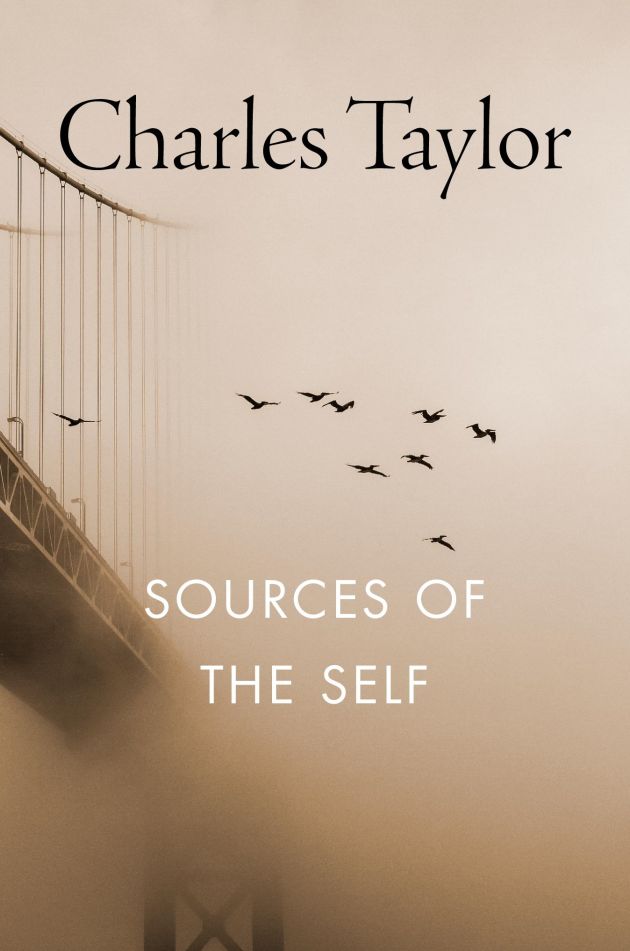
Sources of the Self — Harvard University Press
“Taylor has taken on the most delicate and exacting of philosophical questions, the question of who we are and how we should live…and he has made this an adventure of self-discovery for his reader.” —Martha Nussbaum, New RepublicIn this extensive inquiry into the sources of modern selfhood, Charles Taylor demonstrates just how rich and precious those resources are. The modern turn to subjectivity, with its attendant rejection of an objective order of reason, has led—it seems to many—to mere subjectivism at the mildest and to sheer nihilism at the worst. Many critics believe that the modern order has no moral backbone and has proved corrosive to all that might foster human good. Taylor rejects this view. He argues that, properly understood, our modern notion of the self provides a framework that more than compensates for the abandonment of substantive notions of rationality.The major insight of Sources of the Self is that modern subjectivity, in all its epistemological, aesthetic, and political ramifications, has its roots in ideas of human good. After first arguing that contemporary philosophers have ignored how self and good connect, the author defines the modern identity by describing its genesis. His effort to uncover and map our moral sources leads to novel interpretations of most of the figures and movements in the modern tradition. Taylor shows that the modern turn inward is not disastrous but is in fact the result of our long efforts to define and reach the good. At the heart of this definition he finds what he calls the affirmation of ordinary life, a value which has decisively if not completely replaced an older conception of reason as connected to a hierarchy based on birth and wealth. In telling the story of a revolution whose proponents have been Augustine, Montaigne, Luther, and a host of others, Taylor’s goal is in part to make sure we do not lose sight of their goal and endanger all that has been achieved. Sources of the Self provides a decisive defense of the modern order and a sharp rebuff to its critics.