

THE PRISON INDUSTRIAL COMPLEX The prison industrial complex (PIC) is a term we use to describe the overlapping interests of government and industry that use surveillance, policing, and imprisonment as solutions to economic, social and political problems. Through its reach and impact, the PIC
The time is right: Organizing against the surveillance-industrial complex in the ATmosphere and the fediverses
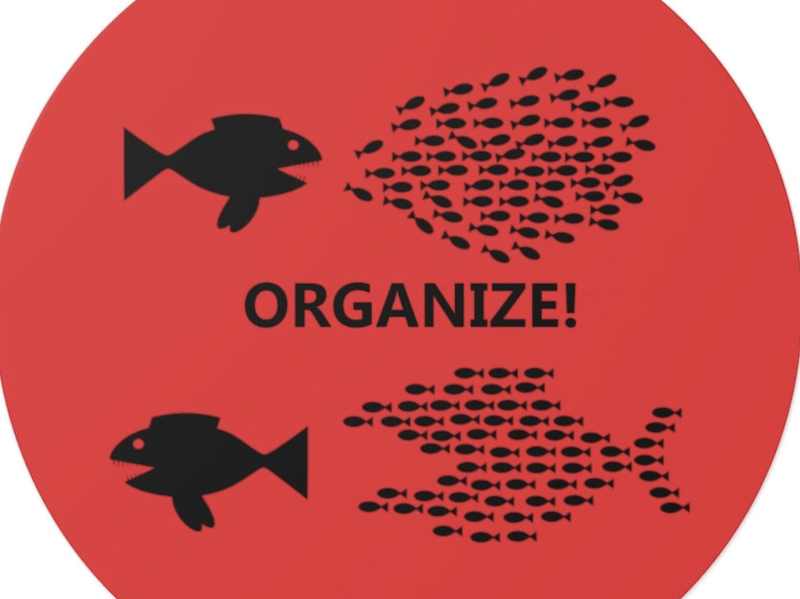
If we organize, we can have a big impact in the fight against the surveillance-industrial complex.
Police Abolition | The Paper Pilot
The Paper Pilot's digital garden of thoughts on philosophy, politics, and sociology
State Capacity of Secret Surveillance
The state capacity-civil society tradeoff model tends to treat the “state” and “civil society” as separate entities who move to constrain one another. However, this modeling technique leaves out the nuances of individual action within a collective setting by treating each as a relative black box. This article explores this balance in the context of the surveillance state that has arisen in the 20th and 21st century. As state capacity in surveillance increases it better allows the state to respond to threats to citizens from citizens. However, the increased capacity also lessens the ability of societal pressure to check authoritarian advances even in a nation with a thriving civil society presence.
State Capacity of Secret Surveillance
The state capacity-civil society tradeoff model tends to treat the “state” and “civil society” as separate entities who move to constrain one another. However, this modeling technique leaves out the nuances of individual action within a collective setting by treating each as a relative black box. This article explores this balance in the context of the surveillance state that has arisen in the 20th and 21st century. As state capacity in surveillance increases it better allows the state to respond to threats to citizens from citizens. However, the increased capacity also lessens the ability of societal pressure to check authoritarian advances even in a nation with a thriving civil society presence.
Torture Techniques from CIA Black Sites Were Used at Alligator Alcatraz
Amnesty International, interviewing migrant detainees, identifies use of the confinement box. There can be no denying it is a torture prison

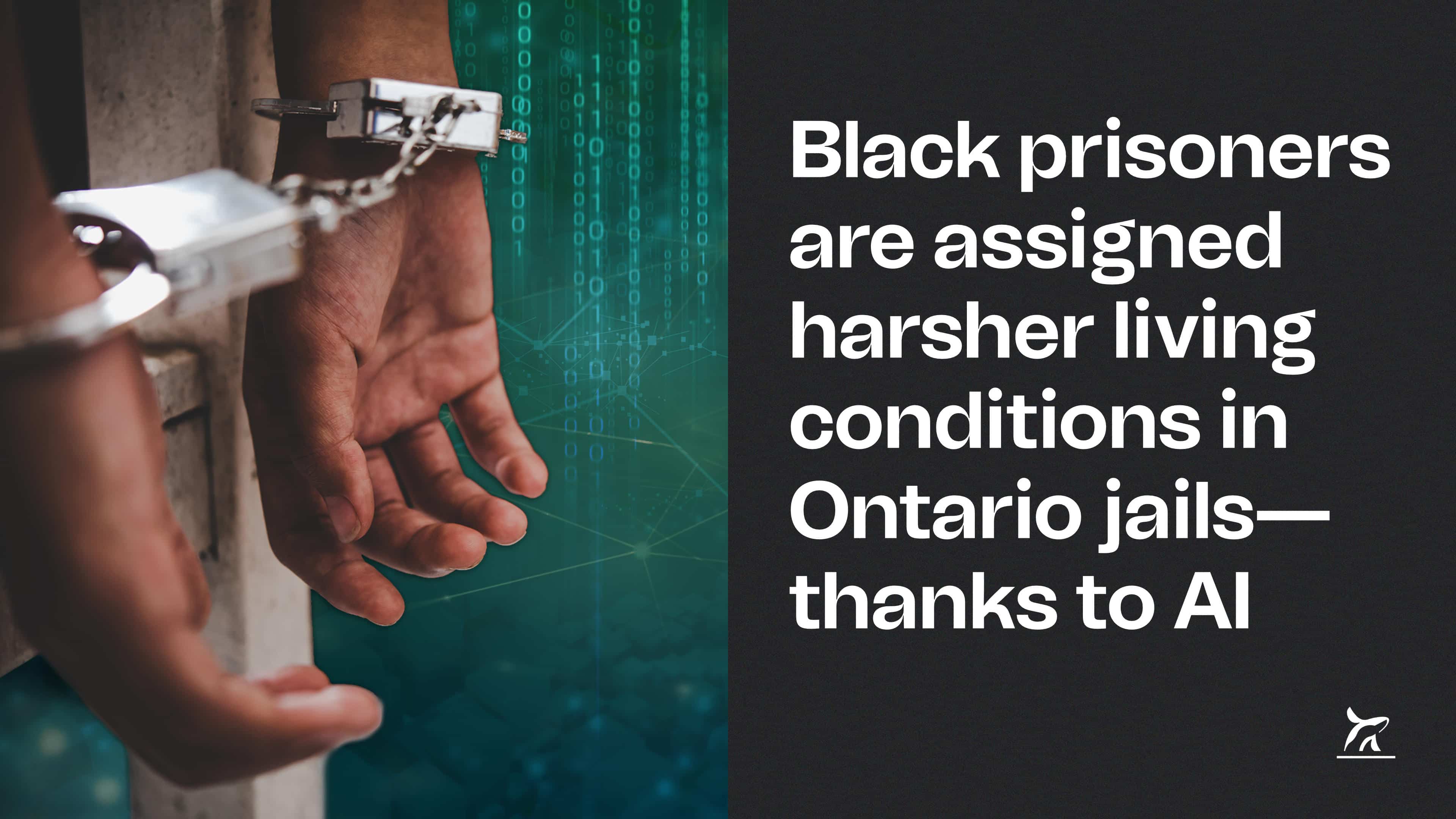
Black prisoners are assigned harsher living conditions in Ontario jails—thanks to AI ⋆ The Breach
Ontario jails are using a program that claims it can predict prisoners’ behaviour, disproportionately putting Black prisoners in higher-security facilities
Abolishing the police and prisons is a lot more practical than critics claim
Mariame Kaba's new book “We Do This ‘Til We Free Us” is a pragmatic playbook for a world without walls.

Discipline and Punish
Discipline and Punish: The Birth of the Prison is a 1975 book by French philosopher Michel Foucault. It is an analysis of the social and theoretical mechanisms behind the changes that occurred in Western penal systems during the modern age based on historical documents from France. Foucault argues that prison did not become the principal form of punishment just because of the humanitarian concerns of reformists. He traces the cultural shifts that led to the predominance of prison via the body and power. Prison is used by the "disciplines" – new technological powers that can also be found, according to Foucault, in places such as schools, hospitals, and military barracks.

Myopic memory: Capitalism's new continuity in the age of AI
This article is a commentary on the relationship between artificial intelligence (AI), capitalism, and memory. The political policies of neoliberalism have reduced the capacity of individuals and groups to reflect on and change the social world, meanwhile applications of AI and algorithmic technologies, rooted in the profit-seeking objectives of global capitalism, deepen this deficit. In these conditions, memory in individuals and across society is at risk of becoming myopic. In this article, I develop the concept of myopic memory with two core claims. Firstly, I argue that AI is a technological development that cannot be divorced from the capitalist conditions from which it comes from and is implemented in service of. To this end, I reveal capitalism and colonialism's historical and contemporary use of surveillance as a way to control the populations it oppresses, imagining their pasts to determine their futures, disempowering them in the process. My second core claim emphasises that this process of disempowerment is undergoing an acute realisation four decades into the period of neoliberalism. Neoliberal policies have restructured society on the basis of being an individual consumer, leaving little time, space, and institutional capacity for citizens to reflect on their impact or challenge their dominance. As a result, with the growing role of AI and algorithmic technologies in shaping our engagement with society along similar lines of individualism, it is my conclusion that the scope of memory is being reduced and constrained within the prism of capitalism, reducing its potential, and rendering it myopic.

Criminal Justice Fact Sheet
A compilation of facts and figures surrounding policing, the criminal justice system, incarceration, and more.

Whitepaper — The Collective Intelligence Project
I. Capitalist Acceleration: Sacrificing safety for progressII. Authoritarian Technocracy: Sacrificing participation for safetyIII. Shared Stagnation: Sacrificing progress for participation

Beyond AI: Infrastructuring the Common Good
Rather than taking AI as a central focus, this paper treats it as diagnostic of deeper contradictions. AI intensifies extractivism while being unable to deliver on its promises, and its rampant scaling of energy and resource demands heralds a form of ‘total mobilisation’. This paper proposes decomputing as a programme for pushing back against such technocratic nihilism. Decomputing adopts a degrowth framework and advocates for reclaiming agency through deautomatisation and people’s councils, in order to develop convivial alternatives that centre an ethics of care. It is a philosophical and tactical response to the wider crisis of care induced by the collapse of existing systems. Decomputing proposes a prefigurative praxis for those experiencing ruptures in the infrastructures of everyday life, while minimising the opening for an authoritarian turn or war economy. Rather than capitulating to an increasingly fascistic world order, decomputing advocates a shift in the idea of order itself, one that means challenging the idea that ever more advanced tech is synonymous with progress. The paper argues that reclaiming critical infrastructures can be decoupled from the collapse of the general technopolitical regime, and makes a plausibility argument informed by destituent power and largely forgotten British cybernetics. Where the Luddite call was to ‘put down all machinery hurtful to the Commonality’, the goal of decomputing is the infrastructuring of the common good.
Lockdown Systems
A worker-owned collective building freedom and privacy tech, empowering people to take control of their own data and protect themselves from unwanted surveillance

CBI dismantles transnational cybercrime networks across multiple States
CBI dismantles transnational cybercrime networks, arresting two operatives in collaboration with international law enforcement agencies.

The time is right: Organizing against the surveillance-industrial complex in the ATmosphere and the fediverses thenexusofprivacy.net/the-time-is-right/ If we organize, we can have a big impact in the linked fights against different aspects of the surveillance-industrial complex

The time is right: Organizing against the surveillance-industrial complex in the ATmosphere and the fediverses
thenexusofprivacy.netThird-country deportations: Guantanamo Bay

Including articles about the Guantanamo Bay detention center in general. Search terms: Gitmo, Migrant Operations Center, Guantanamo Bay detention camp, Naval Station Guantanamo Bay (NSGB), Guantánamo Bay, Cuba
Guantanamo: Detainee Accounts : VI. Punishment

St. Paul man arrested in ICE surge sent to Guantanamo Bay

The Journey of a Group of Cuban Deportees Stuck at Guantánamo

1st migrant flight at Guantanamo Bay arrives, carrying 'worst of the worst'

Offshoring Human Rights: Detention of Refugees at Guantánamo Bay | International Refugee Assistance Project

Guantanamo Detainee Was Tortured, Says Official Overseeing Military Trials
