

A chapter-by-chapter analysis of Kahneman's text with a focus on the replication crisis, clarifying which findings remain solid and which have not held up to scrutiny.
Thinking, Fast and Slow
Thinking, Fast and Slow is a 2011 popular science book by the Israeli-American psychologist Daniel Kahneman. Its main thesis is a differentiation between two modes of thought: "System 1" is fast, instinctive and emotional; "System 2" is slower, more deliberative, and more logical.

Interdependent Thoughts
Bookmarked Will A.I. Become the New McKinsey? by Ted Chiang in the New Yorker
Everything is In-Between — Douglas Rushkoff
I’ve begun this piece maybe twenty times in the past three weeks. By the time I’ve finished the first paragraph, some new thing happens that obsolesces whatever event I’m writing about. And I’m not even writing about the news, so much as using one shared moment as a “peg” for a piece about some larger phenomenon or strategy.
The Shapeshifter’s Little Brother
On Mark Zuckerberg’s AI manifesto—aka nine blog posts in a trenchcoat.

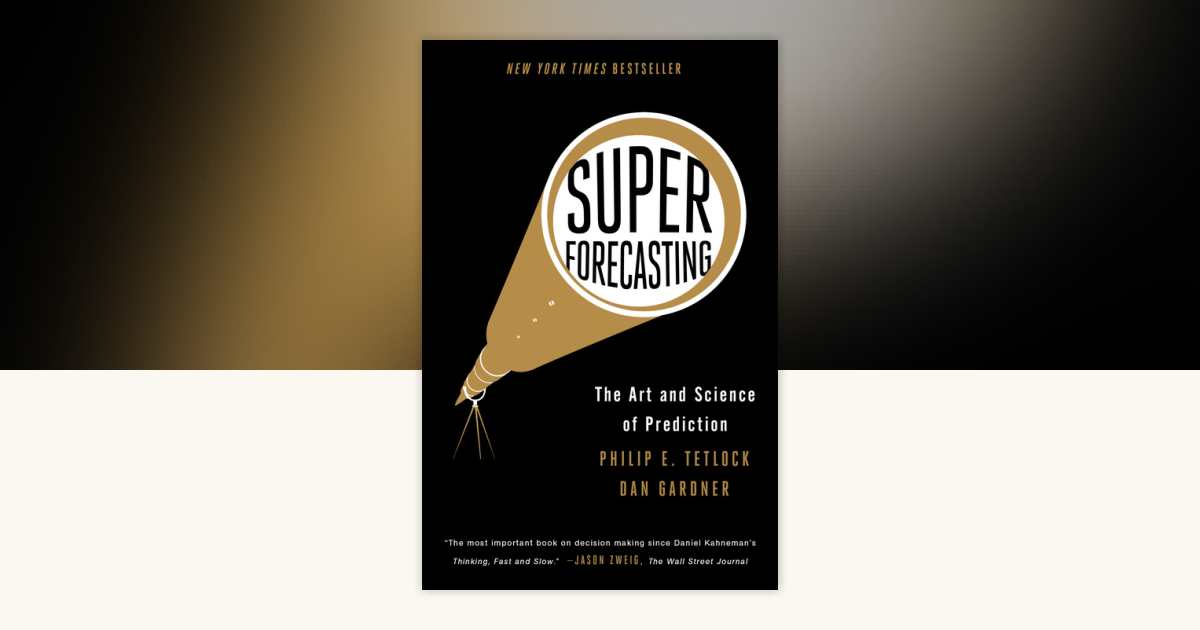
Superforecasting by Philip E. Tetlock, Dan Gardner: 9780804136716 | PenguinRandomHouse.com: Books
NEW YORK TIMES BESTSELLER • NAMED ONE OF THE BEST BOOKS OF THE YEAR BY THE ECONOMIST “The most important book on decision making since Daniel Kahneman's Thinking, Fast and Slow.”—Jason...
howard rheingold's | tools for thought
Capitalist Realism: Is There No Alternative?
It is easier to imagine the end of the world than the end of capitalism. After 1989, capitalism has successfully presented itself as the only realistic political-economic system - a situation that the bank crisis of 2008, far from ending, actually compounded. The book analyses the development and principal features of this capitalist realism as a lived ideological framework. Using examples from politics, film (Children Of Men, Jason Bourne, Supernanny), fiction (Le Guin and Kafka), work and education, it argues that capitalist realism colors all areas of contemporary experience, is anything but realistic and asks how capitalism and its inconsistencies can be challenged. It is a sharp analysis of the post-ideological malaise that suggests that the economics and politics of free market neo-liberalism are givens rather than constructions. New Edition includes:Forward by Zoe Fisher, Mark’s wife, talking about Mark as a personIntroduction by Alex Niven, his friend and colleague, talking about the political significance of the book thirteen years after it was writtenAfterword by Tariq Goddard, the original editor and publisher, describing the writing and editing of the book, its original reception, and Mark’s own view of it"A quick and entertaining read." Socialist Standard "A provocative and necessary read...for anyone wanting to talk seriously about the politics of education today. " Times Higher Educational Supplement
Wisdom in a World in Crisis: The Counterintuitive Need to Slow Down and Find Spaciousness with Iain McGilchrist
#760: Gambling the future into existence
Plus: Cosmo for conservatives, AI;DR and being "agentic"

Guide to Incrementals/Balancing | The Paper Pilot
The Paper Pilot's digital garden of thoughts on philosophy, politics, and sociology
Thoughts on narratives and the role of AI and validators going forward
I wanted to quickly share some reflections and connect some dots around ongoing work with Prashant on causal claims and language in Economics. We have extended

Scaling Trust and Other Fictions
The multiple, capitalist information fiduciaries of the Balkin proposal and the regulatory regime that Khan and Pozen appear to imagine seem to have little in common. But they are responses to the same problem: that of governing data-driven algorithmic processes that operate in real time, immanently, automatically, and at scale.

Guide to Incrementals/Navigating Criticism | The Paper Pilot
The Paper Pilot's digital garden of thoughts on philosophy, politics, and sociology

Recursive Summaries | The Paper Pilot
The Paper Pilot's digital garden of thoughts on philosophy, politics, and sociology
