

These papers may differ in formatting from the versions that appear in print. They are made available only to support the rapid dissemination of results; the printed versions, not these, should be considered definitive. The copyrights belong to their respective owners.
A Core Calculus for Documents
Document languages like Markdown, LaTeX, PHP, and Liquid are widely used to generate digital documents like PDFs and web pages. Document languages often come with programming features like variables and macros to help authors write complex documents. However, these document programming features are often designed or implemented in problematic ways, especially by the standards of a modern programming language. For example:

Call-by-name, call-by-value and the λ-calculus
This paper examines the old question of the relationship between ISWIM and the λ-calculus, using the distinction between call-by-value and call-by-name. It is held that the relationship should be mediated by a standardisation theorem. Since this leads to difficulties, a new λ-calculus is introduced whose standardisation theorem gives a good correspondence with ISWIM as given by the SECD machine, but without the letrec feature. Next a call-by-name variant of ISWIM is introduced which is in an analogous correspondence withthe usual λ-calculus. The relation between call-by-value and call-by-name is then studied by giving simulations of each language by the other and interpretations of each calculus in the other. These are obtained as another application of the continuation technique. Some emphasis is placed throughout on the notion of operational equality (or contextual equality). If terms can be proved equal in a calculus they are operationally equal in the corresponding language. Unfortunately, operational equality is not preserved by either of the simulations.
A formulation of the simple theory of types
The purpose of the present paper is to give a formulation of the simple theory of types which incorporates certain features of the calculus of λ-conversion. A complete incorporation of the calculus of λ-conversion into the theory of types is impossible if we require that λx and juxtaposition shall retain their respective meanings as an abstraction operator and as denoting the application of function to argument. But the present partial incorporation has certain advantages from the point of view of type theory and is offered as being of interest on this basis (whatever may be thought of the finally satisfactory character of the theory of types as a foundation for logic and mathematics).For features of the formulation which are not immediately connected with the incorporation of λ-conversion, we are heavily indebted to Whitehead and Russell, Hilbert and Ackermann, Hilbert and Bernays, and to forerunners of these, as the reader familiar with the works in question will recognize.The class of type symbols is described by the rules that ı and o are each type symbols and that if α and β are type symbols then (αβ) is a type symbol: it is the least class of symbols which contains the symbols ı and o and is closed under the operation of forming the symbol (αβ) from the symbols α and β.
Probabilistic compositional semantics, purely
We provide a general framework for the integration of formal semantics with probabilistic reasoning. This framework is conservative, in the sense that it relies only on typed λ-calculus and is thus co
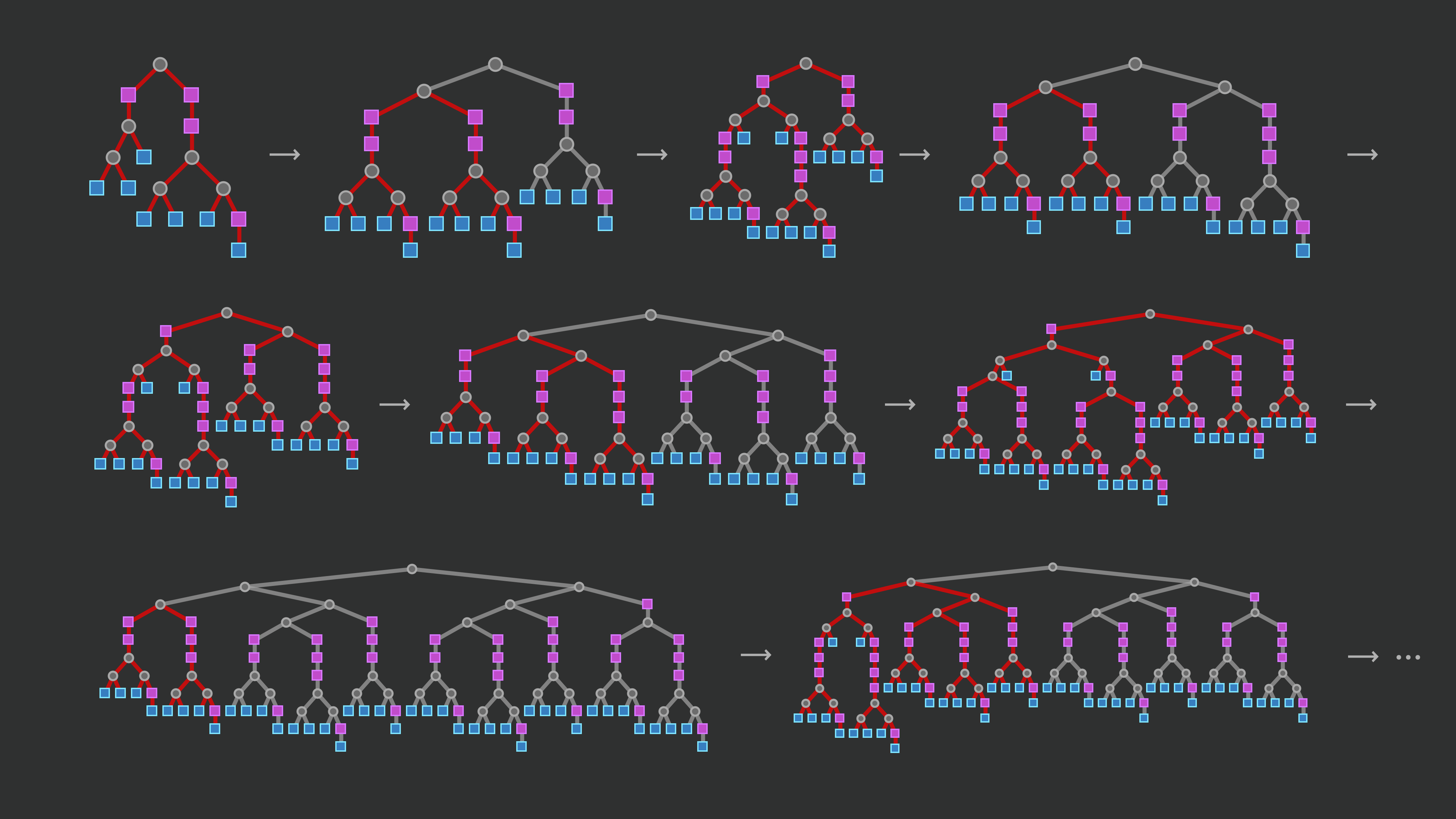
The Ruliology of Lambdas
Stephen Wolfram explains the rich ruliology of lambdas, made particularly significant by their connection to practical computing. Covers basic computations to undecidability to multiway graphs and evaluation strategies.
Docs - La Suite Numérique
Docs est l'outil d'écriture collaboratif de l'État pour rédiger, partager et publier vos documents en toute simplicité.

Docs as Code: The Best Guide for Technical Writers
Recently, my work has involved writing a lot of documentation and. Doing this has introduced me to...

Syntax and semantics of dependent types
In this chapter we fix a particular syntax for a dependently typed calculus and define an abstract notion of model as well as a general interpretation function mapping syntactical objects to entities in a model. This interpretation function is shown to be sound with respect to the syntax.
OASIS Darwin Information Typing Architecture (DITA) TC — Subcommittee | OASIS
Advancing a document creation and management specification that builds content reuse into the authoring process
Sets for Mathematics in nLab
deduction system, natural deduction, sequent calculus, lambda-calculus, judgment
A modal analysis of staged computation | Journal of the ACM
We show that a type system based on the intuitionistic modal logic S4 provides an expressive framework for specifying and analyzing computation stages in the context of typed λ-calculi and functional languages. We directly demonstrate the sense in which ...

Progressive Summarization: A Practical Technique for Designing Discoverable Notes - Forte Labs
Modern digital tools make it easy to “capture” information from a wide variety of sources. We know how to snap a picture, type out some notes, record a video, or scan a document. Getting this content from the outside world into the digital world is trivial. It’s even easier to get content that is already digital from one app to another. We know how to copy and paste text, save an image from a webpage, archive an email attachment, or import a video file.

The Lambek Calculus
There is a noticeable revival of categorial grammar these days, as a vehicle for linguistic description. The systems used differ somewhat from the original calculus of Ajdukiewicz and Bar-Hillel, however. In particular, there is a component of rules for ‘type change’ of expressions, making for greater flexibility and elegance. One fundamental system of this kind is the so-called ‘Lambek Calculus’, whose type-change rules show a close analogy with the inference rules of constructive propositional logic. In this paper, we present one calculus of this kind, and survey its theoretical properties as a device in linguistic semantics. Our two main new contributions are a new and complete semantics for this calculus, as well as a modest study of its language-accepting capacity. In this way, we hope to provide a better understanding of the background theory of flexible categorial grammar, in tandem with its descriptive uses.

