


Archived course website for Stanford CS336: Language Modeling from Scratch (Spring 2025), including schedule, assignments, logistics, and materials.
Stanford CS336 Language Modeling from Scratch I 2025
Andrej Karpathy on Twitter / X
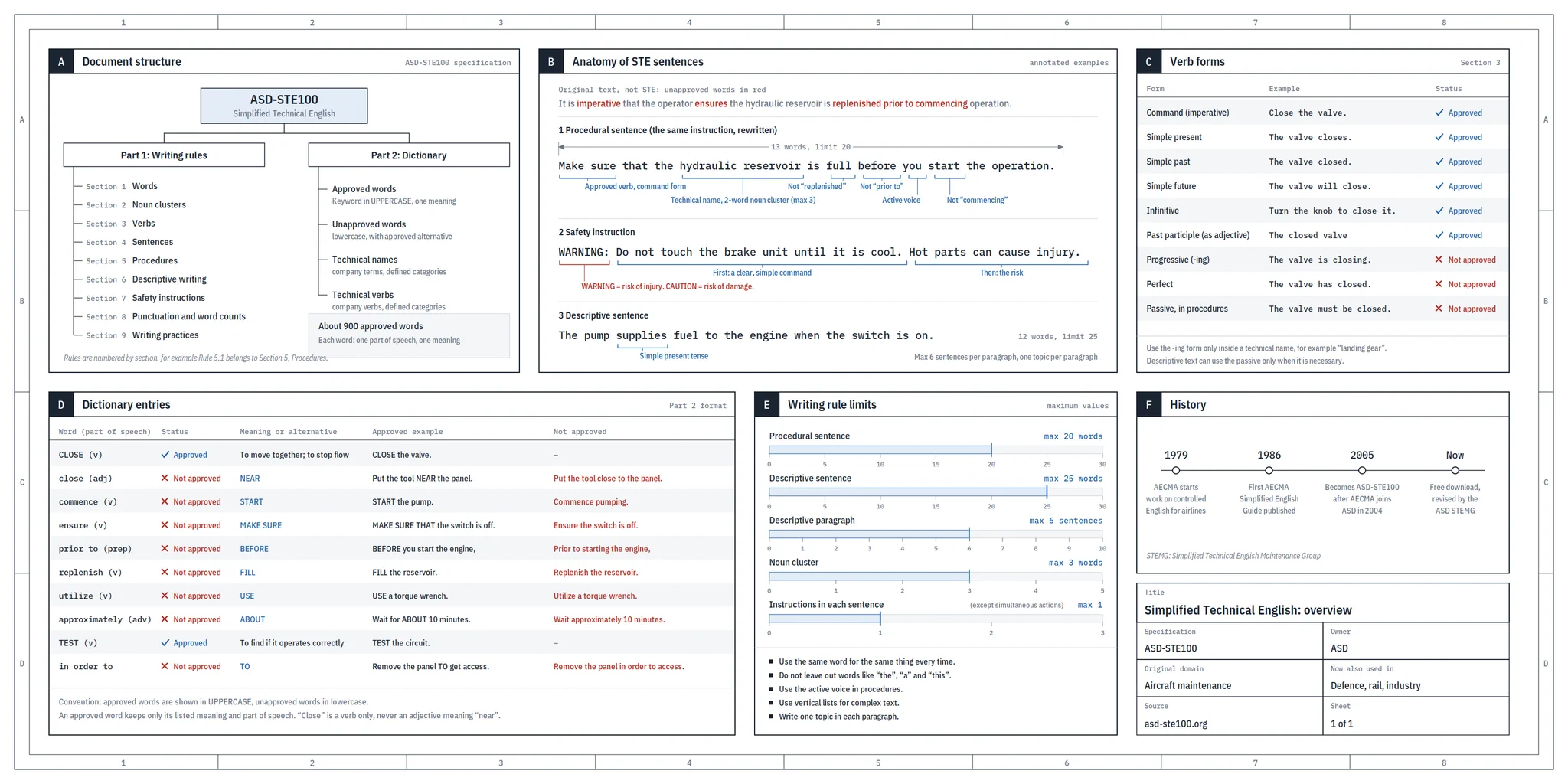
We'll be spending a lot more time trying to understand the outputs of language models. A few thoughts, tips & tricks:Writing. Something I've had success with: Ask your LLM to explain something in ASD-STE100, it's a controlled language specification originally developed for… pic.twitter.com/uMFWTcBCsl— Andrej Karpathy (@karpathy) October 2, 2026
Hypothesis generation and updating in large language models
Large language models (LLMs) increasingly help people solve problems, from debugging code to repairing machinery. This process requires generating plausible hypotheses from partial descriptions,...

Recursive Language Models: the paradigm of 2026
How we plan to manage extremely long contexts
.png?v=c8c07d4bf43b)
The Kaitchup – AI on a Budget | Benjamin Marie | Substack
Weekly tutorials and news on adapting large language models (LLMs) to your tasks and hardware using the most recent techniques and models. The Kaitchup proposes a collection of 180+ AI notebooks regularly updated. Click to read The Kaitchup – AI on a Budget, by Benjamin Marie, a Substack publication with tens of thousands of subscribers.

Build A Large Language Model (From Scratch), Published by Manning, ISBN 978-1633437166
Implement a ChatGPT-like LLM in PyTorch from scratch, step by step
Extracting Training Data from Large Language Models
Nicholas Carlini, Google; Florian Tramèr, Stanford University; Eric Wallace, UC Berkeley; Matthew Jagielski, Northeastern University; Ariel Herbert-Voss, OpenAI and Harvard University; Katherine Lee and Adam Roberts, Google; Tom Brown, OpenAI; Dawn Song, UC Berkeley; Úlfar Erlingsson, Apple; Alina Oprea, Northeastern University; Colin Raffel, Google
Recursive Language Models
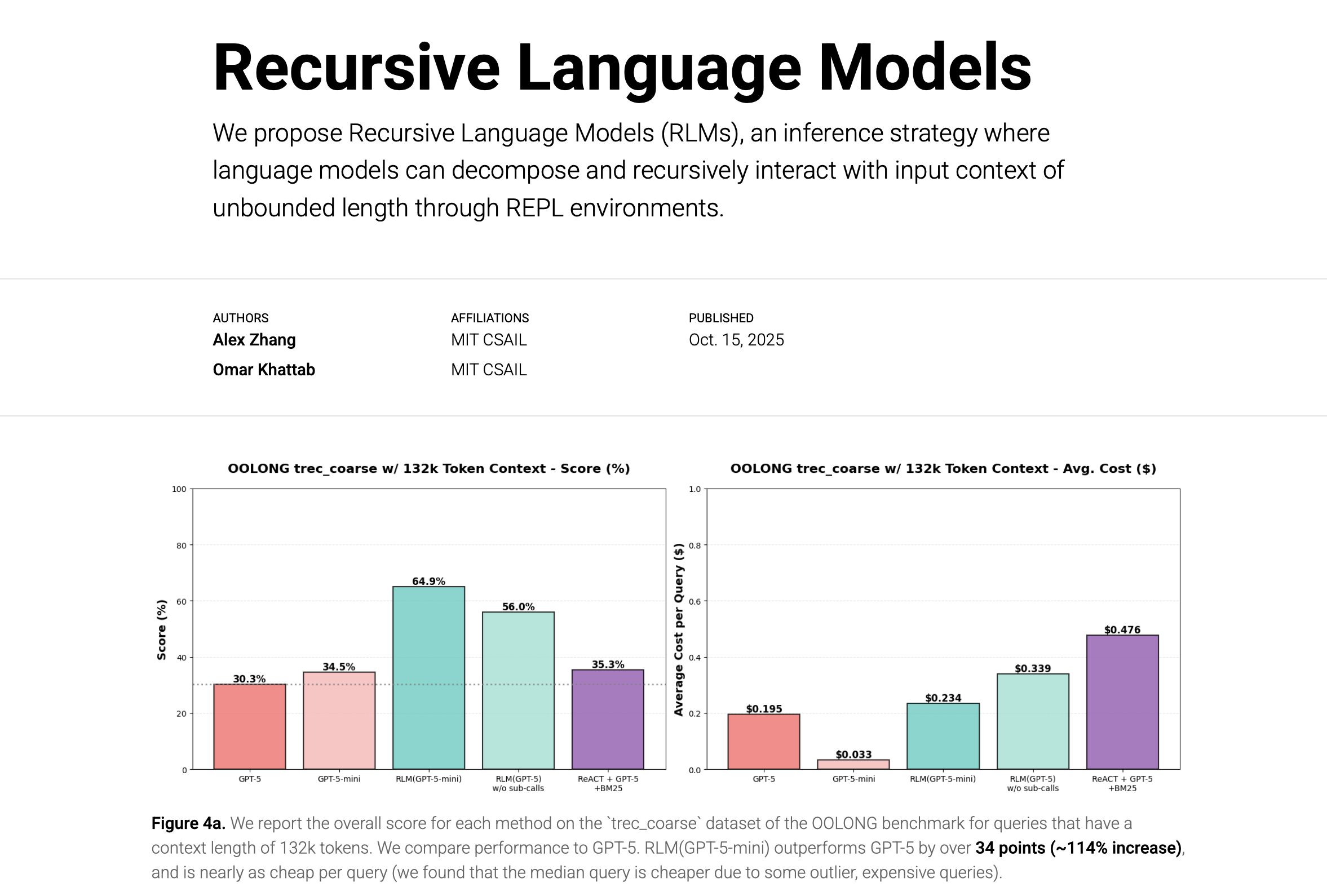
We propose Recursive Language Models (RLMs), an inference strategy where language models can decompose and recursively interact with input context of unbounded length through REPL environments.

openbench: Provider-agnostic, open-source evaluation infrastructure for language models
Provider-agnostic, open-source evaluation infrastructure for language models
Self-Instruct: Aligning Language Models with Self-Generated Instructions
Large "instruction-tuned" language models (i.e., finetuned to respond to instructions) have demonstrated a remarkable ability to generalize zero-shot to new tasks. Nevertheless, they depend heavily on human-written instruction data that is often limited in quantity, diversity, and creativity, therefore hindering the generality of the tuned model. We introduce Self-Instruct, a framework for improving the instruction-following capabilities of pretrained language models by bootstrapping off their own generations. Our pipeline generates instructions, input, and output samples from a language model, then filters invalid or similar ones before using them to finetune the original model. Applying our method to the vanilla GPT3, we demonstrate a 33% absolute improvement over the original model on Super-NaturalInstructions, on par with the performance of InstructGPT-001, which was trained with private user data and human annotations. For further evaluation, we curate a set of expert-written instructions for novel tasks, and show through human evaluation that tuning GPT3 with Self-Instruct outperforms using existing public instruction datasets by a large margin, leaving only a 5% absolute gap behind InstructGPT-001. Self-Instruct provides an almost annotation-free method for aligning pre-trained language models with instructions, and we release our large synthetic dataset to facilitate future studies on instruction tuning. Our code and data are available at https://github.com/yizhongw/self-instruct.
I'm creating a series of short form videos about how language models work technically. The goal is to be something in between "you know it's next token prediction" and "now you've taken a machine learning class." I'd love your thoughts so here are the first few! 🧵 youtube.com/shorts/VZB8XCcyllE

How does ChatGPT work? Or rather, language models in general- Part 1 attempting a lay explanation.
www.youtube.comAnnouncing a new version of our 2024 paper on linguistic hypothesis generation from LMs! @najoung.bsky.social and I have systematized our hypothesis generation framework, added stringent criteria for model selection, 10x-ed our learning trials, and included an epigraph from Jeff Elman 🙏!

