


Evidence from the frontier labs of how AI will extend human productivity
The AI productivity myth is more harmful than you think
Perceived productivity may be up thanks to AI, but there's debt collecting in the shadows.

Bridging the gap: inequalities that divide those who can and cannot create sustainable outcomes with AI
The widespread use of AI technologies impacts individuals, organisations, and societies in ways that warrant more comprehensive investigation. Inequalities in benefiting from AI advancements may le...

The ‘productivity paradox’ of AI adoption in manufacturing firms | MIT Sloan
Companies that adopt industrial artificial intelligence see productivity losses before longer-term gains, according to new research.

In the image of their tools
In the United States, spending on AI infrastructure now dwarfs investment in the Internet and railroads combined, but spending on the institutions that would let societies absorb that technology is, by comparison, negligible. This asymmetry creates a paradox. Models post striking benchmark scores while aggregate economic output barely moves: Economist Daron Acemoglu projects a total factor productivity gain of well under one percent over a decade, and firm-level studies find that task-level gains do not necessarily add up at the firm or economy level. This paradox follows from an institutional mismatch that can be addressed by reverse alignment, the deliberate redesign of institutions, norms, and skills, rather than of models, so that societies can absorb new forms of machine cognition.

AI boosts worker productivity — but does that translate to final outputs? | MIT Sloan
A new study found that developers using AI tools can write much more code than those working without AI, but they don’t release as much new software.

AI, peer review and the human activity of science
When researchers cede their scientific judgement to machines, we lose something important.

AI in scientific publishing: Slower, worse, and more expensive
There’s a saying in the management world, popularized by NASA administrator Daniel Goldin in the 1990s, that the goal of technological improvements is to make products faster, better, and cheaper. Although this strategy had some success in the aerospace industry, the zealots of artificial intelligence (AI) have been making the same argument regarding how it will transform work, claiming that so little human effort will be required that humanity will enter an era of radical abundance, free from disease, drudgery, and danger, among other benefits, leaving society with more time for creative pursuits. But history tells a different story. When machines began to increase productivity during the second industrial revolution, American engineer Frederick Winslow Taylor’s The Principles of Scientific Management encouraged corporations to use surveillance to get employees to work harder and longer, an approach that exhausted and discouraged workers and led to the transfer of knowledge and any decision-making from workers to management, while enriching the profits for only those at the top. Yet, it remains foundational to the American economic enterprise. Indeed, scientific publishing is starting to experience some Taylorism with the insertion of AI. Rigorous human checking of AI-generated research papers is creating bottlenecks as publishers strive to maintain the integrity of the scientific record. The challenge is requiring even more human effort, making the whole endeavor slower and more expensive.
More Than a Tool
What We Learned from a Year of Conversations About AI
How AI can become pro-worker
The automation of blue-collar and office jobs using digital technologies has been an important driver of the rise in inequality since the 1980s. A new CEPR Policy Insight argues that a ‘human-complementary’ path for artificial intelligence could contribute more to productivity growth and help reduce economic inequality. The authors suggest five potential elements for policy attention to help move the US, Europe, and other economies onto this human-complementary path.

"AI" and Productivity
[I keep bringing these up on Bluesky, so I think it’s time to gather them up and make a post out of them.] This is a collection of articles...
Does AI Actually Boost Developer Productivity? (100k Devs Study) - Yegor Denisov-Blanch, Stanford
Thousands of CEOs admit AI had no impact on employment or productivity—and it has economists resurrecting a paradox from 40 years ago | Fortune
In the 1980s, economist Robert Solow made an observation that reminded economists of today’s AI boom: “You can see the computer age everywhere but in the productivity statistics.”

AI is not a tool.
"Like all tools, it has its pros and cons. It brings about radical changes, but we'll adapt." This cliché was true for previous technologies. But it isn’t necessarily true for AI. A tool extends the human body or percept...

The Jagged AI Frontier

The nonintuitive strengths and weaknesses of AI performance relative to human performance, and how it is changing over time.
AI 2027
What will be left for us to work on?

OpenAI and Hugging Face partner to address security incident during model evaluation

Taking more seriously the claim that recent ML models do not "reason", it still is quite odd the particular ways that superhuman game-playin…
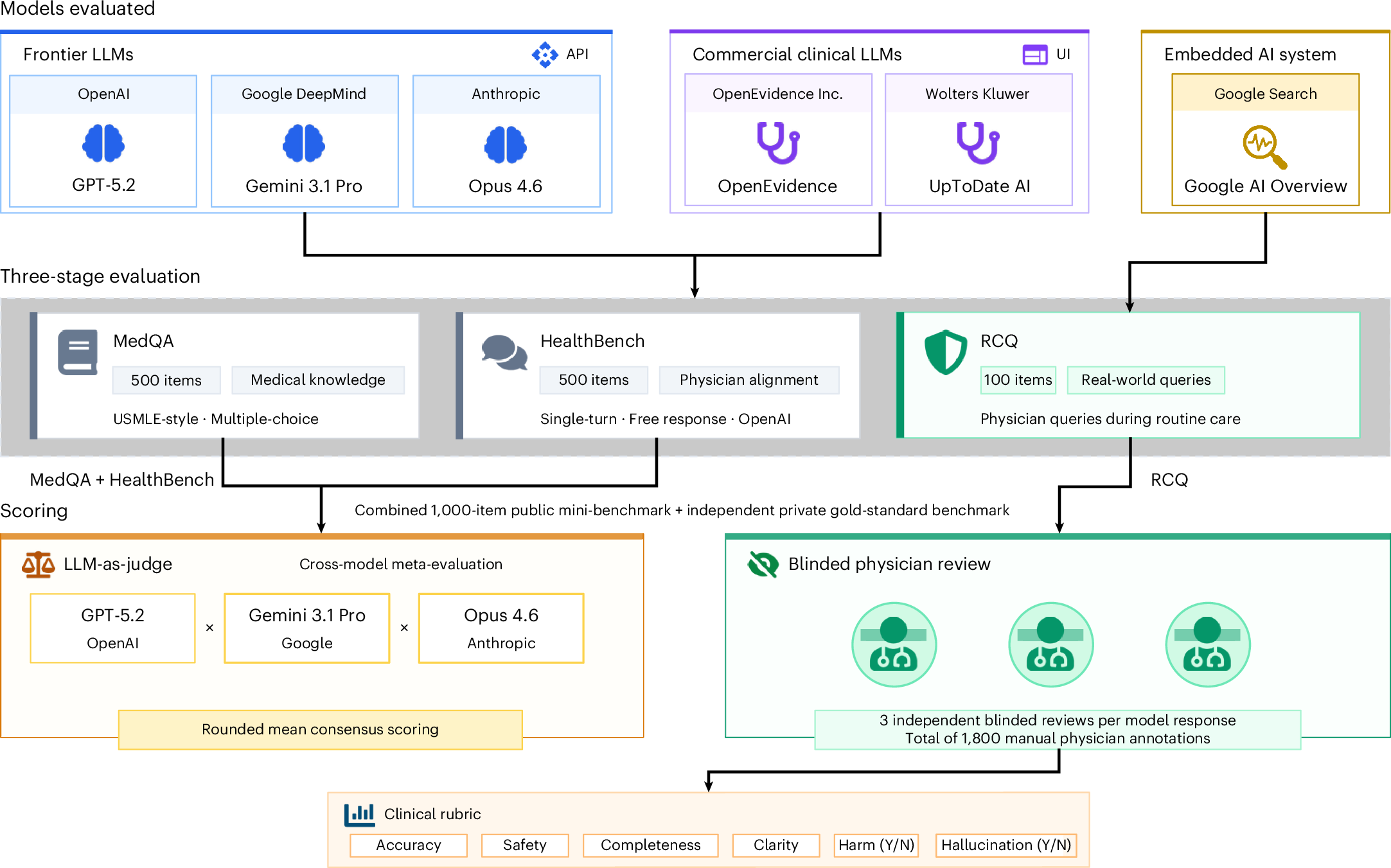
General-purpose large language models outperform specialized clinical AI tools on medical benchmarks

StoryScope: Investigating idiosyncrasies in AI fiction