

The modern Smalltalk-80
Smalltalk
Smalltalk is a purely object-oriented programming language that was originally created in the 1970s for educational use, specifically for constructionist learning, but later found use in business. It was created at Xerox PARC by Learning Research Group (LRG) scientists, including Alan Kay, Dan Ingalls, Adele Goldberg, Ted Kaehler, Diana Merry, and Scott Wallace.

Travels With Smalltalk
Reprinted from Celebrating 25 Years of Smalltalk, SIGS Publications.
The Rise and Fall of Commercial Smalltalk
Relics Gilad Bracha recently posted an article "Bits of History, Words of Advice" that talks about the incredible influence of Smalltalk but bemoans the fact that: ...today Smalltalk is relegated to a small niche of true believers. Whenever two or more Smalltalkers gather over d
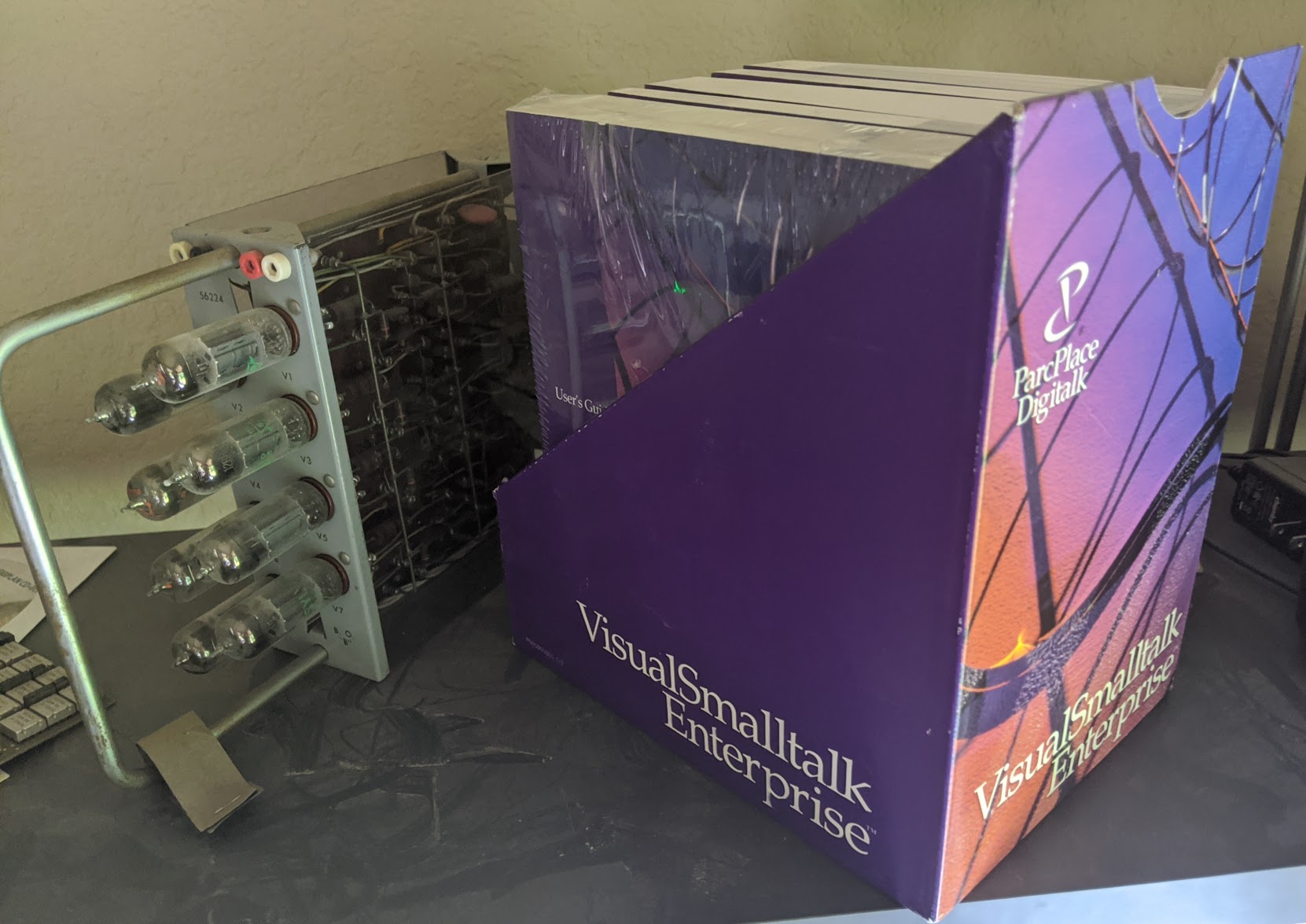
The Early History Of Smalltalk
Permission to copy without fee all or part of this material is granted provided that the copies are not made or distributed for direct commercial advantage, the ACM copyright notice and the title of the publication and its date appear, and notice is given that copying is by permission of the Association for Computing Machinery. To copy otherwise, or to republish, requires a fee and/or specific permission. HOPL-II/4/93/MA, USA © 1993 ACM 0-89791-571-2/93/0004/0069...$1.50
Unorthodocs: Abandon your DVCS and Return to Sanity - bitquabit
I’ve pretty much always been a DVCS apologist. I know quite a few people who’ve been using DVCSes since Mercurial and Git, and a few who go back to BitKeeper, but I can totally out-hipster you. I was there for Monotone. I actually remember struggling to grok tla, and being happy that someone took the time to write baz. I remember the promise and the failure that was Darcs. I remember thinking that even Darcs was comically primitive, because it was nothing but a poor imitation of Smalltalk DVCSes like Monticello, themselves mere iterative improvements on classic Smalltalk changesets.[1]
fx - Tiny, open, native coding agent
Tiny, open, native coding agent. A minimal CLI written in Zig, optimized for research and embeddability as part of larger systems.
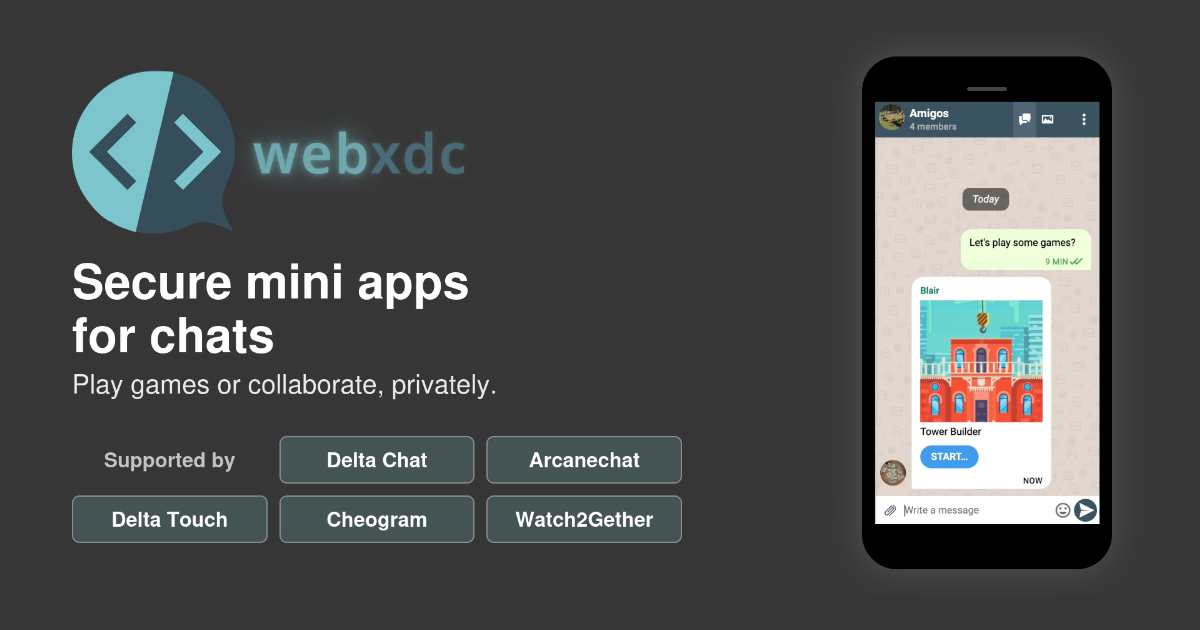
Webxdc: mini apps shared in a chat
Secure mini apps for chats. No internet access, no tracking, no servers.
Keynote: Let It Disconnect: A Local-First Future - Brooklyn Zelenka | Code BEAM Europe 2026
Keynote: Let It Disconnect: A Local-First Future - Brooklyn Zelenka | Code BEAM Europe 2026
26 - Gilad Bracha - Utopia And Dystopia: Smalltalk And The Wider World
peter.michaux.ca - Smalltalk MVC Translated to JavaScript
Published January 3, 2015 in JavaScript, MVC
The small web is beautiful
A vision for the "small web", small software, and small architectures.
What is the Small Web?
Updated June 19th, 2023 Sorry, your browser doesn't support embedded videos. But that doesn’t mean you can’t watch it! You can download Small Is Beautiful #23 directly, and watch it with your favourite video player. Small Is Beautiful (Oct, 2022): What is the Small Web and why do we need it? Today, I want to introduce you to a concept – and a vision for the future of our species in the digital and networked age – that I’ve spoken about for a while but never specifically written about:

Cua on Twitter / X
1/ Introducing CUA-S1: a family of System One Models, small, specialized, and built for computer use.Today we're open-sourcing CUA-S1-FORMS, the first in the family: https://t.co/J1frbEbZTQ pic.twitter.com/8wMJBLndG8— Cua (@trycua) September 18, 2026

The AT Protocol's interesting design - LittleBit
Bluesky's backend was made to be more than a social network
Paul Frazee — Solving for scale in open networks