


Despite their historical importance, empires have received scant attention from social scientists. Now, Alexander J. Motyl examines the structure, dynamics, and continuing relevance of empire—and asks, "Why do empires decline? Why do some empires collapse? And why do some collapsed empires revive?"Rejecting choice-centered theories of imperial decline, Motyl maintains that the very structure of empires promotes decay and that decay in turn facilitates the progressive loss of territory. Although most major empires have in fact declined in this manner, some, such as the Soviet Union, have collapsed suddenly and comprehensively. Motyl explains how and why collapse occurs, why such an outcome is hard to foresee, and why some collapsed empires revive. While broad-ranging historically and empirically, Imperial Ends focuses on five modern empires: the Soviet, Romanov, Ottoman, Habsburg, and Wilhelmine.Examining the possibility of a revival of the Soviet empire, Motyl points out that the expansion of NATO and the European Union, along with increasing globalization, will isolate Russia and its neighbors, promoting their dependence upon one another and perhaps facilitating the rise of the former core. With boldly stated conclusions and concise analytical interpretations, Imperial Ends cohesively illustrates to policymakers and social scientists alike the importance of possible imperial revivals and the rise of future empires.
Empire: World History
Empire: World History
History Podcast · Updated twice weekly · The rise and fall of empires and the events that shaped world history. William Dalrymple and Anita Anand explore the intricate stories of revolutions, imperial wars, and the people who built and lost…
The great myth of empire collapse | Aeon Essays
Societal downfalls loom large in history and popular culture but, for the 99 per cent, collapse often had its upsides
Further Back to the Future: Neo-Royalism, the Trump Administration, and the Emerging International System
With the Liberal International Order (LIO) in decline, scholars have focused increasingly on the possible return to a Westphalian great power system marked by sovereigntist claims and balancing among states. The actions of the Trump administration, however, raise a number of significant puzzles for such accounts—the US seems willing to sign deals with traditional adversaries including Russia and China, while targeting long-standing allies like Canada and Denmark. At the same time, transactional politics often serve narrow personalist interests rather than national objectives. In short, a Westphalian lens focused on states and sovereignty may generate intellectual blinders that misreads the emerging international order. To overcome these limitations, we propose an alternative account, which we label neo-royalism. The neo-royalist order centers on an international system structured by a small group of hyper elites, which we term cliques. Such cliques seek to legitimize their authority through appeals to their exceptionalism in order to generate durable material and status hierarchies based on the extraction of financial and cultural tributes. This short paper lays out the key elements of the neo-royalist order, differentiating it from the Westphalian and Liberal International Orders, and applies its insights to better grapple with the emerging system being promoted by the United States under Donald J. Trump. For policymakers and scholars, the neo-royalist approach clarifies recent events in US foreign policy. Theoretically, the field should take contending ideas of international order seriously, and establish a research agenda beyond a backward looking view to the Westphalian moment.
From the Steppes of Donbas to the Deserts of Syria — OSINT for Ukraine
After more than 13 years of civil war, the Assad regime collapsed in a matter of weeks in December 2024. With few foreseeing the swiftness of the regime's demise, Russian interests in the region were dealt a resounding blow, following nearly a decade of committed involvement. As arguably the Russian ally which enjoyed the most military backing, the old Syria under Assad proved to be somewhat of a testing ground for Russian military expertise - perhaps the most important element of its relations with friendly states in the ‘global south’.

CRISES AVERTED. How A Few Past Societies Found Adaptive Reforms in the Face of Structural-Demographic Crises
Historians and social scientists have long been preoccupied with understanding and documenting periods of crisis. Such emphasis is only growing, and becoming more pressing, as the world continues to face a number of interrelated stressors in the form of irreversible climate change, major ecological shocks and disease outbreaks, eruptions of military violence, economic disruptions and deepening inequalities, political polarization and unrest, the rise of authoritarian and nationalist regimes. Crises in these domains are not new, but have been recurrent features of past societies. Although these periods have typically led to massive loss of life, the failure of critical institutions, and even complete societal collapse, there are instances in the historical record of societies managing to turn the tide of crisis even as violence and social turmoil grow. Here, we focus on four such cases of crises mitigated with structural reforms revealed from our previous historical analyses: early Republican Rome, mid-19th century England and Russia, USA during the the late 20th to early 21st centuries. Utilizing structural demographic theory as a lens to explore these cases, we seek to expose the pressures that built up leading to crisis and the early signs of violent confrontation revealed by these societies, as well as to examine the conditions and key decisions made in the midst of this unrest that allowed these societies to turn the tide and enact significant structural adaptations. Our findings have clear relevance to understanding and navigating similar crises in contemporary societies.
Lenin und seine Imperialismus-Broschüre – Kommunistische Organisation
Paul Oswald setzt sich im folgenden Beitrag mit Teilen des Quellenmaterials von Lenins Imperialismus-Broschüre auseinander. Anhand eines vergleichenden Blicks zwischen Lenins Broschüre und vorangegangenen theoretischen Auseinandersetzungen innerhalb der Arbeiterbewegung sowie der bürgerlichen Wissenschaft wird das Alleinstellungsmerkmal von Lenins Untersuchung herausgearbeitet. Durch diesen Vergleich wird insbesondere Lenins Entwicklung des Begriffs des Imperialismus aufgezeigt und damit ein Zugang zur Imperialismus-Broschüre eröffnet wird, der in der Debatte unterrepräsentiert ist.
Super Imperialism: The Economic Strategy of American Empire | Michael Hudson
Super Imperialism. The Economic Strategy of Americ .... Hudson, Michael Buy Now (Wrapping 1972) “THE MOST IMPORTANT WORK ON IMPERIALISM SINCE LENIN” -TERENCE McCARTHY Michael Hudson Holt, Rinehart, Winston Backside: Super Imperialism "Never before has a bankrupt nation dared insist that its bankruptcy become the foundation of world economic policy; that, because of its bankruptcy,
‘Self-termination is most likely’: the history and future of societal collapse
An epic analysis of 5,000 years of civilisation argues that a global collapse is coming unless inequality is vanquished

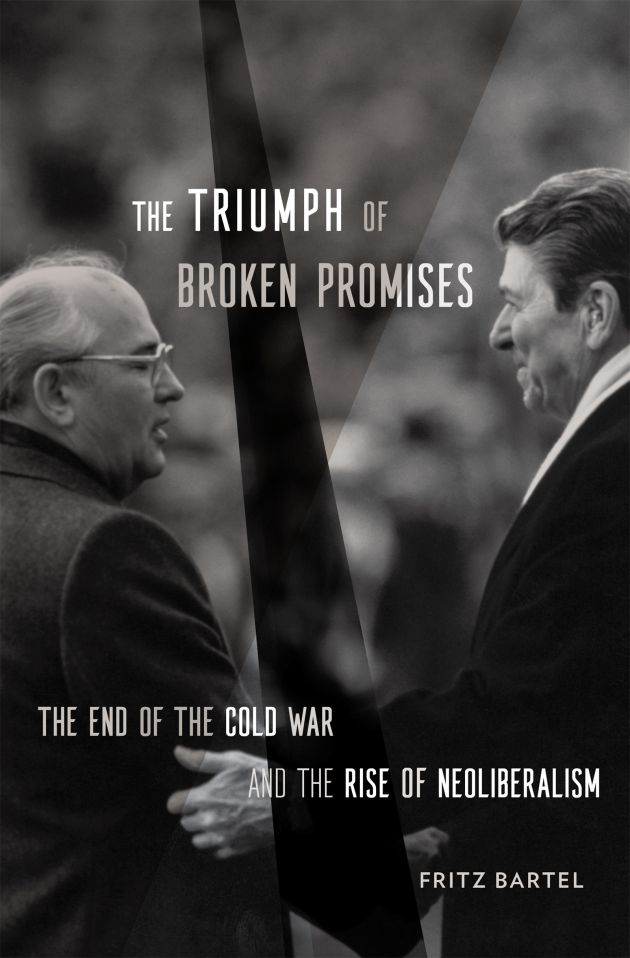
The Triumph of Broken Promises — Harvard University Press
A powerful case that the economic shocks of the 1970s hastened both the end of the Cold War and the rise of neoliberalism by forcing governments to impose austerity on their own people.Why did the Cold War come to a peaceful end? And why did neoliberal economics sweep across the world in the late twentieth century? In this pathbreaking study, Fritz Bartel argues that the answer to these questions is one and the same. The Cold War began as a competition between capitalist and communist governments to expand their social contracts as they raced to deliver their people a better life. But the economic shocks of the 1970s made promises of better living untenable on both sides of the Iron Curtain. Energy and financial markets placed immense pressure on governments to discipline their social contracts. Rather than make promises, political leaders were forced to break them.In a sweeping narrative, The Triumph of Broken Promises tells the story of how the pressure to break promises spurred the end of the Cold War. In the West, neoliberalism provided Western leaders like Ronald Reagan and Margaret Thatcher with the political and ideological tools to shut down industries, impose austerity, and favor the interests of capital over labor. But in Eastern Europe, revolutionaries like Lech Walesa in Poland resisted any attempt at imposing market discipline. Mikhail Gorbachev tried in vain to reform the Soviet system, but the necessary changes ultimately presented too great a challenge.Faced with imposing economic discipline antithetical to communist ideals, Soviet-style governments found their legitimacy irreparably damaged. But in the West, politicians could promote austerity as an antidote to the excesses of ideological opponents, setting the stage for the rise of the neoliberal global economy.
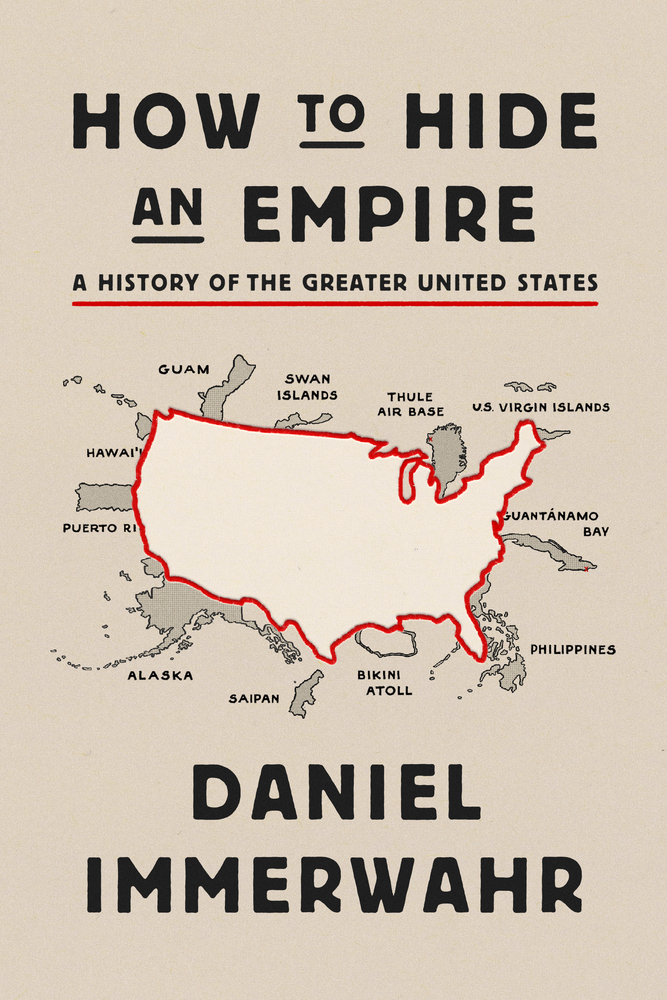
How to Hide an Empire: A History of the Greater United …
A pathbreaking history of the United States' overseas p…
Nick Land-Meltdown
The body count climbs through a series of globewars. Emergent Planetary Commercium trashes the Holy Roman Empire, the Napoleonic Continental System, the Second and Third Reich, and the Soviet International, cranking-up world disorder through compressing phases. Deregulation and the state arms-race each other into cyberspace.
Sollte der Krieg Russlands gegen die Ukraine die Epistemologie der Osteuropäischen Geschichte verändern und wenn ja, wie?
The short article argues for revitalizing historical research to questions of the longue durée and, in analogy to the New Imperial History, considers the emergence of a New National History possible. Above all, the article calls for a continued decolonialisation of Russian history and, in this context, also for a strengthening of the Ukraine and Belarus focus in research, teaching and language mediation as well as in the form of a German Historical Institute in Kyiv.
Why your Steppe Empire can not exist
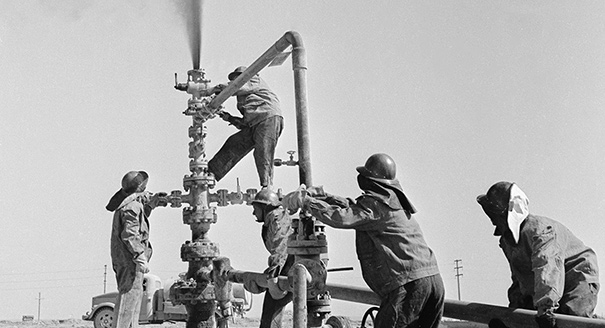
The Formation and Evolution of the Soviet Union’s Oil and Gas Dependence
Between the end of World War II and the mid-1960s, the Soviet Union’s economy was one of the most vibrant in the world. The country had successfully launched the first man into space and was competing with the United States in developing cutting-edge military technology. However, by the end of the 1980s, the economy was in a miserable state.
World-systems theory
World-systems theory is a multidisciplinary approach to world history and social change which emphasizes the world-system as the primary unit of social analysis. World-systems theorists argue that their theory explains the rise and fall of states, income inequality, social unrest, and imperialism.
