

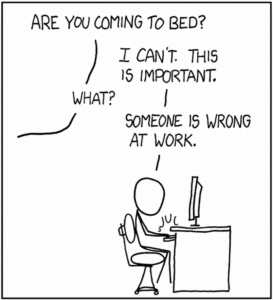
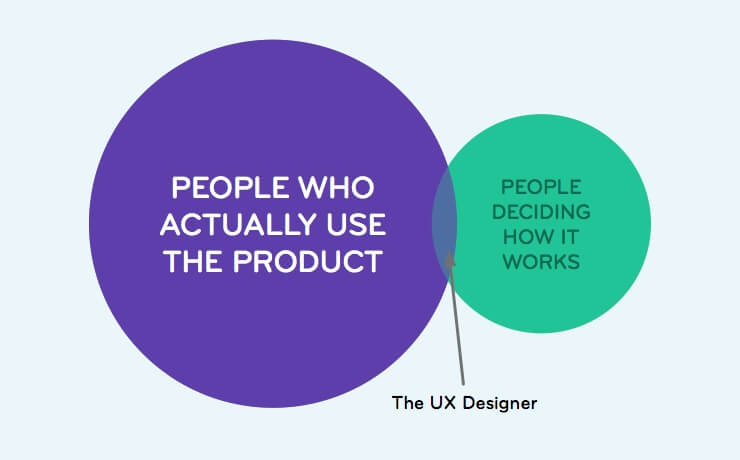
Every time I give a talk on design, someone finds me afterward. They wait out the handshakes and the business cards, and then they ask a version of the same question. How do I make THEM do things the
The Interview Question Bank for Engineering Managers
Organised by theme, and every question comes with a short thinking prompt
Good Luck Opting Out: Manipulative Design Patterns in Opt-Out Processes
EPIC’s report Good Luck Opting Out: Manipulative Design Patterns in Opt-Out Processes by Justin Sherman, EPIC Scholar in Residence, and Caroline Kraczon, EPIC Counsel, investigates whether the consumer opt-out processes provided by major online platforms use manipulative design patterns to make it more difficult for consumers to exercise their opt-out rights.
be diligent
For individuals It's challenging to work a process when it moves slower than feels appropriate. In the context of computer conversations, the tactic of s...

Make one customer happy
Find one customer that is funny and motivating to work with, and learn about all their problems, select one and solve it. Simple.
Do People Ask Good Questions?
People ask questions in order to efficiently learn about the world. But do people ask good questions? In this work, we designed an intuitive, game-based task that allowed people to ask natural language questions to resolve their uncertainty. Question quality was measured through Bayesian ideal observer models that considered large spaces of possible game states. During free-form question generation, participants asked a creative variety of useful and goal-directed questions, yet they rarely asked the best questions as identified by the Bayesian ideal observers (Experiment 1). In subsequent experiments, participants strongly preferred the best questions when evaluating questions that they did not generate themselves (Experiments 2 and 3). On one hand, our results show that people can accurately evaluate question quality, even when the set of questions is diverse and an ideal observer analysis has large computational requirements. On the other hand, people have a limited ability to synthesize maximally informative questions from scratch, suggesting a bottleneck in the question asking process.

Evolving Design Language in the AI Era: From Good to Great
Explore how the AI era reshapes design language, emphasizing objective critique over subjective opinions for successful outcomes.

Exploring Conversation Design: Applications and Benefits
Discover the what, why and how of Conversation Design, including its definition, applications, and benefits.
COMMUNITY-BASED, HUMAN-CENTERED DESIGN
We propose a radical change in design from experts designing for people to people designing for themselves, leveraging the creativity of communities to solve their own problems. People in communiti…

Say precisely what you mean.
The words designers use when they know what they’re looking at.
How to Talk to Customers: 5 Lessons to Improve Communications
Whether you call them product owner, evangelist, or community manager, every company should have someone talking to their customers regularly. They should be the goto for any "What-Ifs” and “I wonders” from the product team.
Best practices: conversation design
An introduction to IBM Research’s Natural Conversation Framework

Design Thinking
In the past, design has most often occurred fairly far downstream in the development process and has focused on making new products aesthetically attractive or enhancing brand perception through smart, evocative advertising. Today, as innovation’s terrain expands to encompass human-centered processes and services as well as products, companies are asking designers to create ideas rather than to simply dress them up. Brown, the CEO and president of the innovation and design firm IDEO, is a leading proponent of design thinking—a method of meeting people’s needs and desires in a technologically feasible and strategically viable way. In this article he offers several intriguing examples of the discipline at work. One involves a collaboration between frontline employees from health care provider Kaiser Permanente and Brown’s firm to reengineer nursing-staff shift changes at four Kaiser hospitals. Close observation of actual shift changes, combined with brainstorming and rapid prototyping, produced new procedures and software that radically streamlined information exchange between shifts. The result was more time for nursing, better-informed patient care, and a happier nursing staff. Another involves the Japanese bicycle components manufacturer Shimano, which worked with IDEO to learn why 90% of American adults don’t ride bikes. The interdisciplinary project team discovered that intimidating retail experiences, the complexity and cost of sophisticated bikes, and the danger of cycling on heavily trafficked roads had overshadowed people’s happy memories of childhood biking. So the team created a brand concept—“Coasting”—to describe a whole new category of biking and developed new in-store retailing strategies, a public relations campaign to identify safe places to cycle, and a reference design to inspire designers at the companies that went on to manufacture Coasting bikes. [hbr_brightcove id=”4443548301001″]

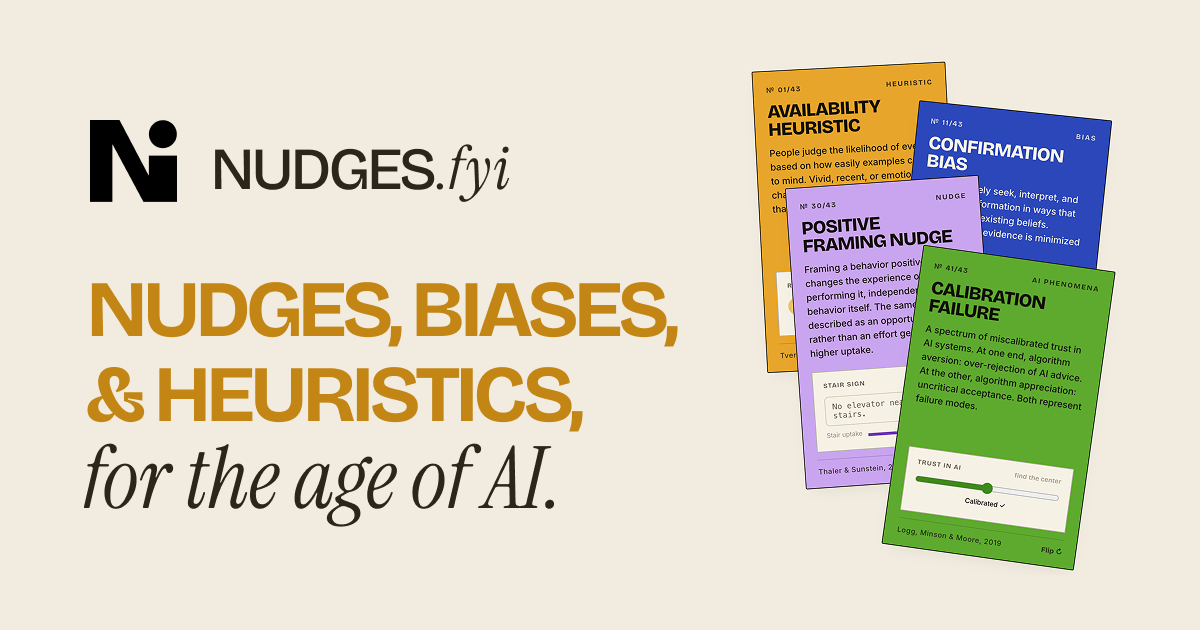
Nudges, Biases & Heuristics for the Age of AI
45 interactive field cards covering nudges, biases, heuristics, and AI phenomena. A practical reference for designers, researchers, and product teams building with AI.
By Humans, For Humans – Mindful Design
Now, more than ever, we need to consider the real, human impact of the work we do. This is a fundamental principle of Mindful Design.

being able to sit patiently with other people's thoughts, sit patiently with your own, and make both of those processes legible to someone who is not you is very valuable. if you can find a new way to do this that is fantastic news but I suspect it will at least resemble the model we've inherited
