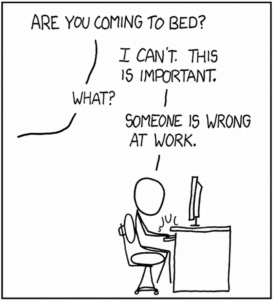
Every time I give a talk on design, someone finds me afterward. They wait out the handshakes and the business cards, and then they ask a version of the same question. How do I make THEM do things the
Don’t Do Interviews, Do Discussions!
(5 Min Read) This change guarantees better signals from the interviewing candidates.

The Interview Question Bank for Engineering Managers
Organised by theme, and every question comes with a short thinking prompt
Good Luck Opting Out: Manipulative Design Patterns in Opt-Out Processes
EPIC’s report Good Luck Opting Out: Manipulative Design Patterns in Opt-Out Processes by Justin Sherman, EPIC Scholar in Residence, and Caroline Kraczon, EPIC Counsel, investigates whether the consumer opt-out processes provided by major online platforms use manipulative design patterns to make it more difficult for consumers to exercise their opt-out rights.
be diligent
For individuals It's challenging to work a process when it moves slower than feels appropriate. In the context of computer conversations, the tactic of s...

How to Deliver Constructive Feedback in Difficult Situations
Thoughtful, empathetic language can make or break your business relationships

Make one customer happy
Find one customer that is funny and motivating to work with, and learn about all their problems, select one and solve it. Simple.
Do People Ask Good Questions?
People ask questions in order to efficiently learn about the world. But do people ask good questions? In this work, we designed an intuitive, game-based task that allowed people to ask natural language questions to resolve their uncertainty. Question quality was measured through Bayesian ideal observer models that considered large spaces of possible game states. During free-form question generation, participants asked a creative variety of useful and goal-directed questions, yet they rarely asked the best questions as identified by the Bayesian ideal observers (Experiment 1). In subsequent experiments, participants strongly preferred the best questions when evaluating questions that they did not generate themselves (Experiments 2 and 3). On one hand, our results show that people can accurately evaluate question quality, even when the set of questions is diverse and an ideal observer analysis has large computational requirements. On the other hand, people have a limited ability to synthesize maximally informative questions from scratch, suggesting a bottleneck in the question asking process.

Kind Engineering: How To Engineer Kindness
How do you avoid becoming a Brilliant Jerk? Read this article to learn practical tips on communication, honesty and psychological safety.

Evolving Design Language in the AI Era: From Good to Great
Explore how the AI era reshapes design language, emphasizing objective critique over subjective opinions for successful outcomes.

Exploring Conversation Design: Applications and Benefits
Discover the what, why and how of Conversation Design, including its definition, applications, and benefits.
COMMUNITY-BASED, HUMAN-CENTERED DESIGN
We propose a radical change in design from experts designing for people to people designing for themselves, leveraging the creativity of communities to solve their own problems. People in communiti…

Say precisely what you mean.
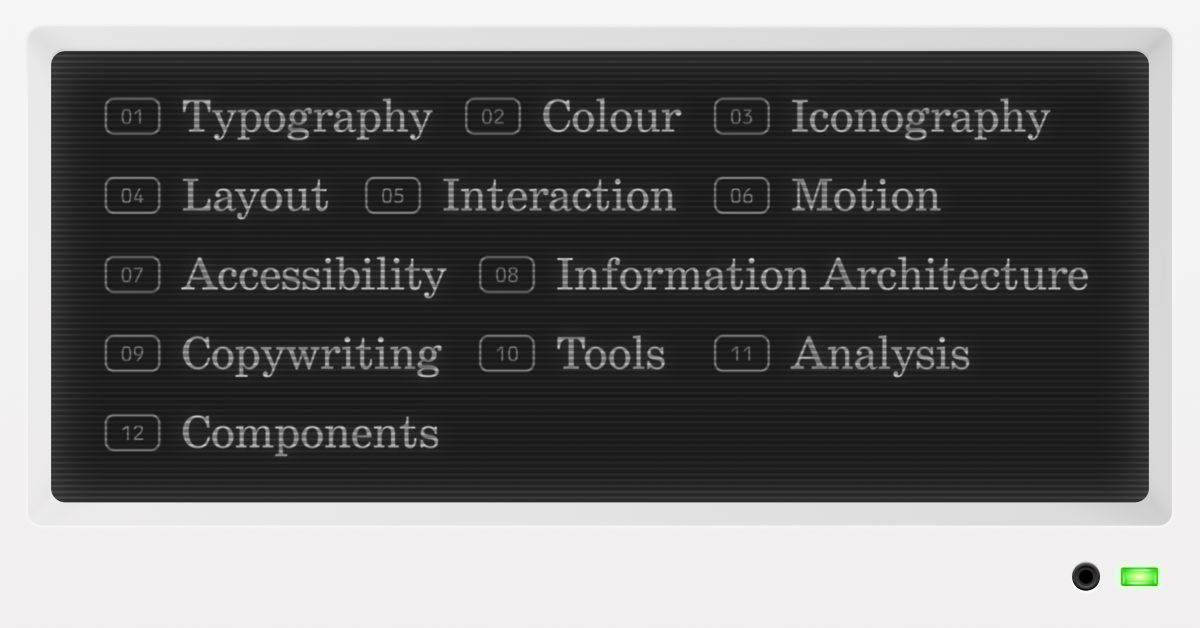
The words designers use when they know what they’re looking at.
How to Talk to Customers: 5 Lessons to Improve Communications
Whether you call them product owner, evangelist, or community manager, every company should have someone talking to their customers regularly. They should be the goto for any "What-Ifs” and “I wonders” from the product team.
Best practices: conversation design
An introduction to IBM Research’s Natural Conversation Framework

Extreme brainstorming questions to trigger new, better ideas
We know, "no idea is a bad idea," but brainstorming is often unsuccessful. These prompts actually work. They could even lead to a unique business model.