

Cybercultural is a website covering internet history and the evolution of digital culture.
Thoughts on Cyberpositionality: The Construction of Digital Communities in Digital Spaces, Damien Patrick Williams
I found Rebecca Monteleone, Martin Perez Comisso, and Elma Hajric’s “Cyberpositionality: Sociotechnical Location in the Digital Age” (2024) to be an extremely timely and important article which can…

Historical pragmatism and the internet
This article argues that the literature describing the internet revolution in the 1990s was characterized by the rhetoric of the technological sublime. This rhetoric suffered from three fatal flaws: (1) it was not sufficiently grounded in the historical development of technology; (2) it viewed the internet in isolation, failing to consider the wider technological context; and (3) it failed to examine the internet in view of the social, economic, religious and political circumstances of its users. Several examples from history are cited, demonstrating that changes in various systems for the production, dissemination and preservation of cultural information both border and deborder the world. The article suggests that if internet researchers take a pragmatic, historically grounded approach, they will discover that the introduction of internet technology can be seen to have similar consequences. While the technology overcomes many boundaries (of space and time, politics and economics), other social borders may be created at the same time. It is easier to see old boundaries coming down than to see new ones being erected. Rather than being swept by utopian or dystopian enthusiasms, the article insists that the really interesting discoveries are to be made in locating the subtle social shifts taking place, relatively unnoticed, as a consequence of technological change.

The Digital Sublime: Myth, Power, and Cyberspace
Interpreting the myths of the digital age: why we believed in the power of cyberspace to open up a new world.The digital era promises, as did many other te
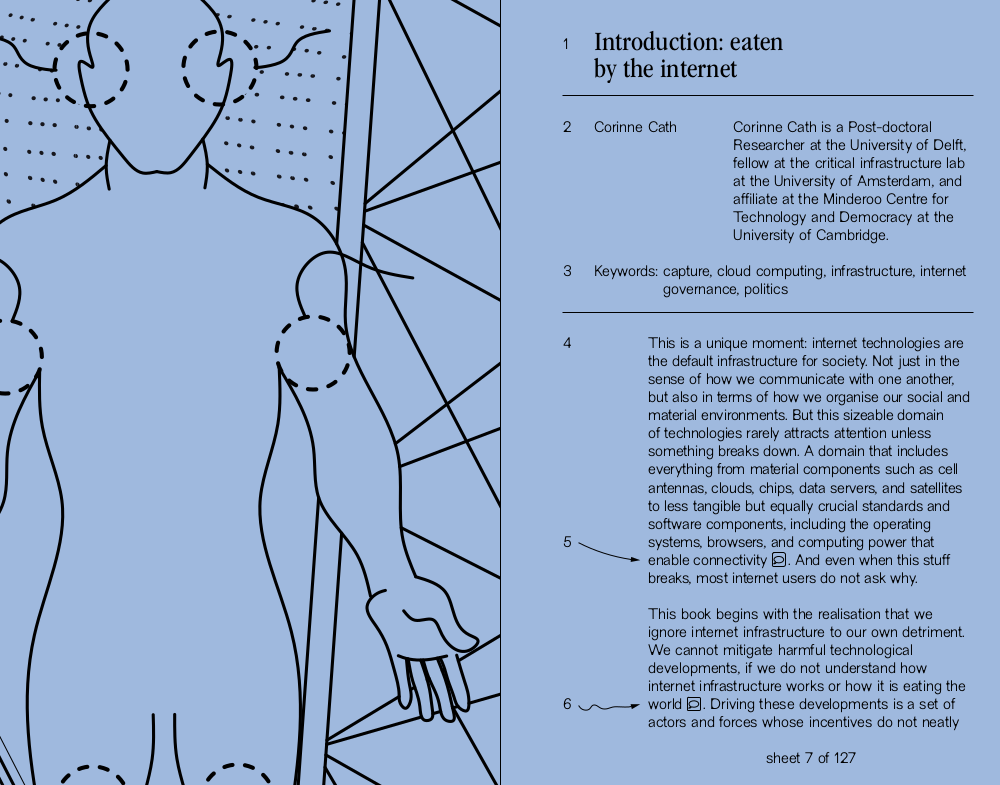
Eaten by the Internet
This book makes internet infrastructure visible as a force of political power, which is transforming the social world, from the bottom up—through fifteen chapters contributed by a global set of researchers, activists, and techies. We are living a unique moment: internet technologies are the default infrastructure for society, not just how we communicate but also how we organise our social life, politics, and economy, all the way down to our material environments, like cities. Our world is eaten by the internet. This means that those who control the internet control the bounds of public speech, economic production, social cohesion, and politics, making its infrastructure a core political terrain in the networked age. The book’s chapters cover a wide set of topics, spanning from the global politics of content moderation by internet infrastructure to the colonialism inherent in the race to plug the moon, from the harms wrought by blockchain companies in rural America to the particularities of online censorship across Asia. The chapters take on thorny topics, discussing power consolidation in the advertisement and cloud industry, the role of internet infrastructure in the war in Ukraine, and tech’s environmental impact—amongst others. In doing so, this book roots contemporary technology debates in the politics of internet infrastructure and urges us to ask how can we ensure our infrastructures sustain us, rather than consume us?
The Critical Legacy of Chinese Cybernetics
In Post-War America, cybernetics inspired countercultural visions of wild complexity. Its Chinese legacy, in contrast, is as an applied science of technocratic nation-building. As the world tilts towards new geopolitical priorities, it is this latter legacy that may prove more prophetic.
Cyberspace to Cyberplace
This post is a broad exploration, it doesn’t have a single central goal or thesis so I will be presenting quotes, resources, and various reflections on these to start circling around the topic from different angles.
The future of the internet is likely smaller communities, with a focus on curated experiences
As brands look to hold onto the internet of the past, the term “community” will become a loaded word.

Building a Culture of (Digital) Safety
Black culture is in a lot of ways synonymous with how internet culture exists writ large. From what is now described as “Gen-Z slang” (or as Black people have always known it, AAVE) to our methods of organizing (Black feminists starting hashtag activism and creating movements like #MeToo, #BlackLivesMatter, and #SayHerName) and even how we […]


My journey to the heart of the forgotten internet
Slowly but surely, huge swaths of the internet are vanishing. But the artefacts of the early web are still out there, and they have lessons for the future.

Digital Commons: Our Shared Right to Knowledge and Culture
As the volume of cultural and scientific works produced and available on the internet continues to expand, the question of freedom to consult and use this immense ‘digital commons’ is becoming a critical one, particularly as cutting off access could entail serious consequences for education, cultural exchange, and even the health of European citizens.

No Sense of Place: The Impact of Electronic Media on Social Behavior
Electronic media present us with a collage of experiences from everyplace. We eat dinner at home while watching starving children thousands of miles away reach out to us for food. From our easy chairs, we stare at blindfolded hostages, and coolly

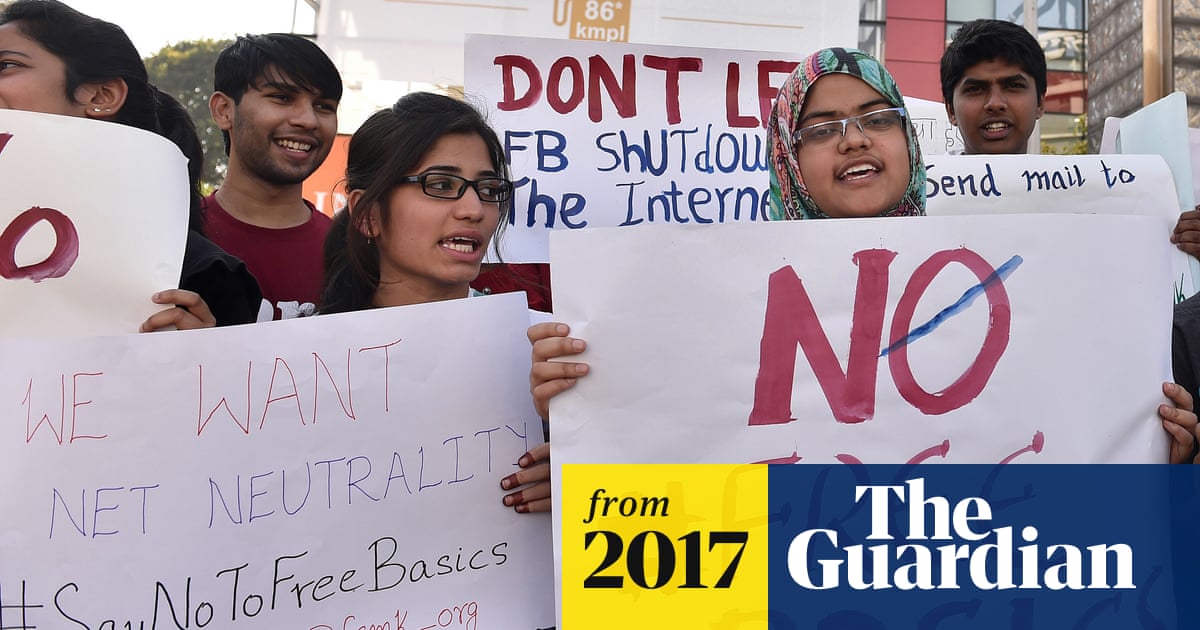
'It's digital colonialism': how Facebook's free internet service has failed its users
Free Basics, built for developing markets, focuses on ‘western corporate content’ and violates net neutrality principles, researchers say
The Internet Is Making You Less Free
Our current age is defined by the internet. The internet—a technology that allows the decentralized, globalized dissemination of information—has become so
