

Michael Levin is an interesting thinker; a rare Platonist in Biology. This quote from a recent post of his makes me think of biological engineering, but not…
The Fabric and the Brain
Articulating agent ecologies with high-personality planetary computation

The Scientist Who Scrambled Darwin’s Tree of Life (Published 2018)
How the microbiologist Carl Woese fundamentally changed the way we think about evolution and the origins of life.

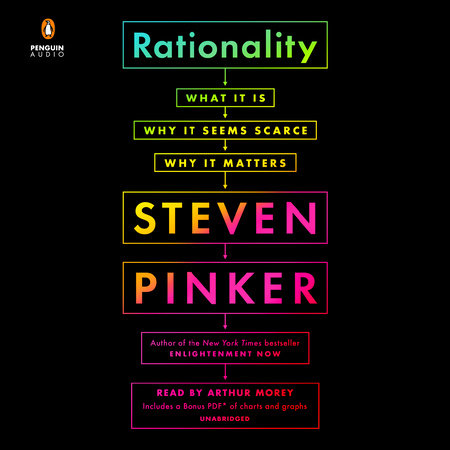
Rationality: What It Is, Why It Seems Scarce, Why It Matters by Steven Pinker
In the twenty-first century, humanity is reaching new heights of scientific understanding—and at ...
Synthetic philosophy
In this essay, I discuss Dennett’s From Bacteria to Bach and Back: The Evolution of Minds (hereafter From Bacteria) and Godfrey Smith’s Other Minds: The Octopus and The Evolution of Intelligent Life (hereafter Other Minds) from a methodological perspective. I show that these both instantiate what I call ‘synthetic philosophy.’ They are both Darwinian philosophers of science who draw on each other’s work (with considerable mutual admiration). In what follows I first elaborate on synthetic philosophy in light of From Bacteria and Other Minds; I also explain my reasons for introducing the term; and I close by looking at the function of Darwinism in contemporary synthetic philosophy.

Timothy Morton
Timothy Bloxam Morton is a professor and Rita Shea Guffey Chair in English at Rice University. A member of the object-oriented philosophy movement, Morton explores the intersection of object-oriented thought and ecological studies. Morton's use of the term 'hyperobjects' was inspired by Björk's 1996 single 'Hyperballad', although the term 'Hyper-objects' has also been used in computer science since 1967. Morton uses the term to explain objects so massively distributed in time and space as to transcend localization, such as climate change and styrofoam.

No. 016: Biomni in Science, Co-Scientist in Nature, open-vs-closed AI workbenches - The Hallway Track
The Hallway Track No. 016 - How AI is affecting the practice of science
233. "The Illusion of Thinking" — Thoughts on This Important Paper
This is a fantastic paper. I just love it. tl;dr AI is not human. Anthropomorphization has been bad for AI, LLMs, and Chat. Clippy walked so today's AI could run.
Anthropic's Scion is heavily inspired by Mononoke · sunshowers
It is important to provide credit.

Design in The Age of Biology: Shifting From a Mechanical-Object Ethos to an Organic-Systems Ethos
In the early twentieth century, our understanding of physics changed rapidly; now, our understanding of biology is undergoing a similar rapid change.

Guest post: If you’re going to critique science, be scientific about it
Loren K. Mell Editor’s note: This post responds to a Feb. 13 article in The Atlantic, “The Scientific Literature Can’t Save Us Now,” written by Retraction Watch cofounders Adam Marcus and Ivan Oran…
Evaluating Claude with BioMysteryBench
BioMysteryBench tests Claude on 99 real bioinformatics problems. Opus 4.6 solved 77% of human-solvable questions and some that experts could not.

Test Driving Claude Science
Anthropic released Claude Science today. I tried it out for an AIxBio literature review and for an analysis using the IUCN Red List API with R.
AI Data Centers Will Be Obsolete (Geometric Reasoning Explained)
No. 029: OpenAI math manuscripts, inquiry narrowing, virtual biology initiative - The Hallway Track
The Hallway Track No. 029 - How AI is affecting the practice of science
Rationalist Cults

Articles on rationalist-adjacent cults: the Zizians, Leverage Research, and the darker outgrowths of the rationalist / LessWrong-derived / Aella polycule scene that is behind "AI Safety" in Silicon Valley. Working thesis: MIRI and CFAR read as high-control groups (cults) who believe in P(DOOM) and use sex (and power) maliciously — yet they are unfortunately the ones who have captured the framing of "AI Safety," which has little to do with actual safety.

The Effective Altruism Kids Aren’t Alright

My Experience with Leverage Research
What Policymakers and the Public Need to Know About the Cult of AI
banteg (@banteg)

The Techno-Religion at the Center of the A.I. Debate

SE Gyges (@segyges.bsky.social)