

Here's why organisers are choosing a fee-free, co-op-run alternative with a transparent reputation system
The Social Cost of Cheap Pseudonyms
We consider the problems of societal norms for cooperation and reputation when it is possible to obtain cheap pseudonyms, something that is becoming quite common in a wide variety of interactions on the Internet. This introduces opportunities to misbehave without paying reputational consequences. A large degree of cooperation can still emerge, through a convention in which newcomers “pay their dues” by accepting poor treatment from players who have established positive reputations. One might hope for an open society where newcomers are treated well, but there is an inherent social cost in making the spread of reputations optional. We prove that no equilibrium can sustain significantly more cooperation than the dues‐paying equilibrium in a repeated random matching game with a large number of players in which players have finite lives and the ability to change their identities, and there is a small but nonvanishing probability of mistakes. Although one could remove the inefficiency of mistreating newcomers by disallowing anonymity, this is not practical or desirable in a wide variety of transactions. We discuss the use of entry fees, which permits newcomers to be trusted but excludes some players with low payoffs, thus introducing a different inefficiency. We also discuss the use of free but unreplaceable pseudonyms, and describe a mechanism that implements them using standard encryption techniques, which could be practically implemented in electronic transactions.

The Social Cost of Cheap Pseudonyms
We consider the problems of societal norms for cooperation and reputation when it is possible to obtain cheap pseudonyms, something that is becoming quite common in a wide variety of interactions on the Internet. This introduces opportunities to misbehave without paying reputational consequences. A large degree of cooperation can still emerge, through a convention in which newcomers “pay their dues” by accepting poor treatment from players who have established positive reputations. One might hope for an open society where newcomers are treated well, but there is an inherent social cost in making the spread of reputations optional. We prove that no equilibrium can sustain significantly more cooperation than the dues‐paying equilibrium in a repeated random matching game with a large number of players in which players have finite lives and the ability to change their identities, and there is a small but nonvanishing probability of mistakes. Although one could remove the inefficiency of mistreating newcomers by disallowing anonymity, this is not practical or desirable in a wide variety of transactions. We discuss the use of entry fees, which permits newcomers to be trusted but excludes some players with low payoffs, thus introducing a different inefficiency. We also discuss the use of free but unreplaceable pseudonyms, and describe a mechanism that implements them using standard encryption techniques, which could be practically implemented in electronic transactions.

Stellar | Making Blockchain Technology Real: Why We're Giving Away Lumens
This giveaway design will test Stellar.org’s hypothesis: there are people in the bitcoin community who will realize the potential of distributed ledgers.
Scott Lanoue - CoMail
MeritRank: Sybil Tolerant Reputation for Merit-based Tokenomics*
Decentralized reputation systems are emerging as promising mechanisms to enhance the effectiveness of token-based economies. Unlike traditional monetary incentives, these systems reward participants based on the actual value of their contributions to the network. However, the advantages and challenges associated with such systems remain largely unexplored. In this work, we investigate the inherent trade-offs in designing a decentralized reputation system that is simultaneously generalizable, trustless, and Sybil-resistant. Specifically, “generalizable” means that the system can assess various types of contributions across different contexts, “trustless” indicates that it functions without the need for a central authority to oversee reputations, and “Sybil-resistant” refers to its ability to withstand manipulations by fake identities, i.e., Sybil attacks.
mitchellh/vouch
A community trust management system based on explicit vouches to participate.
Luozhu on Twitter / X
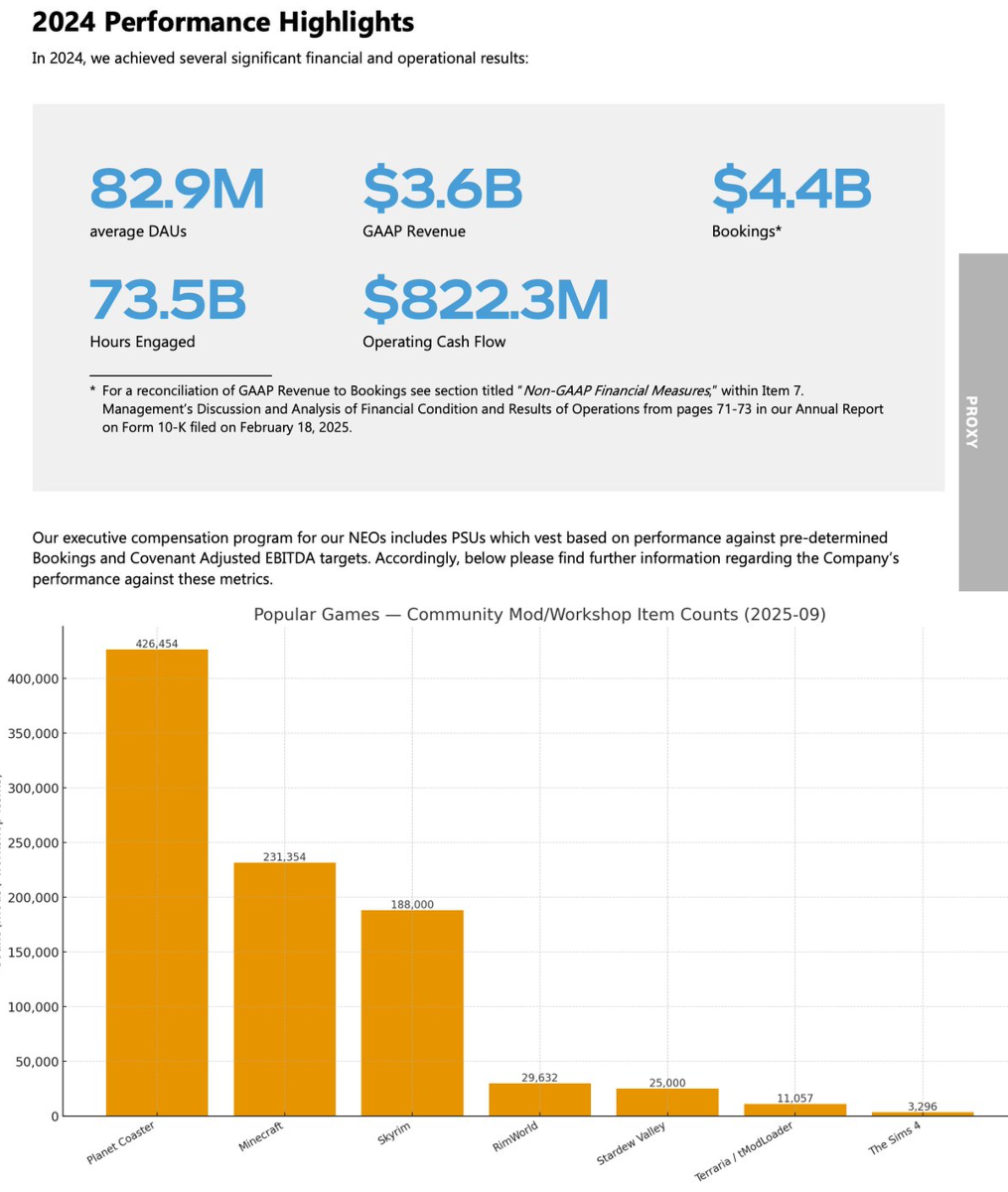
I’ve realized there’s a deeply unfair but widely accepted norm in gaming: mods are assumed to be free.For many successful titles, players don’t just buy the base game. They stay because of the thriving mod community. In extreme cases, the mods are more fun than the original.… pic.twitter.com/BQDu4OWUKo— Luozhu (@LuozhuZhang) September 4, 2025
Trust Infrastructure on ATproto
I agree with Nick that you have noted a big hard problem, with Zooko’s triangle type trade-offs. (For a semi-related example that is “easier” but still crazy difficult, see our “PeerFlow: Secure Load Balancing in Tor” https://doi.org/10.1515/popets-2017-0017 ) As noted or implied already in this thread: in the end, if someone can cheaply spin up indefinite unlinked identities and build good reputations for them, and if trust is based on such reputations, it is hard (impossible?) to avoid them s...

Luma
Discover and host memorable events effortlessly with Luma. Invite friends, sell tickets, and find great events happening near you.

Raise, manage and disburse money with full transparency.
Open Collective is a legal and financial toolbox for groups. It’s a fundraising + legal status + money management platform for your community. What do you want to do?

EFFecting Change: How to Build a Decentralized Web That Truly Works for All
As atproto matures, adversarial actors will reveal all the places where trust is implicit rather than managed - maybe time to build reputation mechanisms for PDSs like we do for email servers? It'll likely need to be default-block/prove-healthy, or default throttle until proven typical?

Scoiattolo
They've got a huge network that I'm in the process of graphing. They're now setting up their own PDSes. It's sophisticated.
As atproto matures, adversarial actors will reveal all the places where trust is implicit rather than managed - maybe time to build reputation mechanisms for PDSs like we do for email servers? It'll likely need to be default-block/prove-healthy, or default throttle until proven typical?
Scoiattolo
They've got a huge network that I'm in the process of graphing. They're now setting up their own PDSes. It's sophisticated.
Some of us in the ActivityPub world feel jealous of AtProto’s success (like me). But more decentralization is a win for everyone. With Bridgy from @anew.social connecting protocols, this isn’t competition, it’s momentum. We’re stronger together, so let’s build the social web humanity deserves 🚀


