

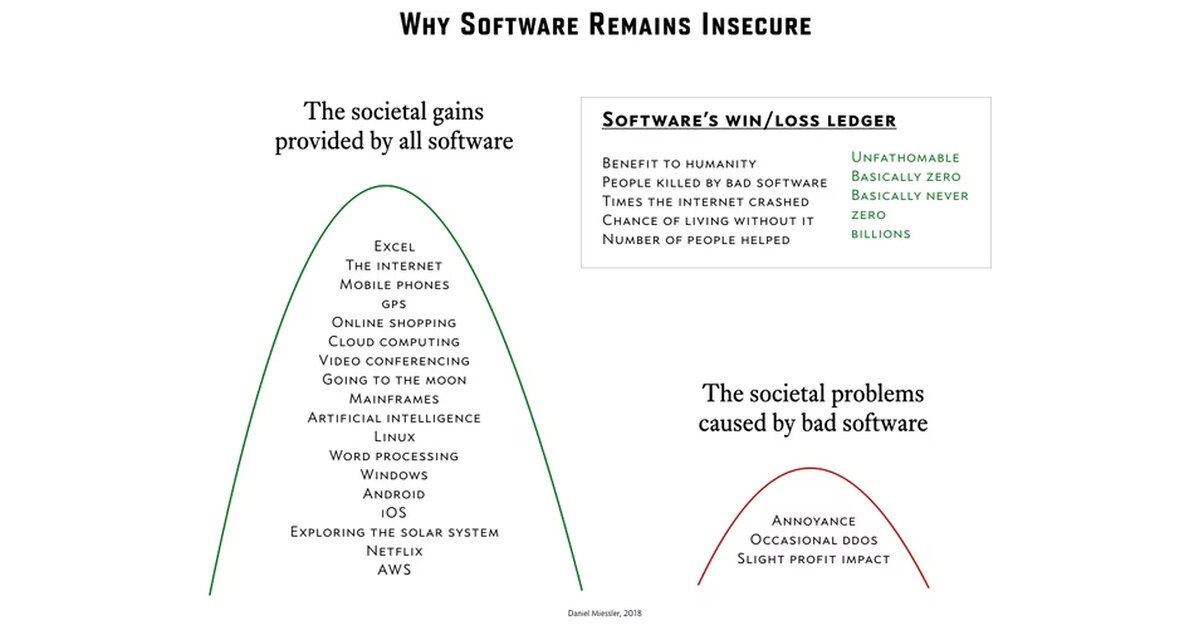
There are myriad theories as to why software remains insecure after we’ve spend decades trying to solve the problem. Common reasons include: Get the Audio
Audiobox: Meta's new foundation research model for audio generation | Hacker News
The more rational voices in my mind, though, become more and more afraid of a world where the only thing you can trust is people sitting right in front of you. That makes the world of information pretty small again.
Why We Can't Have Nice Software - Andrew Kelley
The problem with software is that it's too powerful. It creates so much wealth so fast that it's virtually impossible to not distribute it.

Reflections on trusting trust
To what extent should one trust a statement that a program is free of Trojan horses? Perhaps it is more important to trust the people who wrote the software.

music hardware is a fashion accessory
why is everyone obsessed with audio hardware now?
Open Sources: Voices from the Open Source Revolution
The typical computer user owns lots of software that he bought years ago and no longer uses today. He may have upgraded his computer or changed brands, and then the program wouldn't work any longer. The software might have become obsolete. The program may simply not do what he needs. He may have bought two or more computers, and doesn't want to pay for a second copy of the software. Whatever the reason, the software that he paid for years ago isn't up to the task today. Does that really need to happen?
The Tyranny of the Marginal User
why consumer software gets worse, not better, over time

Can You Trust Your Computer? - GNU Project - Free Software Foundation
Who should your computer take its orders from? Most people think their computers should obey them, not obey someone else. With a plan they call “trusted computing,” large media corporations (including the movie companies and record companies), together with computer companies such as Microsoft and Intel, are planning to make your computer obey them instead of you. (Microsoft's version of this scheme is called Palladium.) Proprietary programs have included malicious features before, but this plan would make it universal.
The future of source code security is consensus-based | TechCrunch
The security landscape is ever-changing. It is the most non-constant industry on the planet. New threats appear and new solutions are built to squash them. Rinse, repeat. It’s a never-ending cycle in what seems like no end in sight. What’s the promised land? Can we ever reach an end-state where all software running across the world is secure and 100 percent free of breaches?

These hackers warned the Internet would become a security disaster. Nobody listened.
As the Web arrived in the 1990s, tech giants churned out flawed products, unleashing bugs that persist today.

How the web should work
When developing in a particular environment, say Android or Cocoa, we are subconsciously aware that the APIs are essentially fixed and beyond our control. There is no effective mechanism to go and tell Apple that some method is poorly named, or tell the Android team how much you wish the Audio APIs were nicer to use. The web, however, is built by many different companies and individuals, giving consumers of the platform (web developers) a unique chance to also become contributors to its evolution. Rather than griping about how broken something on the web is, remember that you can play a part in fixing it!

AI and the Destruction of the Creative Commons
The balance of software copyright protection and openness has always been fraught with minutiae and detail that bores all but the most nerdy of pedants. Yet, through much effort and 40 years of debate we had reached an equilibrium. Now AI has thrown that out the window.
24 Deadly Sins of Software Security: Programming Flaws and How to Fix Them
"What makes this book so important is that it reflects the experiences of two of the industry's most experienced hands at getting real-world engineers to understand just what... - Selection from 24 Deadly Sins of Software Security: Programming Flaws and How to Fix Them [Book]
Triumph of the Cyborg Composer
David Cope's software creates beautiful, original music. Why are people so angry about that?
Nicholas Carlini - Black-hat LLMs | [un]prompted 2026