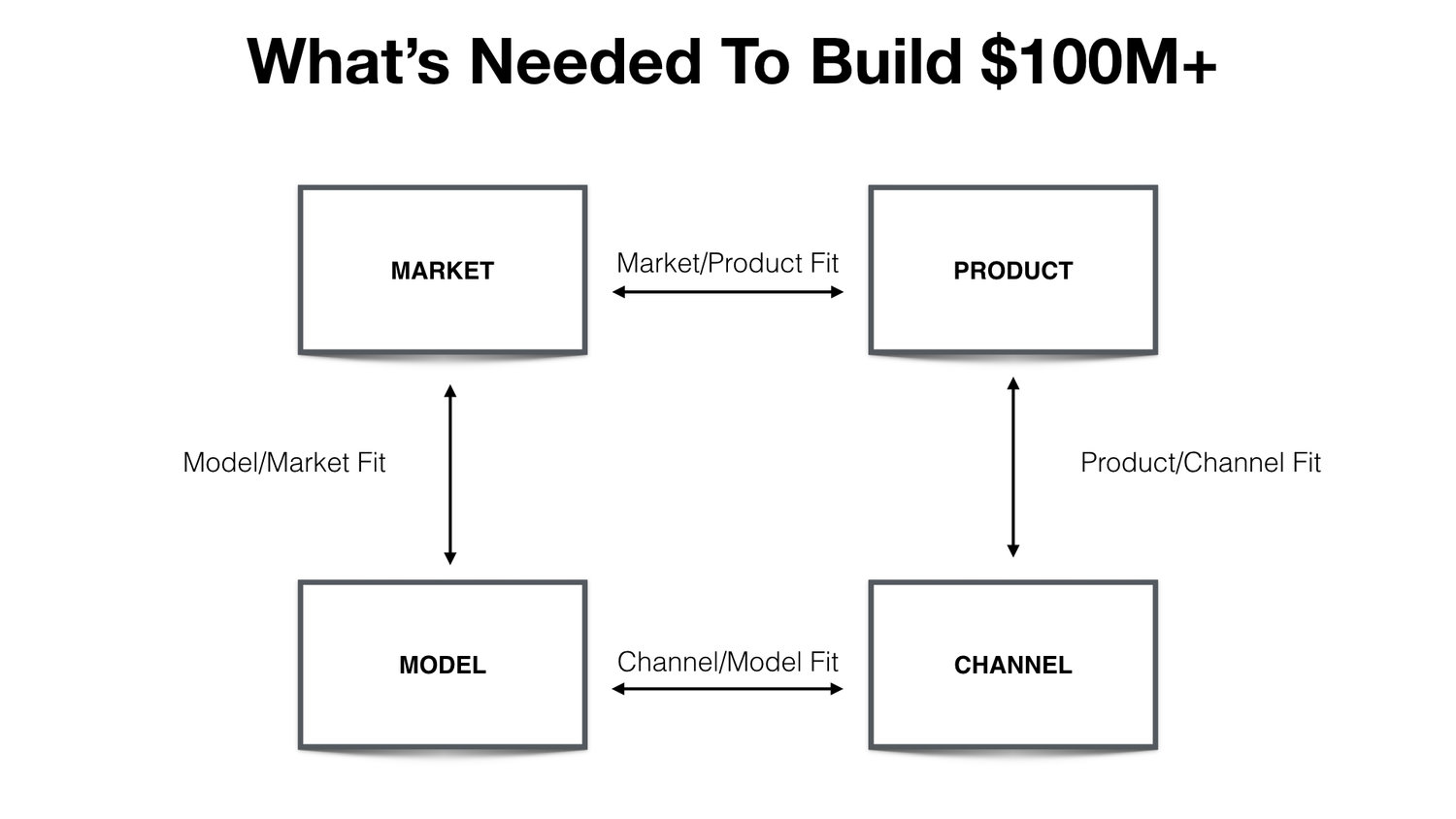
Why Product Market Fit Isn't Enough — Brian Balfour
I’ve been lucky to have been part of building, advising, or investing in 40+ tech companies in the past 10 years. Some $100M+ wins. Some, complete losses. Most end up in the middle. One of my main observations is that there are certain companies where growth seems to come easily, like gui
Complexity and biases
We examine experimentally how complexity affects decision-making, when individuals choose among different products with varying benefits and costs. We find that complexity in costs leads to choosing a high-benefit product, with high costs and overall lower payoffs. In contrast, when complexity is in the benefits of the product, we cannot reject the hypothesis of random mistakes. We also examine the role of heterogeneous complexity. We find that individuals still (mistakenly) choose the high-benefit but costly product, even if cheaper and simple products are available. Our results suggest that salience is a main driver of choices under different forms of complexity.

Not all good products make good businesses - The Intercom Blog
It's easy to assume that solving a real problem with a good product magically creates a successful software business. Sadly that’s never guaranteed.

Work Smarter: The Cocktail of Simplicity, Manageable Adversity, and Muntzing
Sometimes deliberate roadblocks can be a good thing to get more efficient and effective products and workflow. Here's how.

When your project isn’t making money
It might be that you’re losing money on every sale (Which means that each and every item you sell, every service you perform, costs you money. Bigger won’t make you better…) Becau…


Why We Can't Have Nice Software - Andrew Kelley
The problem with software is that it's too powerful. It creates so much wealth so fast that it's virtually impossible to not distribute it.
Good Store
Founded by John and Hank Green with the belief that humanity can be good news. At Good Store, we’re searching the world for the best versions of the products that you use daily, like socks, coffee, or soap, and then we’re giving 100% of profits to charity.

Buy wisely
Whenever I buy things I try to prioritize cost per use. Sometimes I consider other priorities such as cost per smile, cost per thrill, cost per externality, ...
Why Your Product Is So Hard to Explain
Stacking features makes products harder to market, less competitive, and easier to walk away from.

We've located the reality distortion field, and it's in the consumer's brain
For some, learning about a product shatters their illusion of understanding.

The Tyranny of the Marginal User
why consumer software gets worse, not better, over time


What the hell is going on with Apple?
The commonly held belief is that Apple charges ridiculously high prices for its products because they’re well-built, beautiful objects that the company generally stands behind. As founder Steve Jobs loved to say, Apple’s products “just work.”

In-Store Spending Dynamics: How Budgets Invert Relative-Spending Patterns
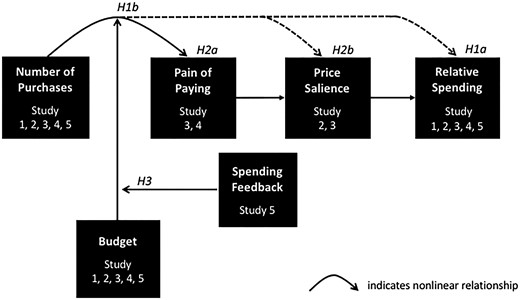
Abstract The authors conduct four controlled lab experiments and one field study in a brick-and-mortar grocery store to demonstrate that relative spending—the price of the purchased item relative to the mean price of the product category—evolves nonlinearly and distinctly for budget and nonbudget shoppers. While the relative spending of budget shoppers evolves in a concave manner, the relative spending of nonbudget shoppers evolves inversely in a convex manner. Thus, budget (nonbudget) shoppers spend relatively more (less) in the middle than at the beginning and toward the end of their shopping trip. Mediation analyses confirm that the pain of paying experienced while shopping drives price salience, which then drives relative spending. Moreover, manipulating shoppers’ pain of paying, by altering the opportunity costs associated with their spending or drawing shoppers’ attention to their spending via real-time spending feedback, is shown to influence these spending patterns. The research offers theoretical contributions to the in-store decision-making, budgeting, and pain-of-paying literature and has important implications for marketing and promotion strategies in retail and mobile technology environments, as it suggests when a shopper may be more sensitive to price-related factors.