

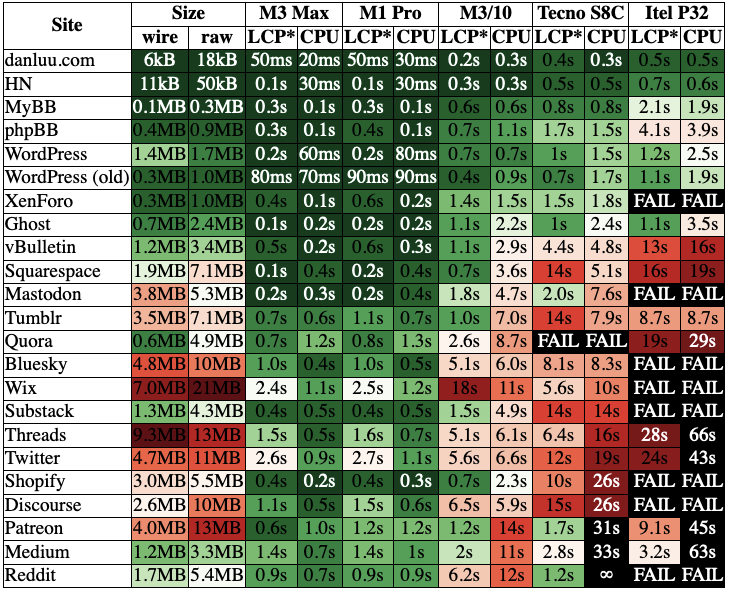
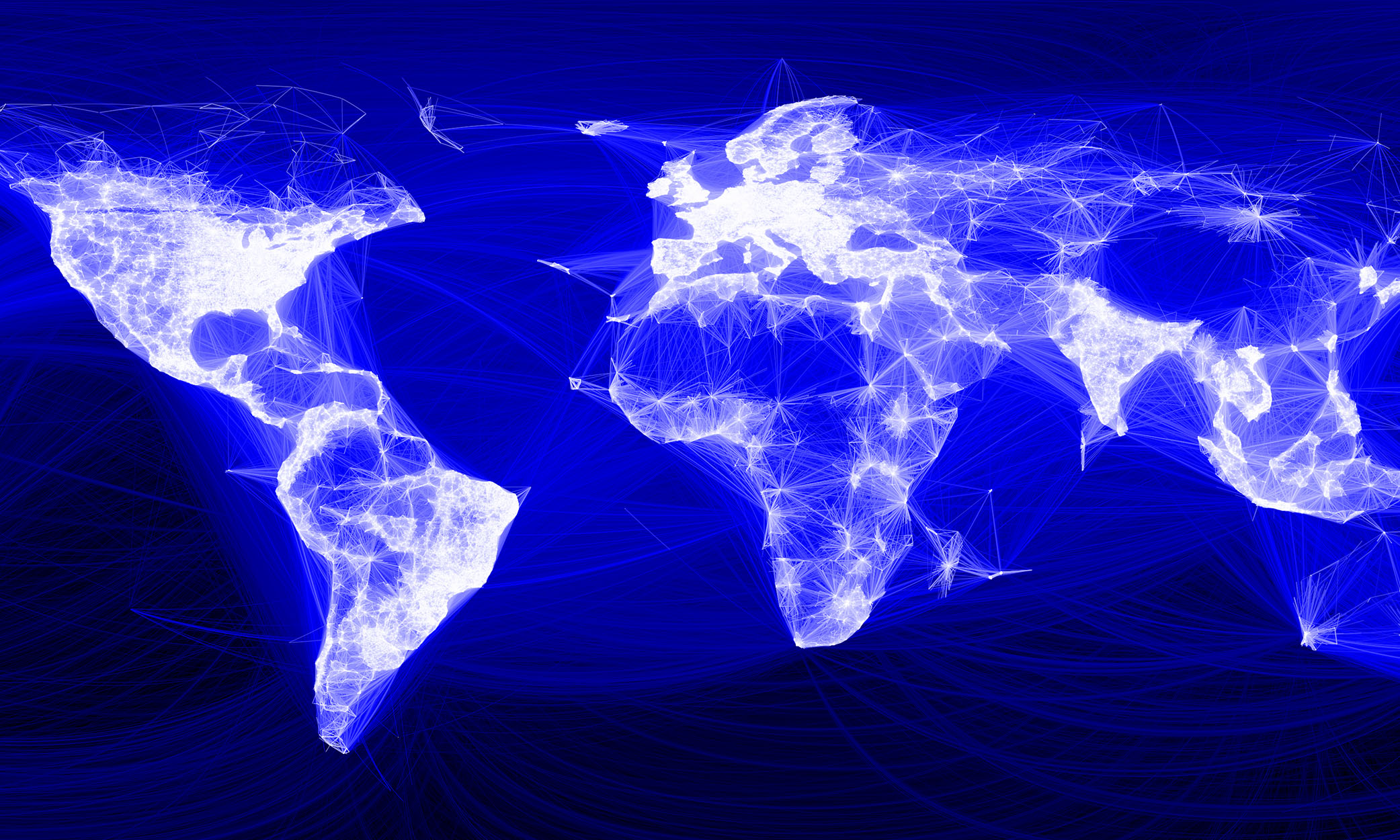
In 2017, we looked at how web bloat affects users with slow connections. Even in the U.S., many users didn't have broadband speeds, making much of the web difficult to use. It's still the case that many users don't have broadband speeds, both inside and outside of the U.S. and that much of the modern web isn't usable for people with slow internet, but the exponential increase in bandwidth (Nielsen suggests this is 50% per year for high-end connections) has outpaced web bloat for typical sites, making this less of a problem than it was in 2017, although it's still a serious problem for people with poor connections.
Should we design for iffy internet?
Around 97% of US households have internet access, but bandwidth and latency are likely worse than you expect.
Web bloat isn’t a knowledge problem | Christian Heilmann
There is a consensus among all browser makers and lovers of the web: the current state of the web is a mess. The average web page is 2.4 megabyte big and has over 200 requests.
How One 1990s Browser Decision Created Big Tech’s Data Monopolies (And How We Might Finally Fix It)
There’s a fundamental architectural flaw in how the internet works that most people have never heard of, but it explains nearly every frustration you have with modern technology. Why your pho…

The Last Mile
Living without the Internet is a reality for the vast majority of people on the Earth. With Facebook and Google treating connection speeds and bandwidth like disposable cutlery, you can hardly guess why they’re having such a terrible time continuing to grow their userbase around the world. The problem is the infrastructure isn’t available. The “last mile,” as it is often referred to, is sub-par in most parts of the world.
Why Internet Infrastructure Decisions Rarely Stay Localized - Internet Society
Even narrow policy choices can have ripple effects that shape what people can access, how information moves, and who can participate online.

How Verizon and a BGP Optimizer Knocked Large Parts of the Internet Offline Today
Today at 10:30UTC, the Internet had a small heart attack. A small company in Northern Pennsylvania became a preferred path of many Internet routes through Verizon (AS701), a major Internet transit provider.

High altitude connectivity: The next chapter
Today nearly 4 billion people globally do not have access to the Internet. It’s why Facebook, along with many other companies and governments, is investing heavily to address the three key ba…
Funding The Web: From Cartel to Covenant
The Web is slow-motion collapsing for multiple reasons, but at the heart of it all is a little known system: the Search/Browser Levy. Let's fix it!
Funding The Web: A Wise Choice
The Web is slow-motion collapsing for multiple reasons, but at the heart of it all is a little known system: the Search/Browser Levy. Let's fix it!
The case for slowing everything down a bit
A top tech exec thinks we need to slow down the internet a bit. He’s right.

The year we wanted the internet to be smaller
Why tiny, weird online communities made a comeback in 2017

Rek Bell — leaner web
Parkinson's Law of the Internet states that whatever the bandwidth, applications will always evolve to consume more than is currently available.
How Google’s AMP project speeds up the Web—by sandblasting HTML
Like Facebook Instant Articles and Apple News, Google takes aim at "the Web is too slow."

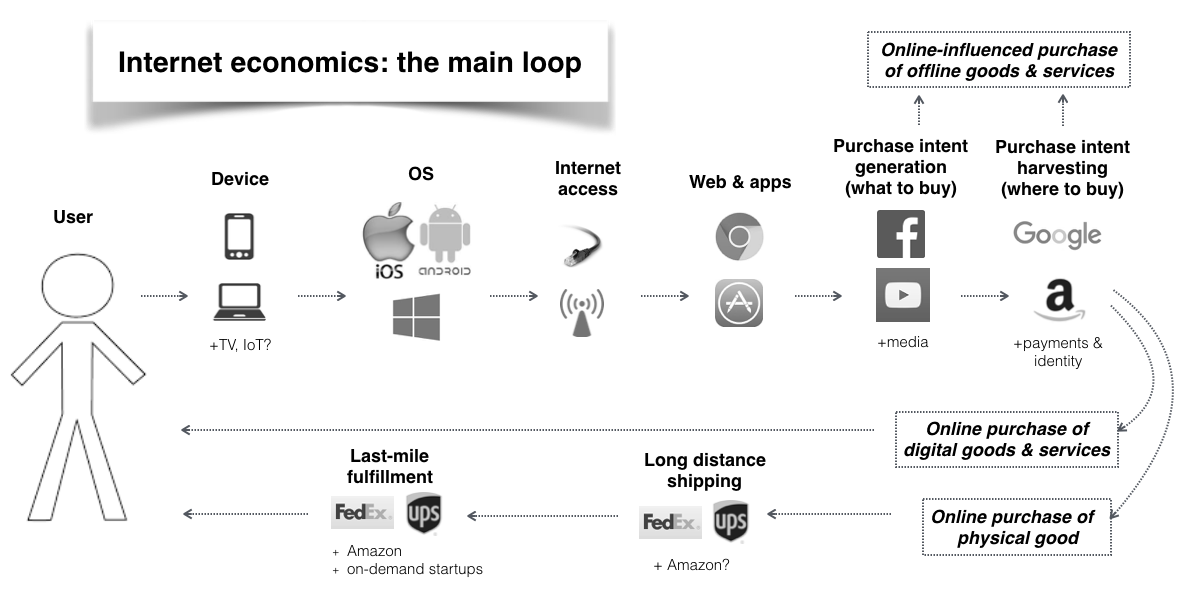
The Internet Economy
We are living in an era of bundling. The big five consumer tech companies — Google, Apple, Facebook, Amazon, and Microsoft — have moved far…
The Zero Click Internet
The internet is undergoing the biggest change since its inception. It's huge. And there is no going back. The web is changing into the Zero Click Internet,...
