


A grading policy to restore your learning and our relationship in the age of Generative AI.
Assigning AI: Seven Ways of Using AI in Class
Also prompts! And things to watch out for!

AI in university assessment: do grades themselves have to go? - Analogue Resistance
Since I started teaching at the University of Amsterdam, roughly 20 years ago, assessment has become more and more schematic. Rules and regulations have prol…


AI Literacy Across the Curriculum
As you have no doubt seen, AI is becoming ubiquitous in our lives and in the technologies we use every day. Generative AI is no longer an experimental tool, but a deployed technology in many of the…

Learning in the Open: What AI Is (and Isn’t) Changing
Khan Academy shares what’s working with AI tutoring, what isn’t, and what we’ve learned from Khanmigo to better support student learning.
Mayor Mamdani and Chancellor Samuels Put Students First with Nation’s Broadest Generative AI Moratorium in Schools
NEW YORK – Mayor Zohran Kwame Mamdani and Schools Chancellor Kamar H. Samuels today announced a moratorium on student-facing generative Artificial Intelligence (AI) use in schools, alongside a new screen time policy, a decision that will impact nearly 600,000 public school students, or two-thirds of the system’s total enrollment. The policy establishes a one-year moratorium, effective in the 2026-2027 school year, on student-facing generative AI for children in 2-K through 8th grade. It also introduces twice-yearly AI critical thinking modules for high schoolers, limited AI pilots for a small number of high school classrooms and age-appropriate screen time restrictions.

Experimental Evidence on the Learning Impact of Generative AI
We study whether access to off-the-shelf generative AI changes how much students learn in a timed assignment. In a proctored, in-person randomized experiment, undergraduates study an unfamiliar topic and write an essay with or without AI, then complete unaided assessments immediately and one week later. AI access raises test scores, and a smaller gain persists a week later. Gains remain for students who use AI as a tutor ("augmentation") and fade for students who have AI write for them ("automation"). We document two mechanisms: students shift time from writing toward reading and searching for information, and report greater learning enjoyment.

What Parents Need to Know About AI in the Classroom | Stanford HAI
From immersive learning and personalized tutors to lesson plans and grading, AI is everywhere in K-12 education.

Ars Technica's policy on generative AI
How Ars Technica uses, and doesn't use, generative AI.
A new direction for students in an AI world: Prosper, prepare, protect | Brookings
This report explores the potential risks generative AI poses to students and outlines what we can do now to minimize them.

I Love Generative AI and Hate the Companies Building It
Update 6/29/26: The Last Update

13 ways you’re using AI in your daily life
A few ways AI helps you stay productive, get around and do some fun stuff, too.

Study explores how AI use affects performance on math and reasoning tasks - Berkeley News
A UC Berkeley researcher co-authored a study that raises profound questions about how we interact with artificial intelligence in education — and daily life.

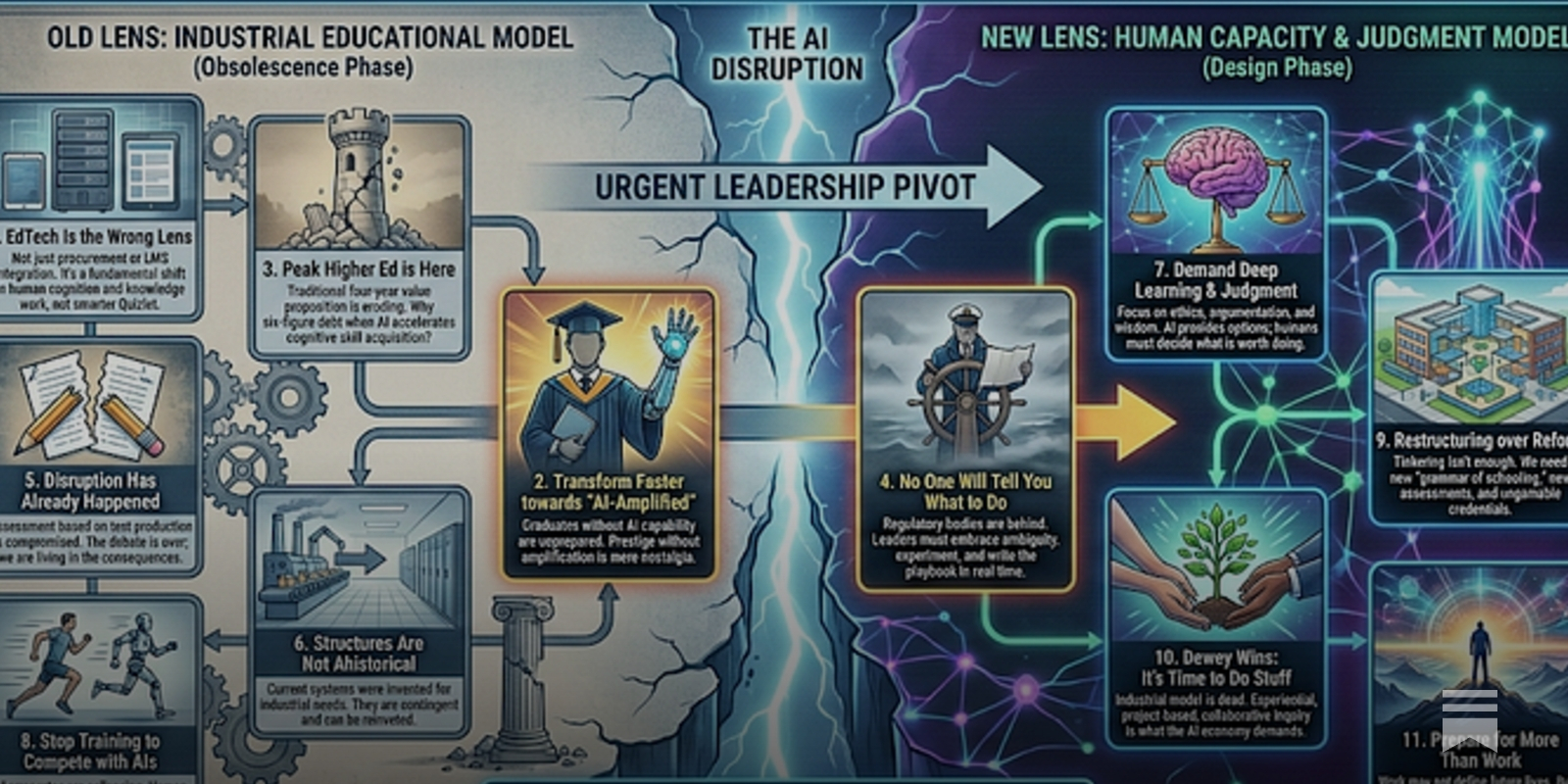
Eleven Things I Wish Educators Understood About AI and What it Means for "Education"
Thank you to all the supporters of this Substack.
Kevin A. Bryan - Eight Rules for Teaching in AI World
Eight rules for how university teaching should change because of AI.