


Link to: https://twitter.com/darrenrovell/status/1673659149417078788
How Your Cheese-Powered Baby Trounces AI
An O.G. AI Researcher on How Being Social and Cultural Makes us Intelligent--and Whether Machines Can Ever Learn Empathy
John Tasioulas on Twitter / X
Intelligence is highly pluralistic. People can have high levels of it in one domain (maths, abstract reasoning) while being deficient in other domains (ethics, social interaction). When one kind of intelligence gets heavily socially valorised among all others, it encourages the…— John Tasioulas (@JTasioulas) October 6, 2026
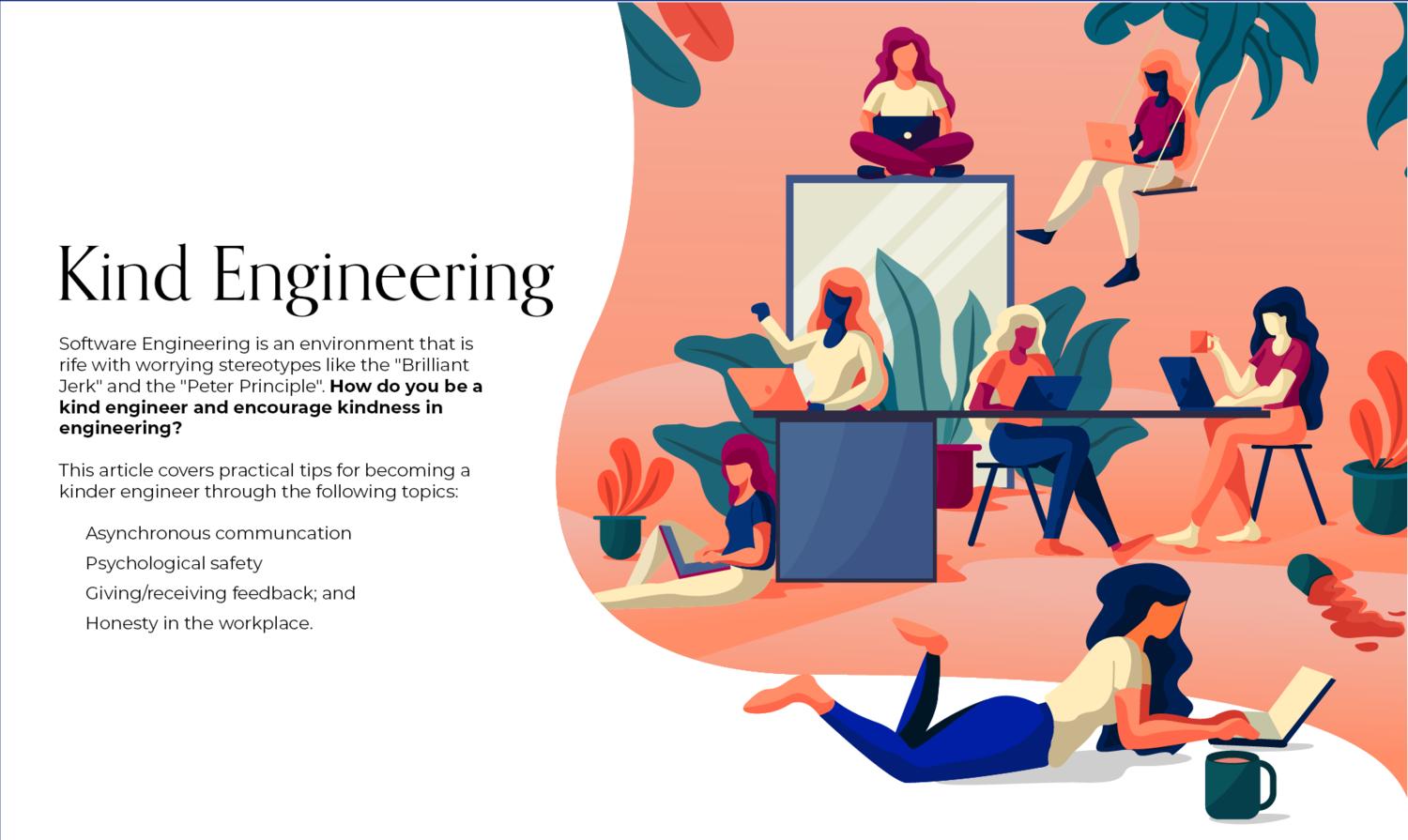
Kind Engineering: How To Engineer Kindness
How do you avoid becoming a Brilliant Jerk? Read this article to learn practical tips on communication, honesty and psychological safety.
Oliver Scott Curry on Twitter / X
Moral "virtues are stable character traits that dispose individuals to perform cooperative actions in response to recurrent social…problems. Different societies at different times face different problems of cooperation, which leads to different virtues" https://t.co/rkOidRMI8h— Oliver Scott Curry (@Oliver_S_Curry) November 4, 2026
Sᴜɴʀɪsᴇ Oᴀᴛʜ 十 Tʜᴇ Sʏʟʟᴀʙᴜꜱ (ORI) - CC0 on Twitter / X
The types of people who find earnest attempts at kindness strange or annoying are not really the target audience for kindness, anyway :^) I like to think that being kind is a form of judgment in itself.— Sᴜɴʀɪsᴇ Oᴀᴛʜ 十 Tʜᴇ Sʏʟʟᴀʙᴜꜱ (ORI) - CC0 (@sunriseoath) October 24, 2026
Socially Minded Intelligence: How Individuals, Groups, and Artificial Intelligence Can Make Each Other Smarter (or Not)
A core part of human intelligence is the ability to work flexibly with others to achieve goals. The incorporation of artificial agents into human spaces is making increasing demands on artificial intelligence (AI) to demonstrate and facilitate this ability. However, this kind of flexibility is not well understood because existing approaches to intelligence typically construe this either as an individual-difference trait or as a property of groups. We argue that by focusing either on individual or collective intelligence without considering their dynamic interaction, existing conceptualizations of intelligence limit the potential of people and AI systems. To address this impasse, we propose a new kind of intelligence, 'socially minded intelligence', that can be applied to both individuals and collectives. We outline how socially minded intelligence might be measured and cultivated within people, how it might be modelled in AI agents, and how it might be applied to other intelligent systems.

Learning to be kind to yourself has remarkable benefits | Aeon Essays
Learning to be kind to yourself when you (inevitably) make mistakes could have a remarkable effect on your happiness

Anna Ciaunica PhD @annaciaunica.bsky.social on Twitter / X
Paper accepted in Philosophical Transactions B! Co-authored with Shaun Gallagher We argue that interactions with artificial agents are always bidirectional and as such they deeply transform who we are as humans Hence we need to carefully assess WHO is behind AI and their… pic.twitter.com/PAdkkOVXIO— Anna Ciaunica PhD @annaciaunica.bsky.social (@AnnaCiaunica) November 9, 2026

[Keynote 05] Unlocking Social Intelligence in AI Agents
Luke Drago on Twitter / X
People outside SF should know that a small group of people with real influence in AI are trying to *intentionally disempower humanity*. Glad Ruxandra wrote it up. https://t.co/csGDhLwzzy— Luke Drago (@luke_drago_) November 12, 2026
It’s Not Enough to Be Right. You Also Have to Be Kind.
Takedowns and clever quips are easy, but empathy and persuasion are better
Superintelligence: The Idea That Eats Smart People
This is the text version of a talk I gave on October 29, 2016, at Web Camp Zagreb [video] (45 mins)
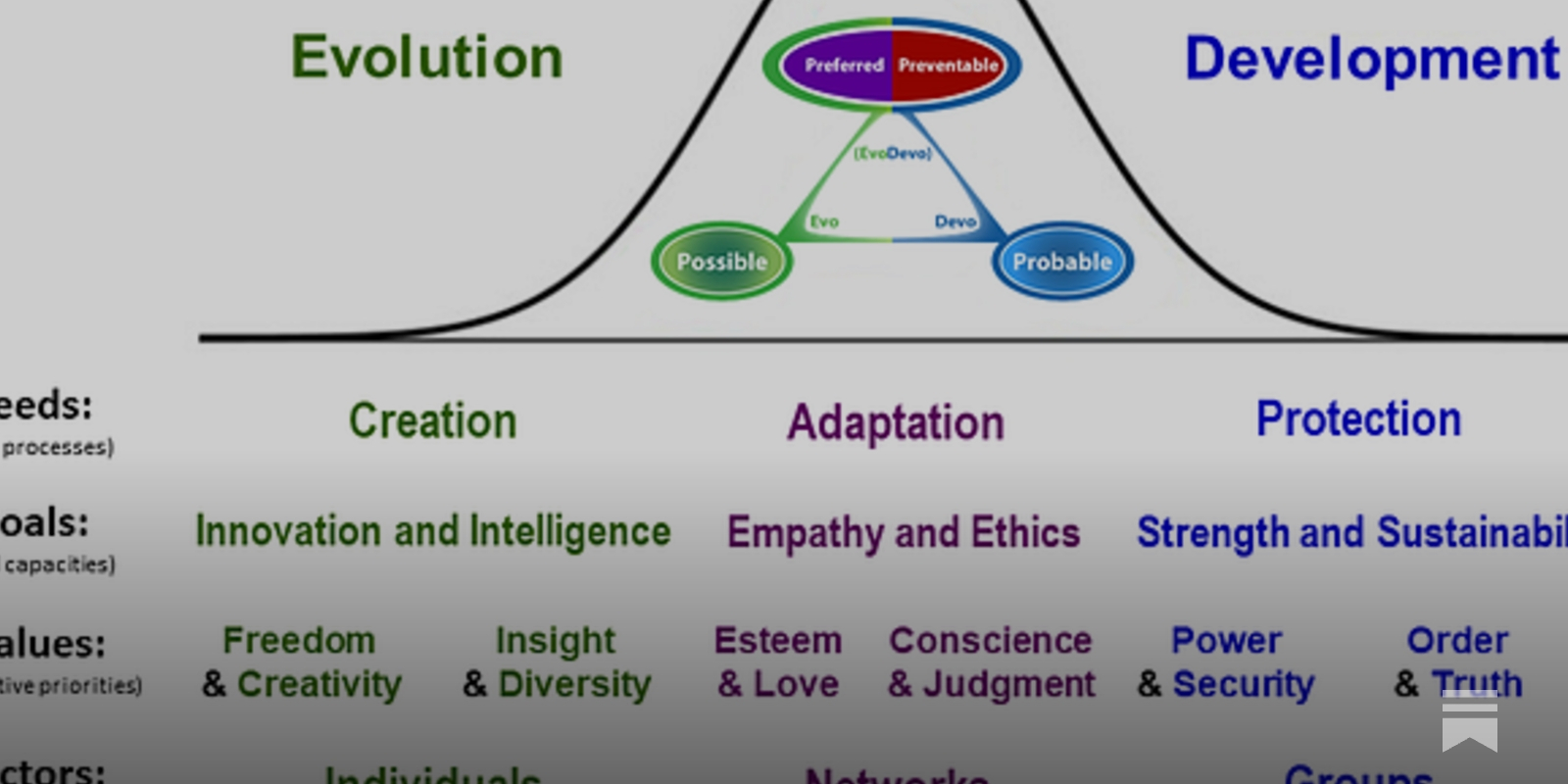
Natural Ethics: Empathic and Social Intelligence
Building Ethical and Empathic AIs, PAIs, and Human-AI Teams. - Part 3 of an Introductory Series on Neuro- and Bio-Inspired AI Strategy
Make ‘em dumb, sell ‘em smarts
Sam Altman wants intelligence to be a utility that you pay him for

Psychologists Find that Nice People Are More Likely to Hurt You
People who are agreeable are also more likely to make destructive choices, if they think doing so will help them conform to social expectations. That's

Very clever. Reminds me of HyDE arxiv.org/abs/2212.10496

Precise Zero-Shot Dense Retrieval without Relevance Labels
arxiv.org
Doug Turnbull
This pattern of asking a cheap LLM to generate hypothetical / fake classifications that we then later resolve to real ones is one of the dominant way I'm doing query understanding these days softwaredoug.com/blog/2026/08/10/hypothetical-…
