


Virtual worlds.
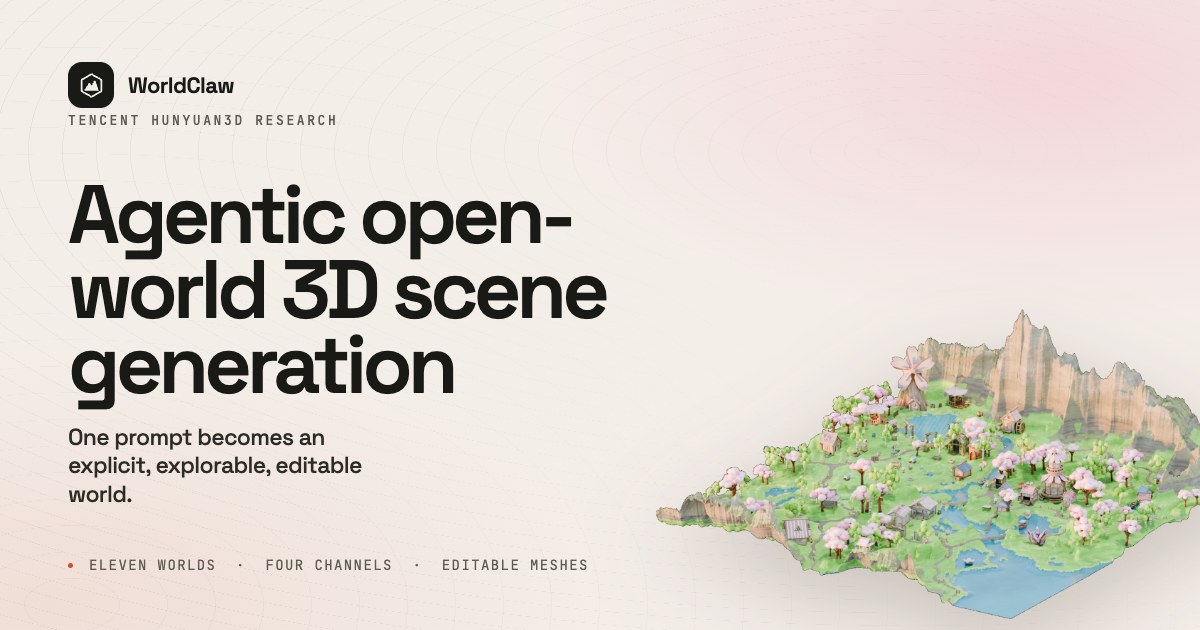
WorldClaw: Agentic 3D Open-World Generation at Scale
From one open-ended prompt to an explicit, explorable, and editable 3D world.
Spatial - Create Immersive UGC, Virtual Classrooms, Experiential Marketing
Join 2M+ creators & brands building and publishing social games, brand experiences, virtual learning, galleries, onboarding, & training. No-code + Unity-based tools. Web (No Download Required), Mobile, VR.

Screen As Room: An Architectural Perspective on User Interfaces — Christoph Locher · Interaction Designer
With the use of video games as social spaces being observed for several years and the increased focus put on virtual social spaces due to the scarceness of physical social spaces in the last months, the concept of “spatial interfaces” is once again at the center of discussions. I want to add an alternative perspective to this, looking at the properties of physical spaces as metaphors, rather than models, for interfaces and exploring seven of them in more detail.
Screen As Room: An Architectural Perspective on User Interfaces — Christoph Locher · Interaction Designer
With the use of video games as social spaces being observed for several years and the increased focus put on virtual social spaces due to the scarceness of physical social spaces in the last months, the concept of “spatial interfaces” is once again at the center of discussions. I want to add an alternative perspective to this, looking at the properties of physical spaces as metaphors, rather than models, for interfaces and exploring seven of them in more detail.
Unity Technologies Aims to Bring Video Game Tools Into the Real World
The video game software leader is pushing to sell tools for making virtual worlds to marketers, architects and car makers

Urp: a luminous-tangible workbench for urban planning and design
In recent years, virtual reality technology has gradually attracted widespread attention from the society, because virtual reality technology could produce many scenes that humans cannot experience personally, such as diving into the deep sea or into ...

The Glimmer — thefugue.space
A brief history of my attempts to bring Spatial Computing to the wider audience..

ROBLOX is a MUD: The history of virtual worlds, MUDs & MMORPGs
A general timeline of virtual worlds, their influence, the key names and where you can get more info.
Radial
Coordinate humans and coding agents on software goals. Every unit of agent work is requested by a human and lands as a signed, reviewable artifact in its author’s own atproto repo — no central server.

After Cybernetics: Treatise for Future Urbanisms — Against Catastrophe
Since 2014, Zaha Hadid Virtual Reality Group, part of Hadid Partners Architecture Firm, has had a focus on cybernetic architecture. This architecture involves what they label the ‘metaverse’. The metaverse integrates physical with digital worlds seamlessly. In industry parlance it is a world populated by what are euphemistically titled ‘cyber-physical’ assets.

Software with a Point of View
Software with a Point of View - Chinatown.js talk August 14 2025
Why Games? - Pardy Time DevLog
Summer is here - why not let your @rpg.actor enjoy the sun. tilemap.world is a 2d tileset and tilemap editor inspired by Tiled and LDtk It's still very much a work in progress, and while you can walk around the sandbox mode I've got some bigger plans for these maps.
Spatial Canvases: Towards an Integration Domain for HCI, with Orion Reed · Zoom · Luma
Orion Reed originally presented this talk at Causal Islands LA. We're hosting it virtually for the TFT Rocks community so that we can get a recording, and have…


World Emulation via Neural Network
I turned a forest trail near my apartment into a playable neural world. You can explore that world in your web browser by clicking right here: