


A new way of thinking about data science and data ethics that is informed by the ideas of intersectional feminism.
Data Feminism
A new way of thinking about data science and data ethics that is informed by the ideas of intersectional feminism.Today, data science is a form of power. I
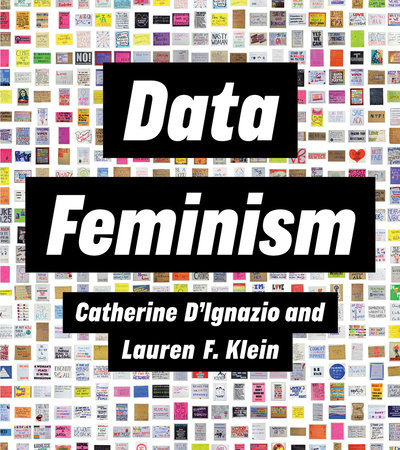
Data Feminism
Today, data science is a form of power. It has been used to expose injustice, improve health outcomes, and topple governments. But it has also been used to d...

Feminist Data Manifest-No
1. We refuse to operate under the assumption that risk and harm associated with data practices can be bounded to mean the same thing for everyone, everywhere, at every time. We commit to acknowledging how historical and systemic patterns of violence and exploitation produce differential vulnerabilities for communities.
MyData
The human-centric approach to data is aimed at a fair, sustainable, and prosperous digital society. In such a society, people get value from their data and set the agenda on how it is used. And for organisations, the ethical use of data is always the most attractive option.

Living in Data: A Citizen's Guide to a Better Information Future (Paperback)
Jer Thorp’s analysis of the word “data” in 10,325 New York Times stories written between 1984 and 2018 shows a distinct trend: among the words most closely associated with “data,” we find not only its classic companions “information” and “digital,” but also a variety of new neighbors—from “scandal” and “misinformation” to “ethics,” “friends,” and “play.”To live in data in the twenty-first century

Data Refusal from Below: A Framework for Understanding, Evaluating, and Envisioning Refusal as Design
Amidst calls for public accountability over large data-driven systems, feminist and indigenous scholars have developed refusal as a practice that challenges the authority of data collectors. However, because data affect so many aspects of daily life, it can be hard to see seemingly different refusal strategies as part of the same repertoire. Furthermore, conversations about refusal often happen from the standpoint of designers and policymakers rather than the people and communities most affected by data collection. In this article, we introduce a framework for data refusal from below —writing from the standpoint of people who refuse, rather than the institutions that seek their compliance. Because refusers work to reshape socio-technical systems, we argue that refusal is an act of design and that design-based frameworks and methods can contribute to refusal. We characterize refusal strategies across four constituent facets common to all refusal, whatever strategies are used: autonomy , or how refusal accounts for individual and collective interests; time , or whether refusal reacts to past harm or proactively prevents future harm; power , or the extent to which refusal makes change possible; and cost , or whether or not refusal can reduce or redistribute penalties experienced by refusers. We illustrate each facet by drawing on cases of people and collectives that have refused data systems. Together, the four facets of our framework are designed to help scholars and activists describe, evaluate, and imagine new forms of refusal.

We Need A New Kind Of Data Rights
Associational data rights would empower communities to reclaim power from Big Tech

Invisible Women: Exposing Data Bias in a World Designed for Men
Invisible Women: Exposing Data Bias in a World Designed for Men is a 2019 book by British feminist author Caroline Criado Perez. The book describes the adverse effects on women caused by gender bias in big data collection.

Practical Data Ethics
Free, online course from fast.ai and USF Data Institute covering disinformation, bias & fairness, ethical foundations, practical tools, privacy & surveillance, the silicon valley ecosystem, and algorithmic colonialism
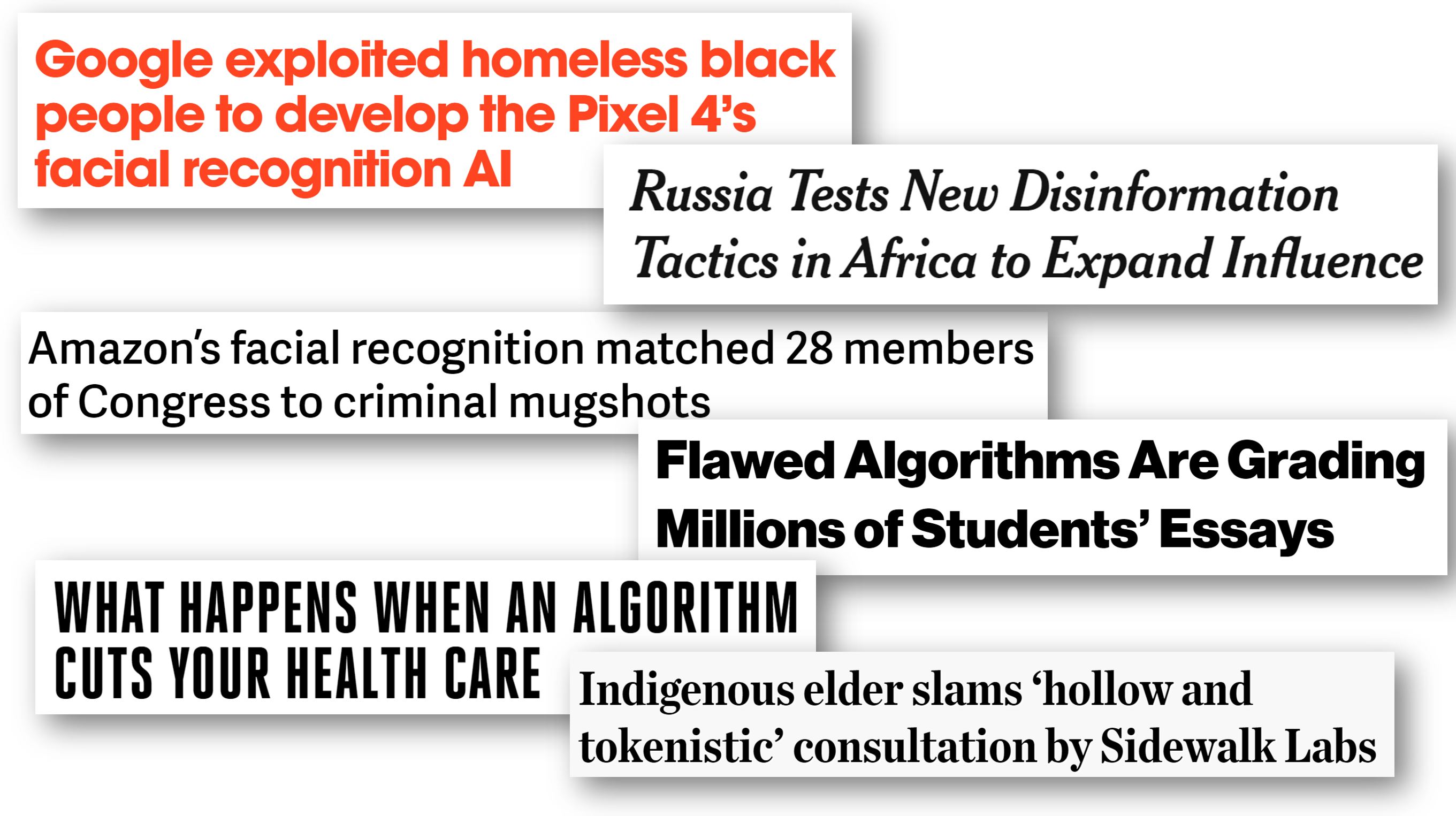
Data Cívica | Organización feminista que utiliza los datos y la tecnología como herramientas para la defensa de los derechos humanos y la justicia en México.
Más datos para más personas

Governing by dismantling: tech oligarchy and the stifling of public data infrastructure
Published in Science as Culture (Ahead of Print, 2026)

Data Leverage: A Framework for Empowering the Public in its Relationship with Technology Companies
Many powerful computing technologies rely on implicit and explicit data contributions from the public. In this paper, we synthesize emerging research that seeks to better understand and help people action this data leverage. Drawing on prior work in areas including machine learning, human-computer interaction, and fairness and accountability in computing, we present a framework for understanding data leverage that highlights new opportunities to change technology company behavior related to privacy, economic inequality, content moderation and other areas of societal concern.
Linked Data is a Political Agenda
Should We Treat Data as Labor? Moving Beyond “Free”
Should We Treat Data as Labor? Moving beyond "Free" by Imanol Arrieta-Ibarra, Leonard Goff, Diego Jiménez-Hernández, Jaron Lanier and E. Glen Weyl. Published in volume 108, pages 38-42 of AEA Papers and Proceedings, May 2018, Abstract: In the digital economy, user data is typically treated as capi...
Accelerating the Advancement of Data Science Education
We outline a synthesis of strategies created in collaboration with 35+ colleges and universities on how to advance undergraduate data science education on a national scale. The four core pillars of this strategy include the integration of data science education across all domains, establishing adoptable and scalable cyberinfrastructure, applying data science to non-traditional domains, and incorporating ethical content into data science curricula.
Movement Data Science: Practices for Working in Solidarity with Social Justice Efforts
Although many data scientists are eager to promote social justice, their efforts often fall short, and in some cases even exacerbate existing injustices. This gap between intentions and impacts follows from issues in how data scientists conceptualize their role in social justice efforts: they typically act as technicians, aiming to develop technical tools that will produce social justice. This default role generally results in depoliticized techno-fixes that fail to produce substantive changes. In this paper, we contribute “movement data science” as a framework to guide data scientists in taking on more productive and equitable roles in social justice efforts. Our framework is inspired by movement lawyering, a practice used by lawyers to situate themselves in grassroots social movements. Movement data science suggests that data scientists should ground their efforts to advance justice in sustained and solidaristic relationships with social movements. We contribute a process with four essential practices to help data scientists build these relationships and identify roles to play within specific social justice efforts. Movement data science does not provide a simple blueprint for data scientists to follow, but it can help them support social justice movements in substantive ways that go beyond attempting to solve injustices with technical tools.
