


The hypermedia framework.
Hypermedia Systems
The revolutionary ideas that empowered the Web. A simpler approach to building applications on the Web and beyond with htmx and Hyperview. Enhancing web applications without using SPA frameworks.
Put State in the Right Place - Delaney Gillilan | SSW 2026
MICROCOSM: An Open Hypermedia Environment for Information Integration.
This report examines open hypermedia systems, and argues that such systems provide users with richer and more diverse ways to access and integrate information from large and dynamic data sets in a distributed, heterogeneous environment. In particular, the enhanced Microcosm model for open hypermedia is examined, and the ways in which it provides such an environment are discussed. The paper continues by investigating the advantages and the short comings of this model and identifies areas in which further work must be completed before such systems can become widely adopted, in particular the granularity of link anchors, editing, and version control. Possible solutions to these problems are presented and discussed.
WDC - RDFa, Microdata, and Microformat Data Sets
More and more websites have started to embed structured data describing products, people, organizations, places, and events into their HTML pages using markup standards such as Microdata, JSON-LD, RDFa, and Microformats. The Web Data Commons project extracts this data from several billion web pages. So far the project provides 12 different data set releases extracted from the Common Crawls 2010 to 2023. The project provides the extracted data for download and publishes statistics about the deployment of the different formats.
Hypermedia
Welcome to the Hypermedia Protocol: a decentralized publishing and discussion network
Elanis/web-to-desktop-framework-comparison
An objective comparison of multiple frameworks that allow us to "transform" our web apps to desktop applications.
The Tao of Datastar Guide
Datastar is just a tool. The Tao of Datastar, or “the Datastar way” as it is often referred to, is a set of opinions from the core team on how to best use Datastar to build maintainable, scalable, high-performance web apps.
Datastar: Modern web dev, simplified
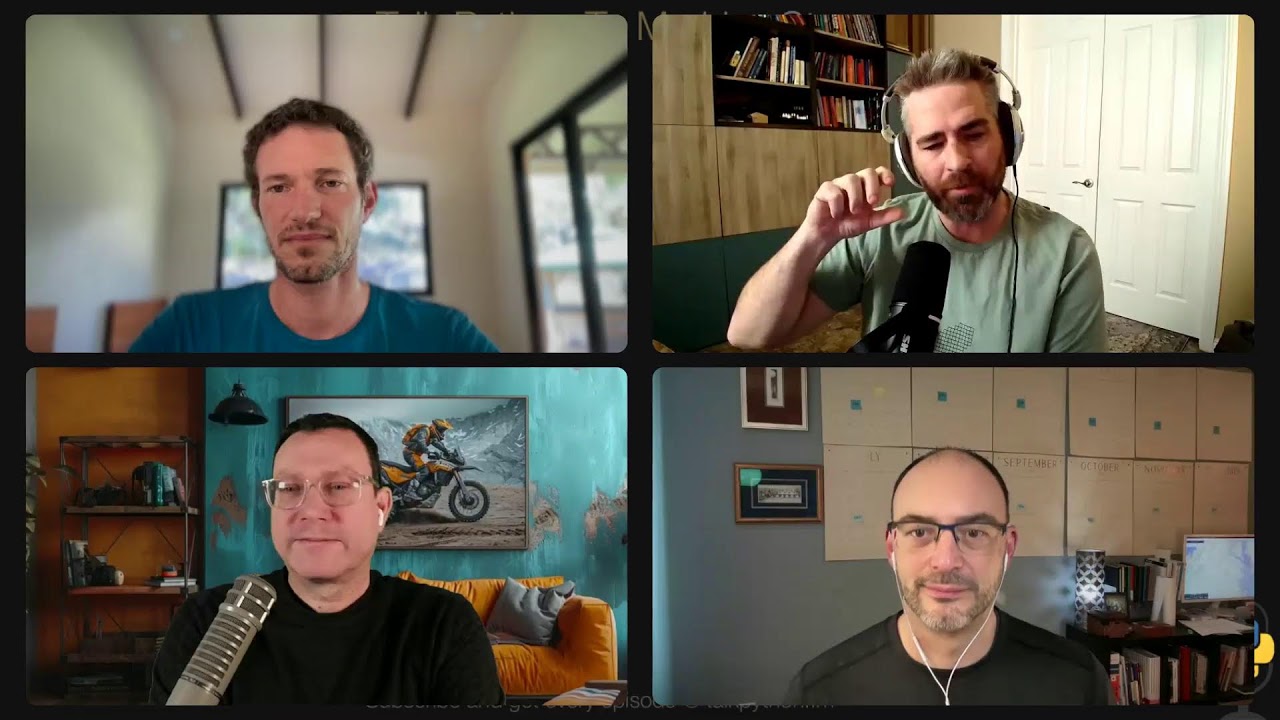
You love building web apps with Python, and HTMX got you excited about the hypermedia approach -- let the server drive the HTML, skip the JavaScript build step, keep things simple. But then you hit that last 10%: You need Alpine.js for interactivity, your state gets out of sync, and suddenly you're juggling two unrelated libraries that weren't designed to work together. What if there was a single 11-kilobyte framework that gave you everything HTMX and Alpine do, and more, with real-time updates, multiplayer collaboration out of the box, and performance so fast you're actually bottlenecked by the monitor's refresh rate? That's Datastar. On this episode, I sit down with its creator Delaney Gillilan, core maintainer Ben Croker, and Datastar convert Chris May to explore how this backend-driven, server-sent-events-first framework is changing the way full-stack developers think about the modern web.
Seed Hypermedia
Publish documents, connect ideas, discuss them in context, and preserve verifiable authorship and collective memory over time.
Elena | Progressive Web Components
Elena is a simple, tiny library for building Progressive Web Components.
Fresh - The simple, approachable, productive web framework.
Fresh features just-in-time edge rendering, island based interactivity, and zero-configuration TypeScript support. Fast to write; fast to run.
Web Platform: What are we working on?
Web Platform What are we working on? Simone Onofri WebEngineHackFest 2025

ViteConf