

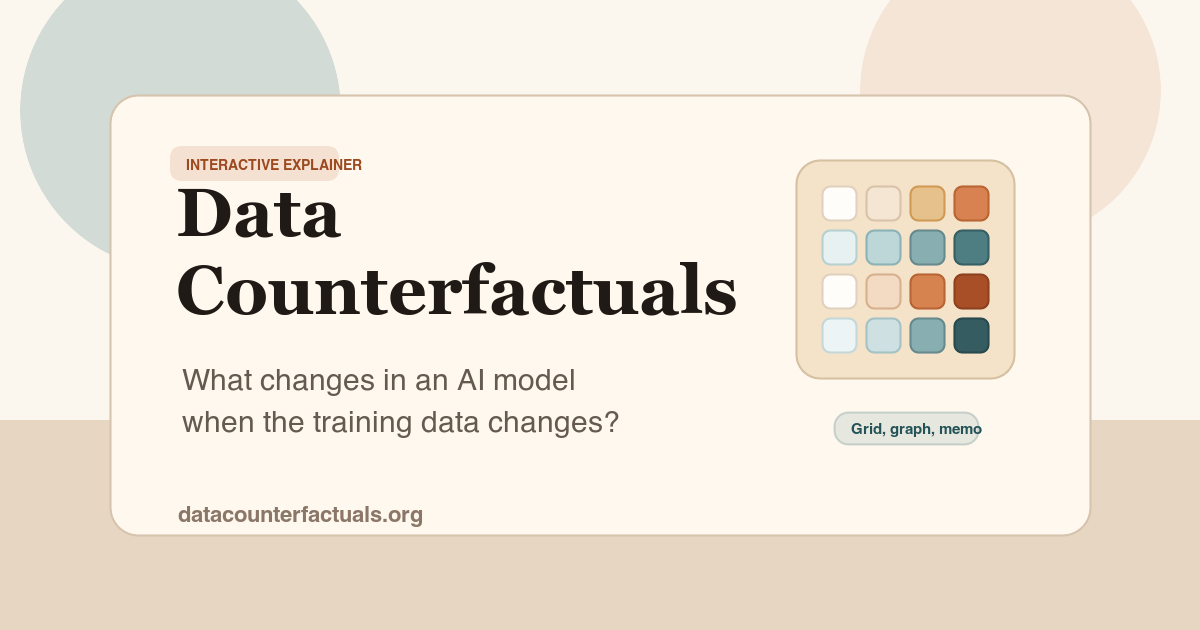
Adjacent research areas and starting papers, curated in Semble and synced into the site.
datasetpapers — a public research experiment
An experimental approach to versioned, forkable, machine-readable analyses. A prototype, not a product or service.
datasetpapers — a public research experiment
An experimental approach to versioned, forkable, machine-readable analyses. A prototype, not a product or service.
Two billion citation links in Crossref help research travel further - Crossref
We’ve recently reached an important milestone for the research nexus: the works in our metadata corpus are now connected with over 2 billion citation links! This is a great opportunity to share a dedicated dataset and discuss why these are important for science.

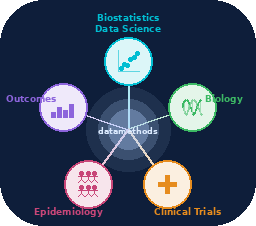
Datamethods Discussion Forum
This is a place for discussions and Q&A about data-related issues and quantitative methods including study design, data analysis, and interpretation.
The Consensus Trap: Dissecting Subjectivity and the “Ground Truth” Illusion in Data Annotation
As part of the Digital Library's transition to Open Access, new features for researchers are available in the Premium Edition. Click here to learn more.


Living in Data: A Citizen's Guide to a Better Information Future (Paperback)
Jer Thorp’s analysis of the word “data” in 10,325 New York Times stories written between 1984 and 2018 shows a distinct trend: among the words most closely associated with “data,” we find not only its classic companions “information” and “digital,” but also a variety of new neighbors—from “scandal” and “misinformation” to “ethics,” “friends,” and “play.”To live in data in the twenty-first century
Information Architecture: The Data Warehouse Foundation
Copyright 1997 CAUSE. From CAUSE/EFFECT Volume 20, Number 2, Summer 1997, pp. 31-33, 38-40, 60. Permission to copy or disseminate all or part of this material is granted provided that the copies are not made or distributed for commercial advantage, the CAUSE copyright and its date appear, and notice is given that copying is by permission of CAUSE, the association for managing and using information resources in higher education. To disseminate otherwise, or to republish, requires written permission. For further information, contact Julia Rudy at CAUSE, 4840 Pearl East Circle, Suite 302E, Boulder, CO 80301 USA; 303-939-0308; e-mail: [email protected]
Tracing LLM Social Reasoning to Pretraining Data: A Provenance Audit for Social Simulation
LLM-based social simulations depend on social-reasoning capabilities whose pretraining evidence is usually opaque. We treat training-data attribution as a provenance audit: for an open model and corpus, which training regions are associated with social reasoning, how do those profiles differ from adjacent capabilities, and does intervention confirm that influential data is load-bearing? We compute gradient-based attribution (TrackStar via Bergson) over a working set from the de-duplicated Dolma3 mix, aggregate influence across WebOrganizer’s 24-format ×24-topic taxonomy (576 bins), and contrast SocialIQA and MMLU Social Sciences against ARC-Challenge and MMLU STEM. In OLMo3-7B, SocialIQA is the profile outlier: its positive attribution is more diffuse and shifted toward interpersonal and narrative regions rather than documentation-heavy ones. Influence-targeted unlearning validates this association most clearly for SocialIQA, while the comparison tasks show weaker, null, or reversed effects. A held-out social-probe suite tests the breadth and limits of the pattern without claiming population-level simulation fidelity.
FAIRdata.ai — FAIR Data Assessment
Assess your research data's FAIRness. Automated pipeline using F-UJI + Claude AI. Free to use.

In an era where research evaluation methods are evolving, the Research Contribution Claim Network makes trustworthy tracking of non-traditional research output easy!
In this whitepaper, Patrick Hochstenbach (Ghent University Library), Thomas van Himbergen (SURF), Laurents Sesink (SURF) and Herbert Van de Sompel (DANS) introduce the...
Networked Research Labs

dc: data provenance and source attribution

Part of the datacounterfactuals.org reading lists. Research on data provenance, dataset documentation, licensing and attribution audits, and technical source-attribution methods for understanding which data sources are available, permitted, or responsible for model behavior.
Semble use for research

exploring ways Semble can be used for research
Improving scientific mentorship with "Open Labs" — science better
Federating friendly spaces - Roomy
modular research multi-agent slack-like environment demo
Buzz! 🐝

Genspace
On open-science research labs on discord, and getting more people.
Widget
Related work | Data Counterfactuals

I’ve got a @semble.so Collection of #AI tools I’ve come across specifically for academic research. Most of these Ive tried and found them…
borgr/ATProto-links-bot

I've been experimenting with a workflow for @semble.so. After I read an article, I send it to Johnson, my PA bot and ask it to use the Sembl…

Check out this thread and contribute your papers if you'd like to share!
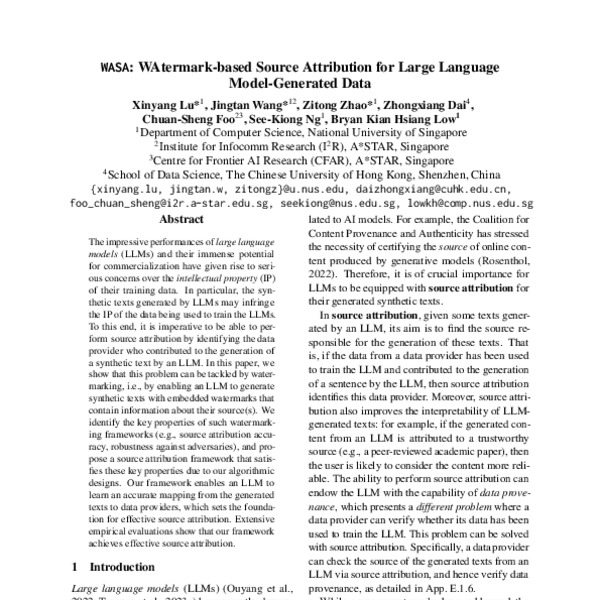
WASA: WAtermark-based Source Attribution for Large Language Model-Generated Data
SILO Language Models: Isolating Legal Risk In a Nonparametric Datastore

Datasheets for Datasets
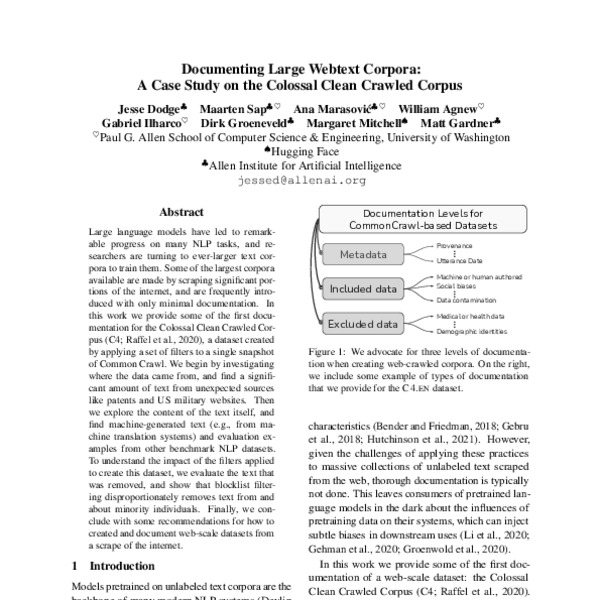
Documenting Large Webtext Corpora: A Case Study on the Colossal Clean Crawled Corpus

A large-scale audit of dataset licensing and attribution in AI