
An aggregated dataset of shootings by agents of Immigration and Customs Enforcement and Customs and Border Protection.
New Study Explores Why US Latinos Join ICE and Border Patrol - Latino Rebels
A new study found that most of the agents joined because they wanted a stable job, and didn’t see many other ways of getting one.
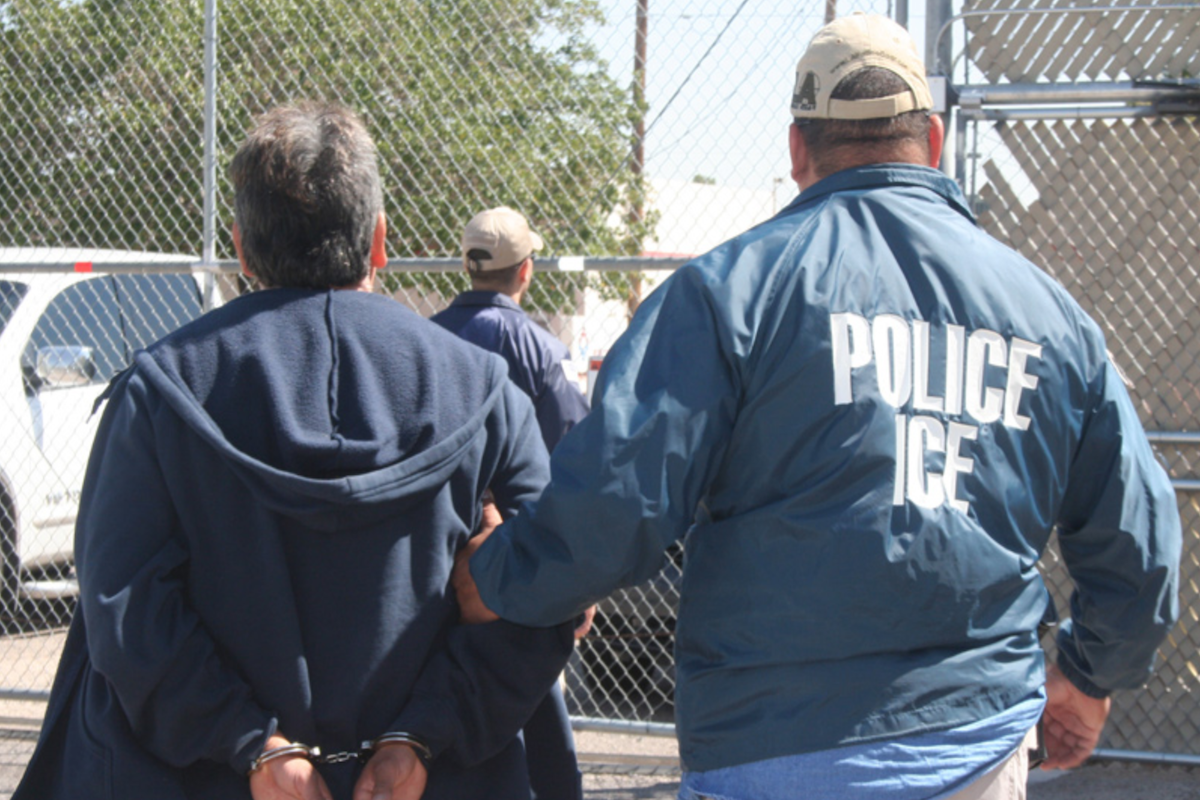
Immigration Enforcement in Los Angeles Under the Second Trump Administration – Deportation Data Project
We rely on our online visual tools to create this report, which means that you can click on any one of the figures and adjust time periods, breakouts, and other aspects to dig into the data in more detail. You can also swap out the Los Angeles ICE area of responsibility for another region to reproduce these figures for your own area of interest.
Immigration and Customs Enforcement – Deportation Data Project
ICE collects data on every person it encounters, arrests, detains, transports via flight, and deports, and every detainer request to local jails.
They Walk Among Us - Criminal ICE and Border Agents — Ohio Immigrant Alliance
The Ohio Immigrant Alliance released “They Walk Among Us: A List of 59 Sexually and Physically Abusive ICE and Border Agents,” an analysis of sexual and violent crimes committed by ICE and Border Patrol agents. It report documents 59 cases of violent and/or sexual criminal acts by DHS employees.

ICE Detention Trends | Vera Institute of Justice
Every year, U.S. Immigration and Customs Enforcement (ICE) subjects hundreds of thousands of people to civil immigration detention—a practice that is unjust, inhumane, and completely unnecessary. It does so under a veil of secrecy, sharing only limited, often error-prone statistics with the public. ICE’s failure to regularly release accurate, complete, and accessible data to the public enables it to operate its multi-billion-dollar detention network with impunity and little oversight.
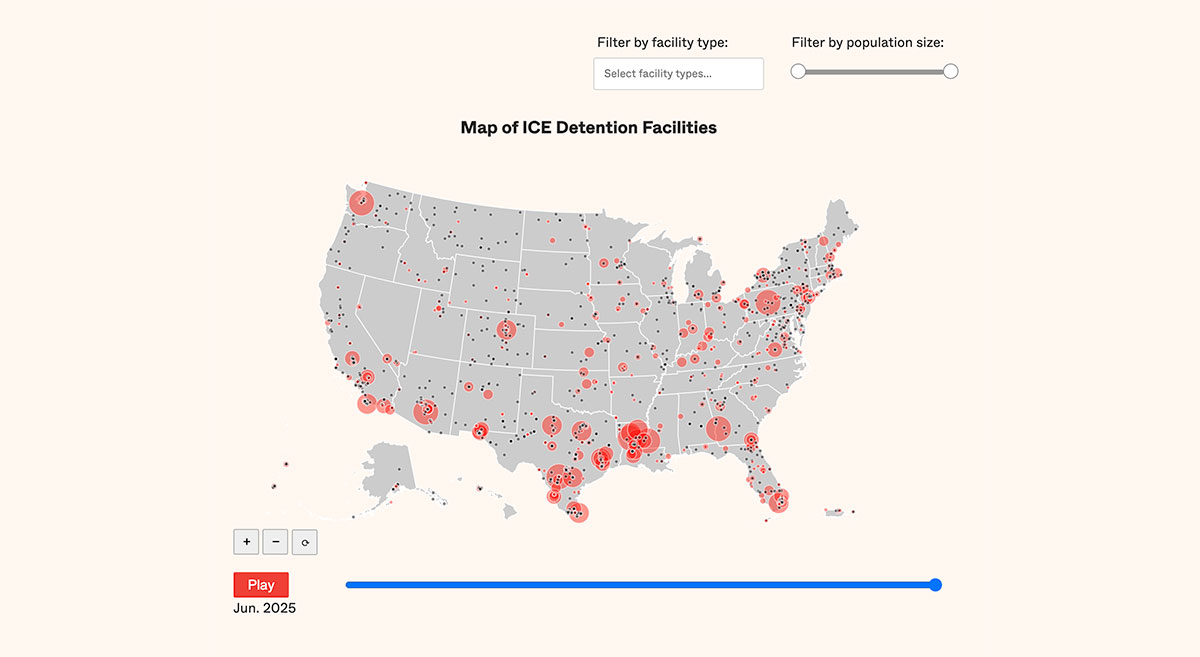
Amid a big hiring push, police experts question ICE officer vetting
The recent fatal shootings by ICE officers in Texas and Maine come at a time when the federal agency has hired a huge number of officers quickly. Some law enforcement experts worry that this kind of a hiring spree can lead police agencies to cut corners in vetting new hires.

Deportation Data Project
The Deportation Data Project obtains, posts, and analyzes internal U.S. government immigration enforcement data via public records litigation.
Know Your Rights | Enforcement at the Airport | ACLU
At the border, you are likely to encounter Customs and Border Protection (CBP) officers, and you may encounter Homeland Security Investigations (HSI) agents. HSI is part of U.S. Immigration and Customs Enforcement (ICE). Know your rights in these scenarios.

Department of Homeland Security AI Use Case Inventory
All data presented in this tracker is drawn directly from the DHS AI Use Case Inventory published by the Department of Homeland Security. The information is reproduced as provided in the source file and has not been independently verified, including statements on safety and impact. This presentation may contain errors or omissions. Users should consult the original DHS source file for authoritative data. The comparison view identifies differences between the 2024 Inventory July Revision and 2025 Inventory releases; some field differences reflect changes in the reporting format rather than substantive changes to the use cases.
Latinxs in <i>La Migra</i> : Why They Join and Why It Matters
Once an exclusively white enterprise, the last forty-five years have witnessed the emergence of a disproportionately Latinx immigration law enforcement workforce. This article addresses the question of why Latinxs elect to work for agencies that have systematically targeted the ethnic communities to which they belong. Where existing scholarship has often implied Latinxs may self-select into immigration law enforcement due to a lack of identification with the immigrant-experience, a dissociation with ethnic identity, and generally restrictionist immigration attitudes, this article finds little empirical evidence to support such an assumption. Analysis of interviews with sixty-one Latinx Immigration and Customs Enforcement (ICE) agents across Arizona, California, and Texas reveals, instead, Latinxs elect to work in immigration law enforcement in service of economic self-interest and survival, with “money,” “a good job,” and “benefits” cited as the primary motivation(s) behind applying for and accepting a job in immigration. This pattern holds irrespective of individual agents’ levels of identification with the immigrant-experience and particular attitudes toward immigration, and suggests a diversity in the demographics of immigration law enforcement agencies that extends beyond mere race and ethnicity, to include a diversity of perspective and potential for empathy.

Latinxs in <i>La Migra</i> : Why They Join and Why It Matters
Once an exclusively white enterprise, the last forty-five years have witnessed the emergence of a disproportionately Latinx immigration law enforcement workforce. This article addresses the question of why Latinxs elect to work for agencies that have systematically targeted the ethnic communities to which they belong. Where existing scholarship has often implied Latinxs may self-select into immigration law enforcement due to a lack of identification with the immigrant-experience, a dissociation with ethnic identity, and generally restrictionist immigration attitudes, this article finds little empirical evidence to support such an assumption. Analysis of interviews with sixty-one Latinx Immigration and Customs Enforcement (ICE) agents across Arizona, California, and Texas reveals, instead, Latinxs elect to work in immigration law enforcement in service of economic self-interest and survival, with “money,” “a good job,” and “benefits” cited as the primary motivation(s) behind applying for and accepting a job in immigration. This pattern holds irrespective of individual agents’ levels of identification with the immigrant-experience and particular attitudes toward immigration, and suggests a diversity in the demographics of immigration law enforcement agencies that extends beyond mere race and ethnicity, to include a diversity of perspective and potential for empathy.
ICE violence against women is largely untracked. One advocacy group is working to change that.
Immigration agents with prior records of sexual and gender-based violence have drawn attention in Trump’s second term amid questions about training and vetting.
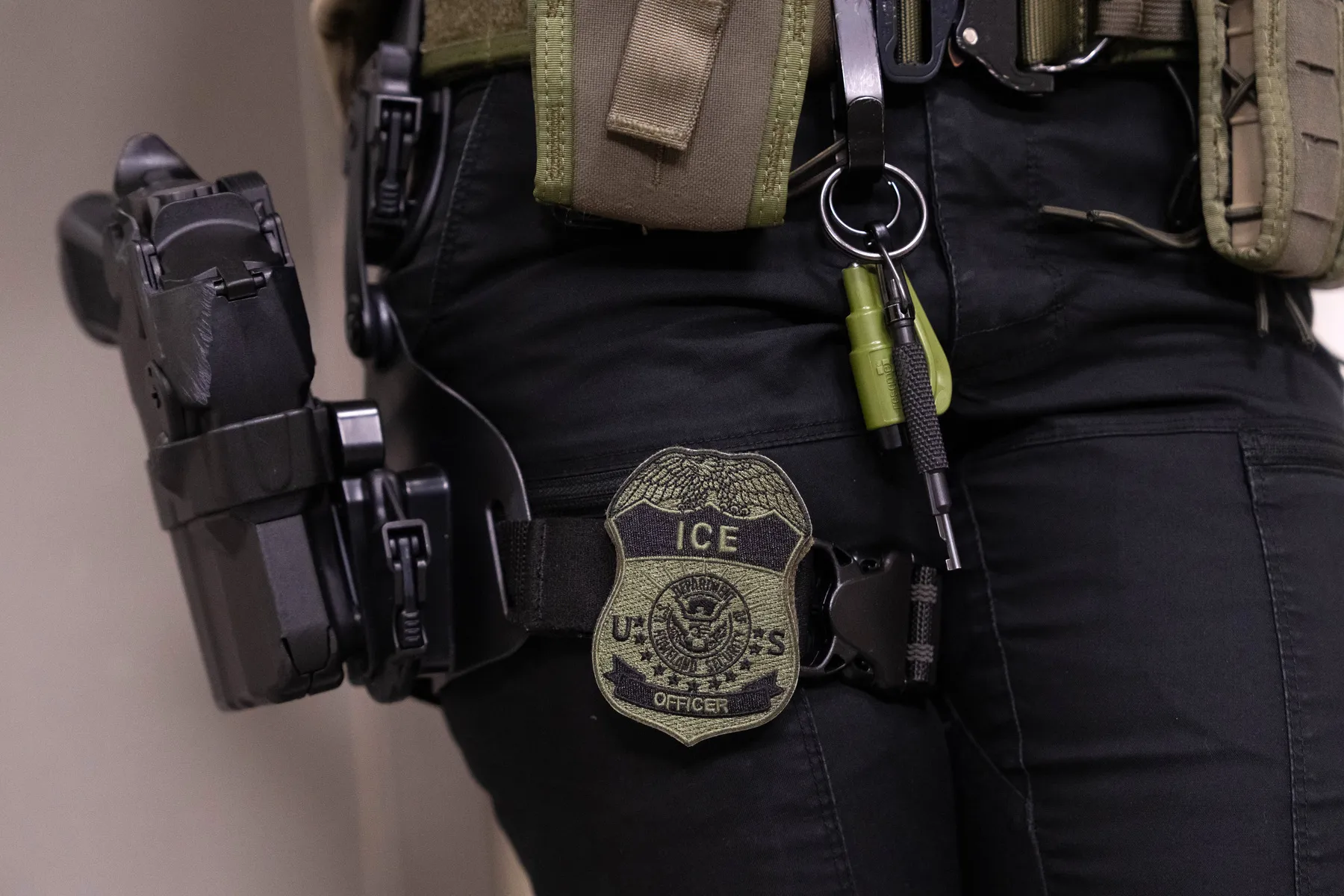
Attacks on ICE up 1,000%? Trump administration claim not backed up by court records
The Trump administration has cited a more than 1,000% increase in assaults on immigration agents to justify aggressive tactics. But court records reviewed by The Times show the majority of the alleged assaults in the areas where ICE and Border Patrol have been most active resulted in no injuries.

How to Film ICE
Filming federal agents in public is legal, but avoiding a dangerous—even deadly—confrontation isn’t guaranteed. Here’s how to record ICE and CBP agents as safely as possible and have an impact.

Mass Arrests by Trump's ICE, CBP Repeatedly Fail Under Scrutiny — ProPublica
ProPublica and FRONTLINE found more than 300 protesters and bystanders who were arrested on charges like assaulting an immigration agent or interfering with law enforcement. Over and over, the accusations fell apart under scrutiny.

More Than 500 U.S. Citizens Have Been Detained, Including Handcuffed or Held at Gunpoint, in Trump’s Immigration Crackdown — ProPublica
The government doesn’t track how often immigration officers detain U.S. citizens. So ProPublica did. We’ve found more than 500 Americans who were held against their will during this Trump administration.