


This book equips journalists with the knowledge to investigate on disinformation and media manipulation.
Still Manufacturing Consent: An Interview with Noam Chomsky | Hacker News
The marking out of the symbiotic relationship between reliable information producers and journalists is also vital to understanding the media system. A reliable, centralised stream of new information content is the life blood of journalism organisations, with a strong emphasis on _reliable_ and _centralised_. This particular need that journalists have sees them often becoming dependent on state institutions and corporations at the expense of minority groups and labor. An example being the journalists 'on the beat' that used to hang out around the local courthouse because that's where the 'feeding trough' is. Or the reports so nicely formatted and condensed produced by the state departments such that journos merely have to copy-paste the information straight into their papers. Easy-peasy.
How to Responsibly Report on Hacks and Disinformation
The run-up to the 2016 U.S. presidential election illustrated how vulnerable our most venerated journalistic outlets are to a new kind of information warfare. Reporters are a targeted adversary of foreign and domestic actors who want to harm our democracy. And to cope with this threat, especially in an election year, news organizations need to prepare for another wave of false, misleading, and hacked information. Often, the information will be newsworthy. Expecting reporters to refrain from covering news goes against core principles of American journalism and the practical business drivers that shape the intensely competitive media marketplace. In these cases, the question is not whether to report but how to do so most responsibly. Our goal is to give journalists actionable guidance.
What happens when content creators and journalists come together?
Find out how journalists and content creators can work together, and why this collaboration is needed to improve information integrity.

Elena Rossini on GoToSocial ⁂ (@elena@aseachange.com)
[3 media attachments] Dear friends, Please gather around for a long post about #WSocial and how they are responding to critiques. I have noticed a trend: W Social leaders and staunch supporters are describing any critical posts about the company as "targeted disinformation." Its CEO said they will soon have a technical solution in place for this. Oh?!? 🔗: https://mu.social/profile/anna.wsocial.eu/post/3mtqufy6g4s2r I suppose the "targeted disinformation" claims are about recent posts by the likes of me and @pallenberg about troubling hate speech that is allowed on W Social. Claims backed by hard evidence, in the form of screenshots and video captures. (I am increasingly doing screen recordings of problematic posts and interactions by W Social people because they have a tendency to delete evidence - like an infamous comment on a video by the Instutute for Remigration). ⬇️ ⬇️ ⬇️ Discrediting sources, renaming evidence as "disinformation" and creating a victim narrative has a long, storied history. ⬆️ ⬆️ ⬆️ But I'm digressing. I speak up about W Social because: - Mainstream media runs PR fluff about them; - Horrid hate speech on the platform is completely unmoderated. W Social is currently showing the limits of free speech absolutism. Its CEO wrote: "We don’t need W to become another echo chamber." Reminds you of something? Atmosphere user @echna.bsky.social astutely remarked that "W Social is on an X speedrun, without ever having been like Twitter." 🔗: https://mu.social/profile/echna.bsky.social/post/3mtqlknzork2t Bluesky, #Blacksky, and #Northsky have mechanisms in place to report hate speech - and I am super thankful for that. As of today, I cannot report to W Social posts by their users that contain hate speech. The W Social moderation list's only purpose is to make a distinction between verified users and bots. Compare it with Blacksky's moderation list and be amazed (see screenshots). What's the big deal about the lack of content moder…

Disinformation and grievance narratives
Synthese - Disinformation is often defined as misleading content intended to instill false beliefs. But this definition is too narrow. We need to focus instead on its broader epistemic effects....

Q&A: Robin Berjon on freeing journalists' feeds.
The AT protocol and “long-term, lifelong, sustainable protection against enshittification.”
Show your work: The new terms for trust in journalism - PressThink
The transparency movement has finally come of age. Power has shifted to the users. Their trust has to be earned in different ways now.

De Facto Journalism Co-op (@defactomedia.ca)
Interrogate power. Highlight truth. We are a non-profit, journalist-owned co-operative in British Columbia, Canada. https://www.defactomedia.ca/

Let's normalize debunking each other
The spread of misinformation has become an epidemic, but information hygiene can help.
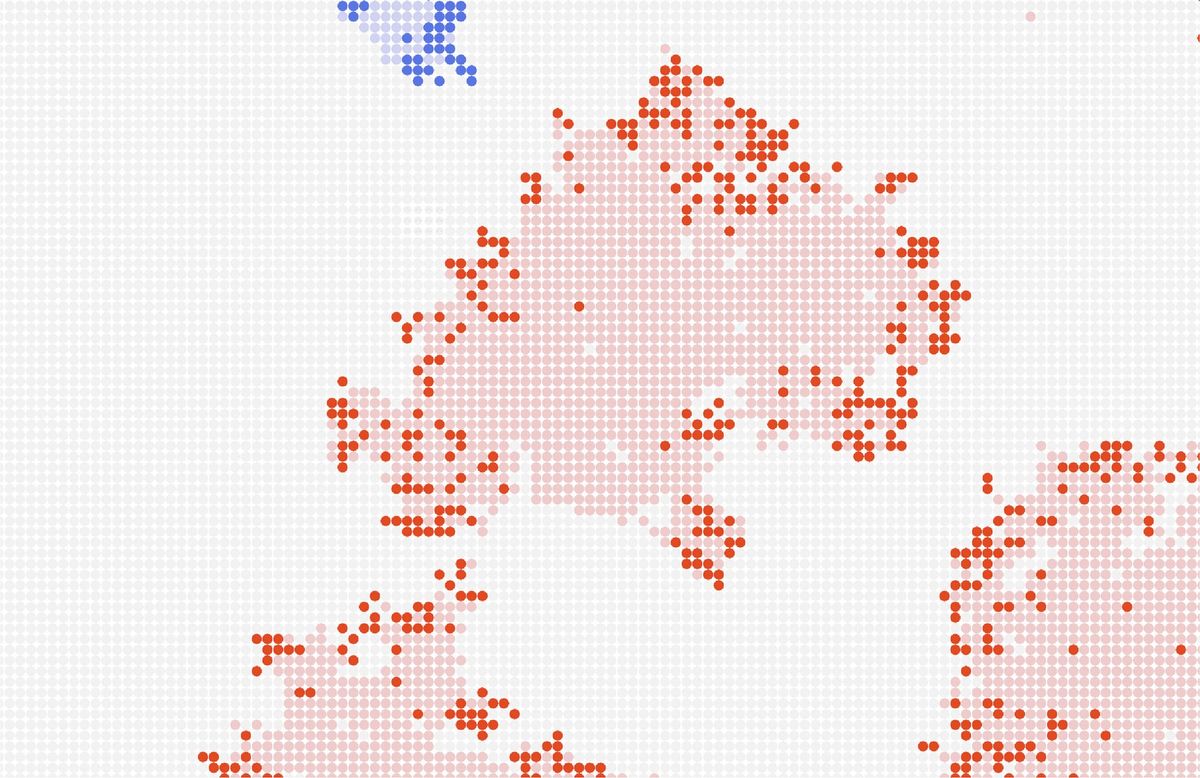
How Social Media Rewards Misinformation
A majority of false stories are spread by a small number of frequent users, suggests a new study co-authored by Yale SOM’s Gizem Ceylan. But they can be taught to change their ways.

Building trust in the open
How Protocols for Publishers points to the future of journalism – and the web
We're getting the social media crisis wrong
The bigger problem isn't disinformation. It's degraded democratic publics

We're getting the social media crisis wrong
The bigger problem isn't disinformation. It's degraded democratic publics
So maybe now we can agree that having an unchecked research integrity militia who unfortunately has the ear of the press and increasingly that of the the publishers, but who fiercely rejects any… | Ioana A. Cristea
So maybe now we can agree that having an unchecked research integrity militia who unfortunately has the ear of the press and increasingly that of the the publishers, but who fiercely rejects any minimal ethics or code of conduct, is a (growing) problem? Also, that 1. problems have to be investigated before deciding they are are legitimate and serious; 2. this investigation is not social media, blogs and the press; 3. this investigation should not be on the front page of journals and Retraction Watch; 4. there are degrees of seriousness and some things can just be corrected or are simply not very consequential (no, it's not a house of bricks where we have to check every brick, that's a dumb analogy), so being absolutely hysterical and overdramatic about any lie, inaccuracy or mistake is purposeful at worse and should be ignored at best and 5. it is not only unnecessary, but harmful, to also go into other, non-academic things the person did or does to complete "investigations" that you (press, sleuth, blogger, etc) do not have the tools and information to do completely and accurately (this fixation would be called harassment in the before times). Others will justly write about what the institutions did or did not do, but what I want to say is that we really should end it with the blank credit we give to any and all allegations that come from the establish research integrity truth fighters.

Policies and Standards
Newsweek is committed to accurate, independent, ethical and responsible journalism. We report fairly; we attribute clearly; we correct mistakes transparently. Our editorial policies and processes are always intended to support those values

If you care about fighting misinformation, strengthening information integrity and safeguarding democracy, you should read this account I've written about the journalist-creator lab my colleagues and I have just delivered in Kenya. Spoiler: it was an absolute success.

What happens when content creators and journalists come together?
www.trust.org