A proposal for interoperable attestation objects that connect training data, evaluation labor, and AI-generated outputs across the AI supply chain.
Don’t Let AI Invert The Testing Pyramid
Thierry de Pauw: consulting CTO - IT Delivery Consultant - IT Engineer - Don’t Let AI Invert The Testing Pyramid
AI is a business model stress test
AI commoditizes anything you can specify. It can't commoditize what you have to operate.

Union.ai: Ship fast. Scale big. Orchestrate the future.
The AI development platform to go from experimentation to production faster. Orchestrate, train, and serve AI.

Meet Foundry: An AI Startup that Builds, Evaluates, and Improves AI Agents

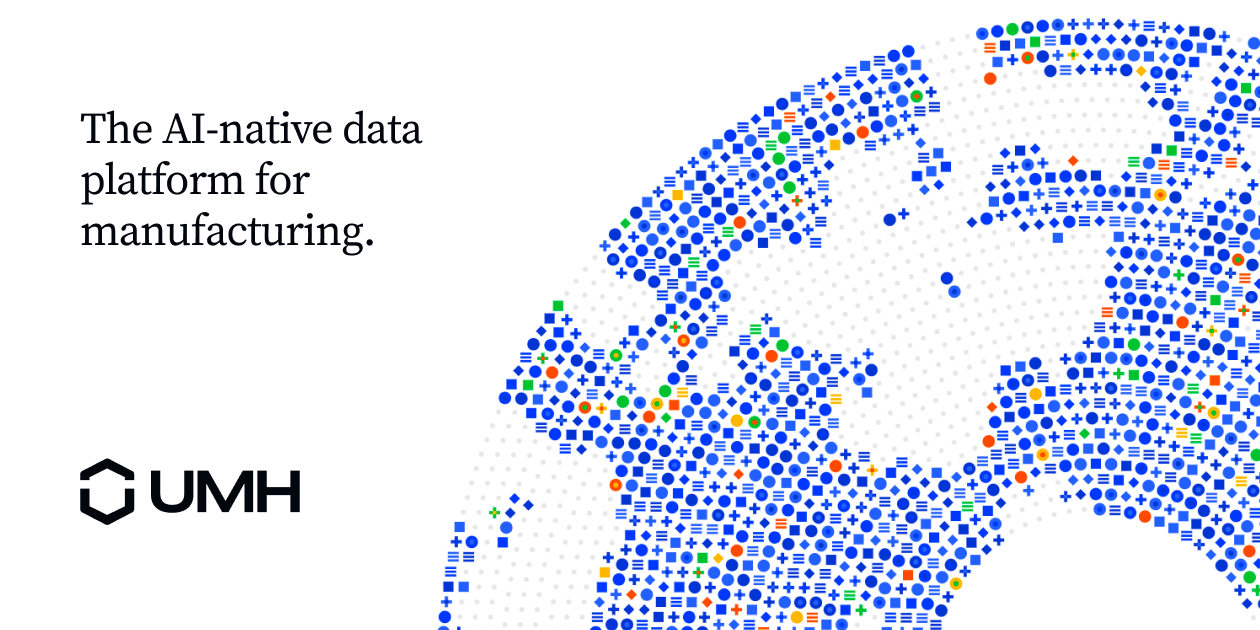
AI native industrial data platform for manufacturing | UMH
Standardize industrial data across sites and systems to reduce costs, improve efficiency and accelerate execution. Open-source, deployed at production sites across Europe, live in weeks.
Workers powering the AI industry face terrible conditions, but they shouldn’t have to – interview
Mark Graham, founder of the Fairwork initiative, notes that most of the labour in the AI supply chain is data work primarily done in low-income countries in poor conditions.

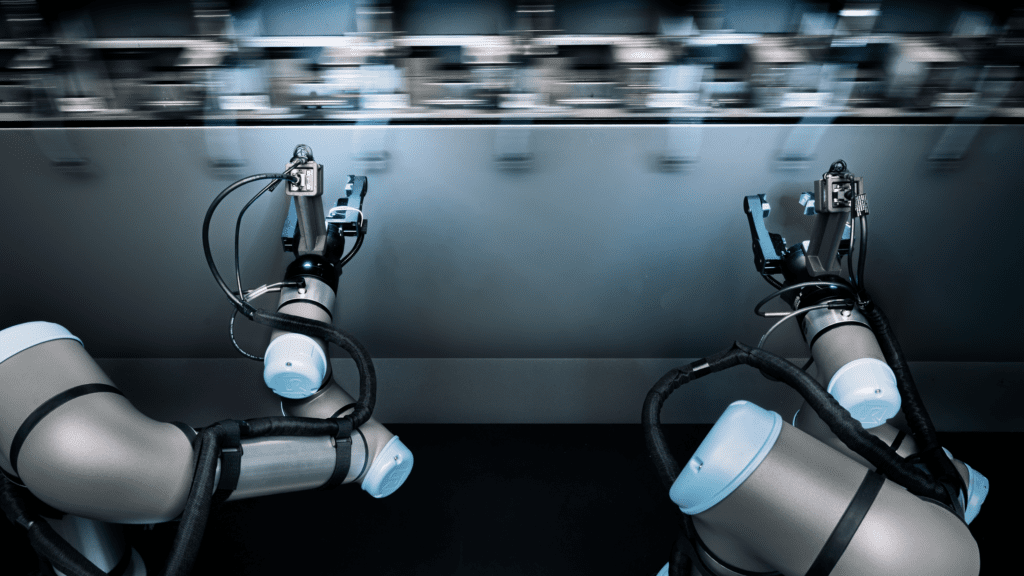
Physical AI for Industrial Automation | Sanctuary AI
Discover Sanctuary AI's production-ready Physical AI platform that helps industrial leaders automate complex and dynamic manufacturing tasks.
The AI "Evaluation Crisis" Is an Opportunity to Get Data Flow Right
Why the AI evaluation crisis could force a reckoning on dataset provenance, attribution, and consent.

trace-spec/ROADMAP.md at 738358dfac58047eaf689ca824f9e15008aabf36 · agentrust-io/trace-spec
TRACE: Trust Runtime Attestation and Compliance Evidence. Open attestation standard for agentic AI governance. - agentrust-io/trace-spec
Permissive-Washing in the Open AI Supply Chain: A Large-Scale Audit of License Integrity
Permissive licenses like MIT, Apache-2.0, and BSD-3-Clause dominate open-source AI, signaling that artifacts like models, datasets, and code can be freely used, modified, and redistributed. However, these licenses carry mandatory requirements: include the full license text, provide a copyright notice, and preserve upstream attribution, that remain unverified at scale. Failure to meet these conditions can place reuse outside the scope of the license, effectively leaving AI artifacts under default copyright for those uses and exposing downstream users to litigation. We call this phenomenon ``permissive washing'': labeling AI artifacts as free to use, while omitting the legal documentation required to make that label actionable. To assess how widespread permissive washing is in the AI supply chain, we empirically audit 124,278 dataset $\rightarrow$ model $\rightarrow$ application supply chains, spanning 3,338 datasets, 6,664 models, and 28,516 applications across Hugging Face and GitHub. We find that an astonishing 96.5\% of datasets and 95.8\% of models lack the required license text, only 2.3\% of datasets and 3.2\% of models satisfy both license text and copyright requirements, and even when upstream artifacts provide complete licensing evidence, attribution rarely propagates downstream: only 27.59\% of models preserve compliant dataset notices and only 5.75\% of applications preserve compliant model notices (with just 6.38\% preserving any linked upstream notice). Practitioners cannot assume permissive labels confer the rights they claim: license files and notices, not metadata, are the source of legal truth. To support future research, we release our full audit dataset and reproducible pipeline.

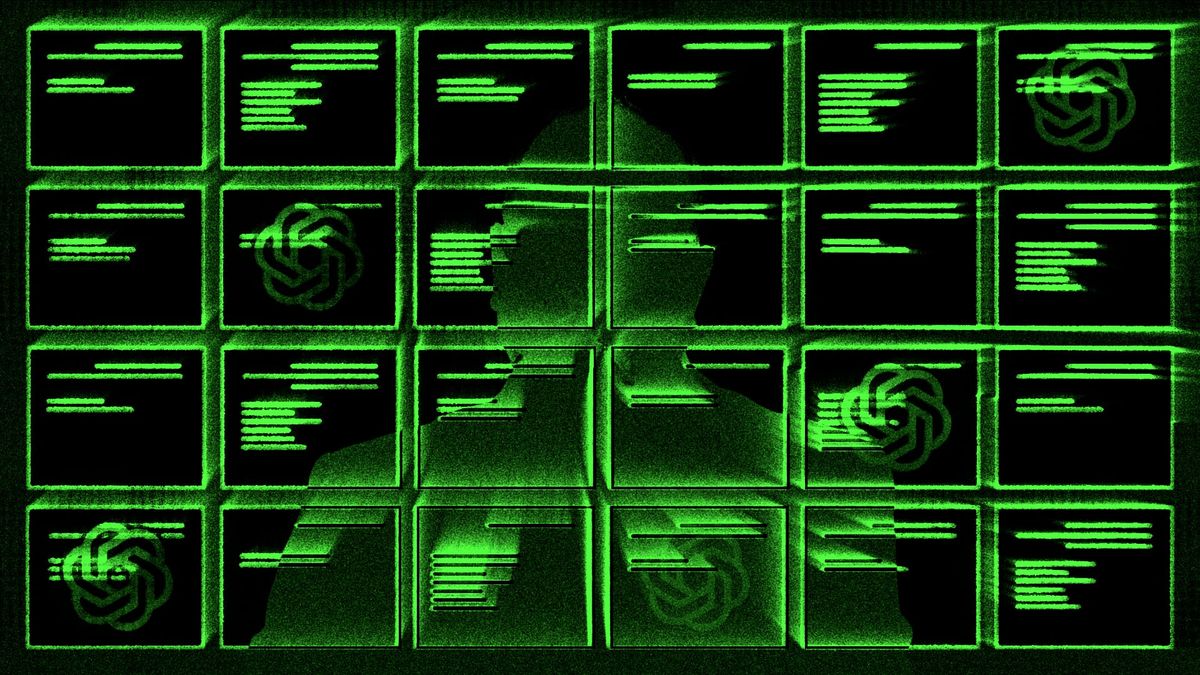
People Training OpenAI’s AI Fired for Using AI to Train the AI
OpenAI has thousands and thousands of contractors helping improve the company's AI models. Multiple contractors have been fired for using AI to train the AI.
Distributional AGI Safety
AI safety and alignment research has predominantly been focused on methods for safeguarding individual AI systems, resting on the assumption of an eventual emergence of a monolithic Artificial General Intelligence (AGI). The alternative AGI emergence hypothesis, where general capability levels are first manifested through coordination in groups of sub-AGI individual agents with complementary skills and affordances, has received far less attention. Here we argue that this patchwork AGI hypothesis needs to be given serious consideration, and should inform the development of corresponding safeguards and mitigations. The rapid deployment of advanced AI agents with tool-use capabilities and the ability to communicate and coordinate makes this an urgent safety consideration. We therefore propose a framework for distributional AGI safety that moves beyond evaluating and aligning individual agents. This framework centers on the design and implementation of virtual agentic sandbox economies (impermeable or semi-permeable), where agent-to-agent transactions are governed by robust market mechanisms, coupled with appropriate auditability, reputation management, and oversight to mitigate collective risks.
Cloudflare Workers AI | Open-source AI inference
Workers AI facilitates the scalable development & deployment of AI applications at the edge.

Emerging Tech: Navigating the Risks and Opportunities of Synthetic Data for AI Solutions
Gartner Research on Emerging Tech: Navigating the Risks and Opportunities of Synthetic Data for AI Solutions

LaborTrail — The Trail of Your Blood on Circuits - a Hugging Face Space by sage-lollipop
LaborChain Model Cards for AI training labor exploitation
AI #180: No Longer In Charge
What we know about internal AI models hacking into real companies during cyber evaluations keeps getting worse.