

Ever since discovering the Entity Component System pattern through Bevy a few years ago, I’ve been simultaneously obsessed with it and frustrated with the lack of attention it is getting outside of the game development world.
Object-Oriented Entity-Component-System Design – John Lin's Thoughts
About two months ago, I decided to start developing a fresh codebase for my voxel project – something that many indie developers are probably all-too familiar with, including myself. This time around, there were three major features that I wanted to implement:
Entity Component System and SQL
The Yawning Gash If you have ever dabbled in video game development in the past ten or twenty years, chances are you used an object oriented programming language to do so. Hell, my first attempts at creating a game were done using the jMonkey engine. And one can easily see why OOP is popular for game development: it is very convenient to summarise data into semantic classes:
Distributed Entity Component System Architecture in the Cloud
Every so often, my mind will fixate on a topic and I won’t be able to eat, sleep, or function properly until I get some kind of closure on…
Architected Rapid Application Component Based Development Framework and IDE – Vestorly
Visual Component Based Development framework for rapid application and systems development
Components.build
An open standard for building modern, composable and accessible UI components.
Issues in Component Computing: A Synthetic Review
This paper provides a review of the rhetoric behind the component movement in educational software, and a critical analysis and synthesis of issues underlying the movement. We draw on case studies ...

Trying the Software factory pattern.
One of the interesting challenges of the AI ecosystem in 2026 is that new, effective patterns emerge faster than I can adopt them. I’ll find a handful, get back to work, and realize a month later that I’d missed four or five more. The adoption cycle for Imprint this year has been something like: January: get every engineer onto Claude Code every single day March: ok, let’s also get everyone else onto Claude Code or Claude Cowork every single day April: local development is bottlenecked on checkout and worktree model, instead create ~10 local workspaces which each have an independent checkout of every repository, and operate at the workspace level, not at the repository level, so it can generate cross-repository pull requests across frontend, backend, infrastructure and data monorepos June: oh boy, agent-driven development is heavily constrained by lack of a common task management system with higher visibility and less permission complexity than Jira, so let’s migrate the entire company over to Linear and hard stop on Jira July: yikes, now we have visibility into all these tickets, many of them are trivial but managing them through local development isn’t scaling, let’s roll out an orchestrated harness which internally we call “Agent Fleet”, along the lines of Stripe’s Minions The most recent question for me has been figuring out how to adopt the software factory pattern. (After some light research, the specific AI-context origin of this term is slightly messy to attribute, but I think it might be Justin McCarthy in February 2026’s Software Factories And The Agentic Moment.)

GraphRAG: A Practitioner's Guide to 6 Advanced Architectural Patterns
Beyond basic graph retrieval: six production-oriented architectures for combining semantic search, knowledge graphs, and LLM reasoning.

Game Programming in Lean4 - A 2D Graphics library and Global Store for ECS
Tutorial: Writing a tiny Entity Component System in Rust
The Entity Component System (or ECS) pattern is all the rage in the Rust game development community. In this short tutorial we're going to build our own.

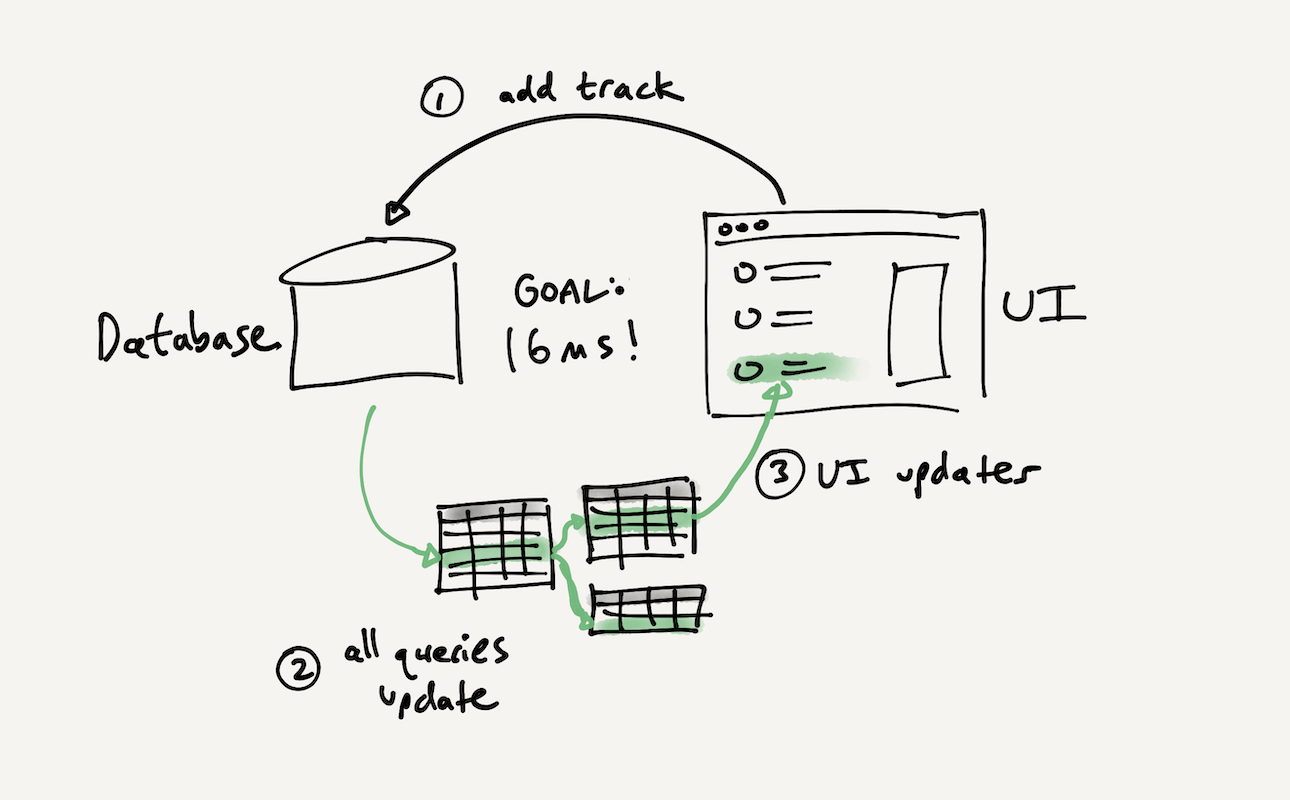
Building data-centric apps with a reactive relational database
We're exploring an approach to simplifying app development: storing all application and UI state in a client-side reactive relational database that provides a structured dataflow model.
Inside Design Tokens: The Three Class Token Society
Design tokens are often grouped based on their phenomenal reference sequence. From basic, over semantic to component tokens. This article compares this organization with a model based architecture and figures out the advantages and disadvantages.
Object-Oriented UX
We know big, monolithic webpages won’t meet the needs of responsive sites and endless screens. But we’re often still quilting together design patterns and content modules, rather than truly thinkin…

There are a lot of architectural bits, but if I had to pick one design feature it's Lexicons. Lexicons allow for new shared data types and structures in a way that are immediately available on network for any other service provider to adopt. Getting shared agreement in ActivityPub is hard.

Pedro Vezza
Why did you decide to bet on atproto over Mastodon or similar?
