


No. No it can't. Come on, now.
Will AI ruin the social sciences — or revolutionize them?
The technology can whip up spurious findings and pollute survey responses, but it could also make research more rigorous.
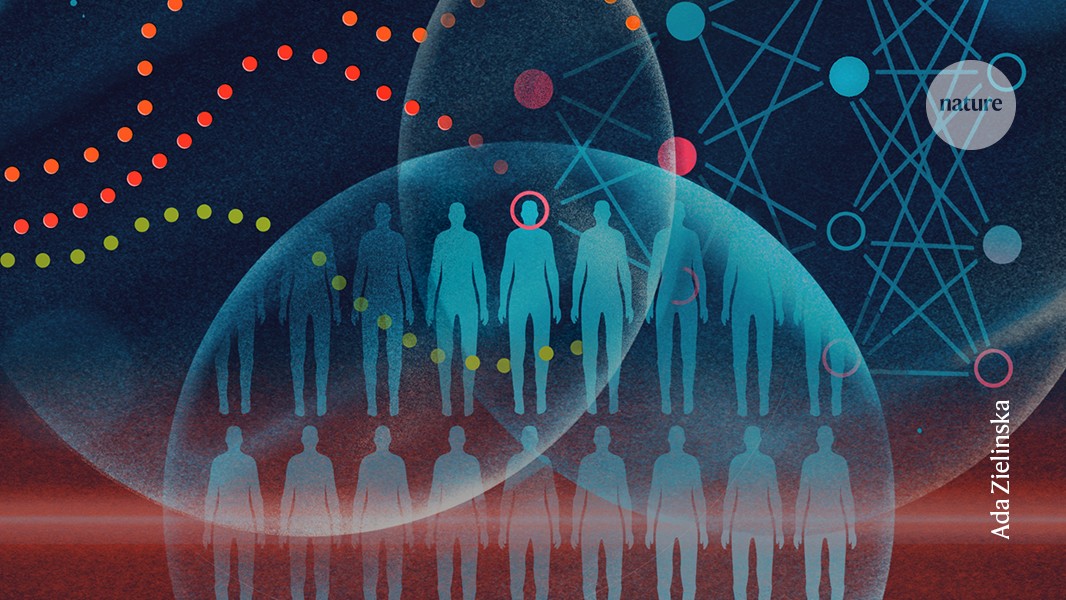
New Studies: How Commercial Forces Make Science Less Reliable
Computational social science has been distorted by commercial forces, and AI is making it worse.

How should social science think about AI?
Big structures and large processes are back, baby

Is the scientific paper due to be replaced?
AI is pushing scientific publishing to the brink. For neuroscience, the crisis may be an opportunity to finally connect findings across subfields.

Is the scientific paper due to be replaced?
AI is pushing scientific publishing to the brink. For neuroscience, the crisis may be an opportunity to finally connect findings across subfields.
3: Consulting the Record: AI Consistently Fails the Public - AI Now Institute
Amid the excitement over AI’s (speculative, hypothetical) potential, we have lost sight of the sobering reality of its present and recent past. AI is already intermediating critical social infrastructures, materially reshaping our institutions in ways that ratchet up inequality and concentrate power in the hands of the already powerful. It is consistently deployed in ways […]


70 years of AI hype
Quoting from Olivia Guest et al. (2025) "Against the Uncritical Adoption of AI Technologies in Academia."
Field Theory: AI as Social Science Question, Object & Tool
Uses of advanced artificial intelligence are changing how societies organize labor, govern, produce knowledge, and make meaning. In light of these developments, this essay argues that AI models, tools, and systems pose three interrelated imperatives for social science: they demand renewed attention to social theories of how technology, human experience, and social order are entangled; they require study as objects of inquiry in their own right; and they offer capabilities that may transform—or upend—the practice of social investigation itself. From Weber’s analysis of rationalization to Du Bois’s study of technology and inequality to contemporary scholarship on algorithmic governance, the essay examines what social science distinctively offers: the capacity to historicize the apparently unprecedented, to trace connections across scales, and to center those most affected by technological change. It identifies how algorithmic systems are remaking the distribution of opportunity and risk as a central task of social inquiry and asks what futures social science might help bring into being.
No. 010: AutoScientists governance, AI-agent monoculture, nonsense-term retractions - The Hallway Track
The Hallway Track No. 010 - How AI is affecting the practice of science
"AI" is Automated Inequality
Tech bros still dominate the discussions about so-called "AI" with false claims. Even most "AI"-critical researchers spend much of their time meticulously debunking (always only a subset of) claims, leaving vast areas of the economic consequences of "AI" unexplored. (Even the "AI"-evangelist Economi

AI as Social Technology: Astor Lecture by Professor Henry Farrell
AI as Social Technology: Astor Lecture by Professor Henry Farrell
Remarkable how over a decade ago @michaelnielsen.bsky.social pointed the way towards solving long standing issues plaguing science to this day (issues that are all the more relevant in the age of AI mediated science)

Ronen Tamari
This is why @atproto.science is so relevant rn This compilation of essays indicates that scientists are most frustrated by insufficient “community tools and resources... Essential infrastructure for sharing, maintaining and building on existing work and data is also badly underdeveloped." >
Livetweet @mcxfrank.bsky.social talk: If we care about intelligence and cognition, AI has recently allowed a change; we now have two ways to study them. AI is of course allowing us a lot that we wouldn't dare on our Children (brain surgery, never tell a child about cats...) #acl #conll


