
"There are no guarantees that things are going to turn out very well for anyone.”
On technological optimism and technological pragmatism
"There are no guarantees that things are going to turn out very well for anyone.”
On technological optimism and technological pragmatism
"There are no guarantees that things are going to turn out very well for anyone.”
Tech optimism isn't a solution to the climate crisis
(Or, why we should worry about billionaires who treat Neal Stephenson books like an instruction manual)
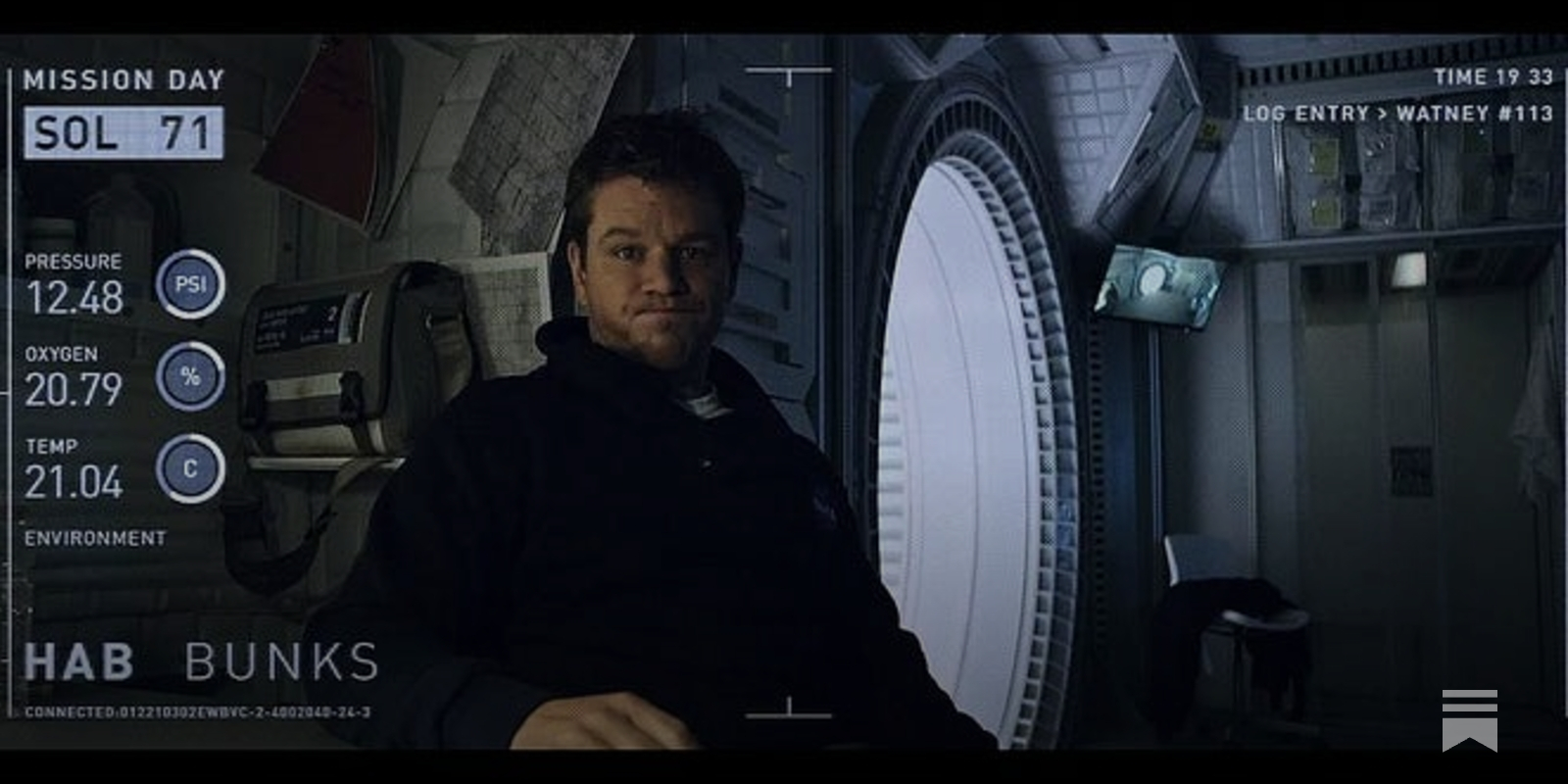
Ali Alkhatib: On techno-optimism
I’ve got a longer draft in the works, but I don’t think that’s going to become a blog post, so I figure it might be useful to publish something here and solicit feedback, or just plant a flag in the ground that this was a thing I did. Last week Several weeks ago I gave a talk at Wayne State University titled “the uncanny pessimism of techno-optimism”. In this post I’m going to breeze through some of the stuff I talked about and give a sense of what’ll be coming. Eventually.

What’s the best technology that doesn’t exist yet?
We analyzed 100+ conversations and essays on positive futures to find out

How Technology Grows (a Restatement of Definite Optimism)
The deepest bias in American intellectual society; a new Moby-Dick; the US isn't making the best robots; plastics; process knowledge as industrial deepening

The Golden Age Is Behind Us: How the Status Quo Impacts the Evaluation of Technology
New technology invariably provokes concerns over potential societal impacts. Even as risks often fail to materialize, the fear continues. The current research explored the psychological underpinnings of this pattern. Across four studies ( N = 2,454 adults recruited via Amazon Mechanical Turk), we found evidence for the role of status quo thinking in evaluating technology. In Study 1, we experimentally manipulated the reported age of unfamiliar technology and found that people evaluate it more favorably when it is described as originating before (vs. after) their birth. In Studies 2 through 4, participants’ age at the time of invention strongly predicts attitudes toward a wide range of real-world technologies. Finally, we found that individual differences in status-quo-based decision-making moderated evaluations of technology. These studies provide insight into how people respond to the rapidly changing technological landscape.

Ali Alkhatib: On techno-optimism
New Year’s Message: Moving Fast And Breaking Things Is The Opposite Of Tech Optimism
Every year since 2008, my final post of the year for Techdirt is about optimism. This makes this year’s post (which will be the only post for today — go out and enjoy the holiday times, people) my …

Technological risks are not the end of the world
There’s a scene in the movie Oppenheimer in which the protagonist is trying to explain to General Groves, his military overseer, the hazards of their endeavor. Groves asks Oppenheimer, “Are you saying there’s a chance that when we push that button, we destroy the world?“ The physicist says, “The chances are near zero.” When Groves, understandably alarmed, asks for clarification, Oppenheimer responds, “What do you want from theory alone?”

We Build On Hope @ PublicSpaces Conference 2026
Keynote by Robin Berjon The current state of tech can feel disheartening. Years of critical analysis and reform efforts have left us with a digital sphere that seems worse than ever. In Europe, our...
‘No & ...’ : A Forum on Technological Refusal - Home
This forum begins from the idea that refusal is, among other things, a rejection of one’s current relationship to technology (as an individual and/or as part of a collective) and a simultaneous commitment to another way of being in the world. The ‘no’ is accompanied by a ‘yes’ to another path. In this sense, refusal demands a careful articulation of what needs to change as well as a vision for a future that can (and should) be worked towards.

From risk to flourishing: Seeds for responding to a complex world
Flourishing is the actualization of all beings toward their good -- not only individually but collectively, answering the question of `how do we live well with and for each other?'. In science as in society, the tendency to reduce, segregate, specialize, and settle has precluded embracing the concept of flourishing as a guiding principle. We aim to identify an approach to risk science research that promotes the flourishing of socio-ecological-technological systems (SETS). We discuss the normative role of an orientation toward flourishing for the field of risk science. We explore the possibility that (risk) science could be done in a way that is capable of pointing society toward a different future, one more resilient and more capable of flourishing. Our exploration mirrors the conversational nature of flourishing itself: examine ideologies traditionally believed to be rigidly in opposition and consider what emerges in the space(s) and conversation between them. We call this a dialectical approach. Within this paradigm grounded in conversation, pluralism, and pragmatism, we revisit three longstanding tensions in risk science: physical$|$social, determinism$|$uncertainty, contextuality$|$generality. Although these tensions are not new, revisiting them together through the lens of complexity science, and with explicit attention to the normative commitments that shape risk research, reveals underexplored possibilities for the field. Examining them in conversation with the other allows us to explore the provisional seeds for what might be termed complex risk science: interdependence, responsivity, participation, pluralism, openness, and ongoingness. Enacting the dialectical paradigm towards a risk science for a flourishing world will depend on creating collectives toward complex risk science, supporting them with skillfully governed commons, and centering care in our research.

It’s Time to Dismantle the Technopoly
As technology accelerates, we need to stop accepting the bad consequences along with the good ones.

Technology is Not Values Neutral: Ending the Reign of Nihilistic Design
We fail to take tech seriously when we do not grasp its full impact on humans