Der Star, auch als Gemeiner Star bezeichnet, ist der in Eurasien am weitesten verbreitete und häufigste Vertreter der Familie der Stare (Sturnidae). Durch zahlreiche Einbürgerungen auf anderen Kontinenten ist der Star heute einer der häufigsten Vögel der Welt. Im Niederdeutschen werden Stare Spreen genannt.
Face of a Bird, Legs of an Eagle: The Hybrid Venus in Medieval Texts of Image Magic and the So-Called Talisman of Catherine de’ Medici
This article examines the imagery of the goddess Venus in medieval sources of astrological magic, focusing on a zoomorphic hybrid Venus characterized by avian features. Furthermore, the article examines the transmission of this motif into early modern printed sources and talismans. The most renowned among surviving items related to the hybrid Venus is the 18th-century medallion known as Catherine de Medici’s talisman, depicting on one side a classical Venus figure, and on the other, a seated Jupiter alongside a hybrid with the head and feet of a bird. In previous scholarship it has been argued that the hybrid figure, interpreted as Venus, derives from Cornelius Agrippa and the medieval magical compendium Picatrix. The study demonstrates that the same hybrid Venus appears in several other medieval sources predating Agrippa and independent of the Picatrix. These sources, explored in this article in detail, offer a new insight into the evolution of the zoomorphic Venus, providing a deeper understanding of the ways in which non-Christian and non-classical astrological iconography was transformed and found pathways within medieval literature. Based on the findings of this research, De sigillis attributed to Arnoldus Saxo, seems to provide the most direct model for depicting two distinct Venus figures within the same talisman. The article further argues that the avian hybrid Venus was a dynamic figure among non-classical hybrids, appearing in a relatively wide range of sources, including contexts where astrological hybrids were a rarity.
Star
A star is a luminous spheroid of plasma held together by self-gravity. The nearest star to Earth is the Sun. Many other stars are visible to the naked eye at night; their immense distances from Earth make them appear as fixed points of light. The most prominent stars have been categorised into constellations and asterisms, and many of the brightest stars have proper names. Astronomers have assembled star catalogues that identify the known stars and provide standardized stellar designations. The observable universe contains an estimated 1022 to 1024 stars. Only about 4,000 of these stars are visible to the naked eye—all within the Milky Way galaxy.

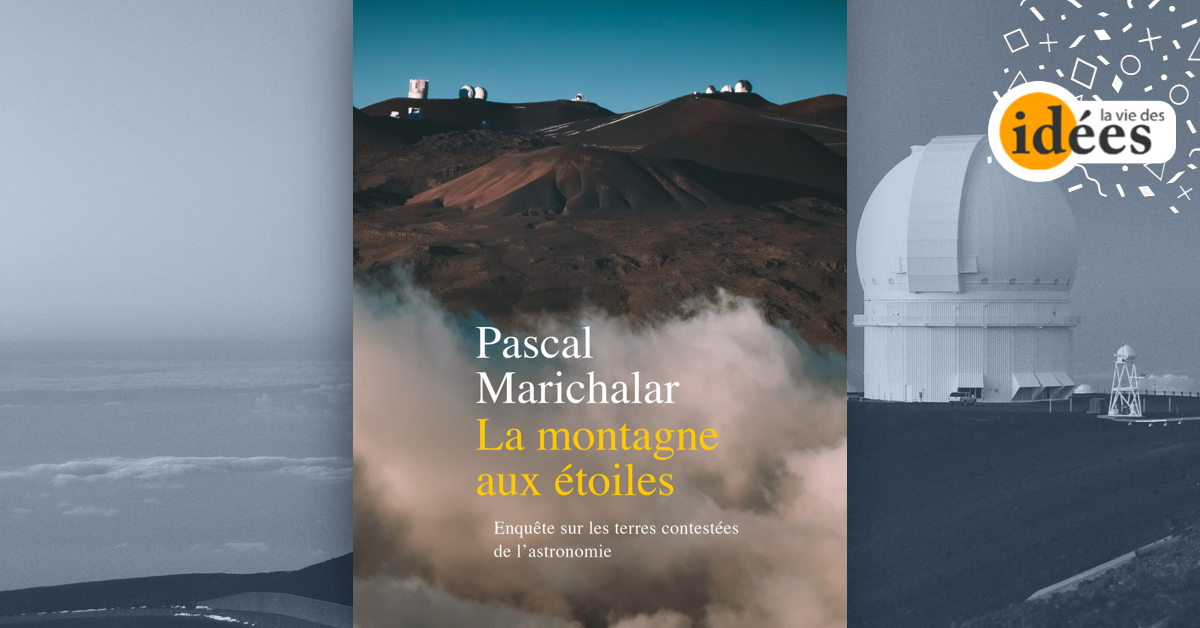
La face cachée des télescopes
À propos de : Pascal Marichalar, La Montagne aux étoiles, La Découverte
Das geheime Leben der Hirschkäfer | ARTE Fernweh
Dohle
Die Dohle, auch Turmkrähe genannt, ist eine Singvogelart aus der Familie der Rabenvögel (Corvidae). Sie ist eine von zwei Arten der Untergattung der Dohlen. Im Vergleich zu den eng verwandten Arten der Raben und Krähen (Corvus) ist sie ein eher kleiner Vertreter der Rabenvögel. Sie zeichnet sich durch schwarz-graues Gefieder, einen stämmigen Schnabel und hellblaue Augen aus. Das Verbreitungsgebiet der Dohle reicht vom nordafrikanischen Atlasgebirge über Europa bis zum Baikalsee. Sie bevorzugt offene Lebensräume mit Baumbestand, Felsen oder alten Gebäuden als Habitat. Die Nahrung der Dohle besteht überwiegend aus Samen und Insekten, bei Gelegenheit frisst sie aber auch Aas oder menschlichen Abfall. Dohlen leben meist in größeren Gruppen und bilden lebenslange monogame Paare. Ihre Nester bauen sie in Löchern und Nischen aller Art, etwa in Spechthöhlen oder Gebäudenischen. Das Weibchen brütet vier bis sechs Eier aus, die Nestlinge werden anschließend von beiden Eltern gefüttert.


Les enfants sont inégaux face aux vacances
Plus de quatre millions d’enfants ne partent pas en vacances, souvent en raison du manque d’argent de leurs parents. Dans les familles aisées, trois quarts des enfants font leurs valises au moins une fois par an. Mais dans les foyers à bas revenus, plus de la moitié ne part pas de l’année.

The Great Season — 13FOREST Gallery
On Friday, January 24, 13FOREST Gallery will open The Great Season, an exhibition of new and recent acrylic work by painter Nicole Duennebier. Dark and sumptuous, The Great Season highlights a fantastical six-panel painting that associates the random beauty of nature with an elaborate 19th-century parlor game. Set against black backgrounds, Duennebier’s complex forms strongly refer to Baroque still-life paintings in which fruits and vegetables simultaneously emerge and pass into different stages of maturity. A key difference in Duennebier’s work is that, rather than render images of everyday objects, she bases them on her fascination with biology, particularly bacteria, fungi and other objects hidden from view. Referring to her use of darkness, the artist states that her inky backgrounds are “like a primordial soup, a pool of black that springs forth a decadent and sometimes horrible growth.” Each of the paintings in the show is associated with lush proliferation. In Bright Beast After Nature, for instance, a black background gives rise to a nebula of unfolding, biomorphic forms that seem to divide and overtake one another. Painted in thin, translucent layers, the work suggests a still life captured in only one of many stages it will eventually pass through. With Bright Beast Dissected View Duennebier gives an equally fantastic image of the engine behind such proliferation. Similar to vivisections seen in science textbooks, the painting shows the surface of a soft, woolly plant and the interior, biological source of its existence. In content the “engine” plays with the idea of a still life, but one made of flowers, vegetables and animal viscera. Duennebier’s centerpiece in The Great Season is a vast, six-panel painting titled, Hydnellum Myriorama. Its title refers to a type of fungus found in nature and to a Victorian card game – myriorama – in which children could arrange a series of illustrated cards to form hundreds of different landscapes. In Duennebier’s six panels are hybrid images that resemble Baroque still lifes, coral, fur, crystals and close-ups of microscopic fauna. Each of the forms emerges from nothing and stands bathed in a common light source. Despite the panels’ differing environments, Duennebier negates their importance by enabling viewers to arrange the panels into aesthetic experiences of their own choice. With Hydenellum Myriorama, the random potential of generation and decline in nature is given its parallel in art. Of her own work Duennebier states: “My interests in natural phenomenon (dermoid cysts, fungus, invasive flora/fauna) and my love of candied Old Master opulence always seem to be present in my painting… Painting with attention to detail, I’ve become accustomed to the fact that nature in itself, or anything living really, never totally allows you to have a perfectly idealized experience. Everything is always spewing, dripping, rotting a little.”

Jean Abbiateci (@jeanabbiateci.bsky.social)
Incroyable photo de Fontainebleau signée Stéphane Mahé de @reuters.com, vue sur le live du Monde L'incendie semble avoir aspiré les couleurs de la forêt comme dans un livre de Lovecraft, à l'exception du rouge vif du panneau qui donne tout sa dimension tragique à cette image.

Saatkrähe
Die Saatkrähe ist eine der vier europäischen Arten der Gattung Corvus aus der Familie der Rabenvögel (Corvidae).

Comment la France est redevenue une société d’héritiers
« L’héritage, amplificateur des inégalités ». Le niveau élevé des inégalités de patrimoine et de la fortune héritée observé aujourd’hui rappelle celui de la France du XIXᵉ siècle. Un phénomène inquiétant, synonyme d’ascenseur social bloqué, et alimentant le ressentiment des classes moyennes.

Les énergies fossiles sont le carburant de la droite réactionnaire
Il est temps de les arrêter.
Du travail, de la nature et de la productivité
L’année 2024 se termine. Elle a été la plus chaude jamais enregistrée et le théâtre d’atrocités et de destructions sans nom en Ukraine, à Gaza, au Liban, au Soudan, au Burkina Faso, au Yemen, etc., la liste n’est hélas pas close. Cette année a été marquée par la prise du pouvoir ou la montée des partis d’extrême droite, en Amérique et en Europe.
Francisco Goya: Was steckt hinter seiner düsteren Kunst? | Die Geheimnisse der Meisterwerke | ARTE
Louvre Couture at the Museum of Fine Arts, Houston (Through March 15, 2026)
Fashions from the Paris exhibition “Louvre Couture—Art and Fashion: Statement Pieces” are on view alongside masterworks from the MFAH collections.

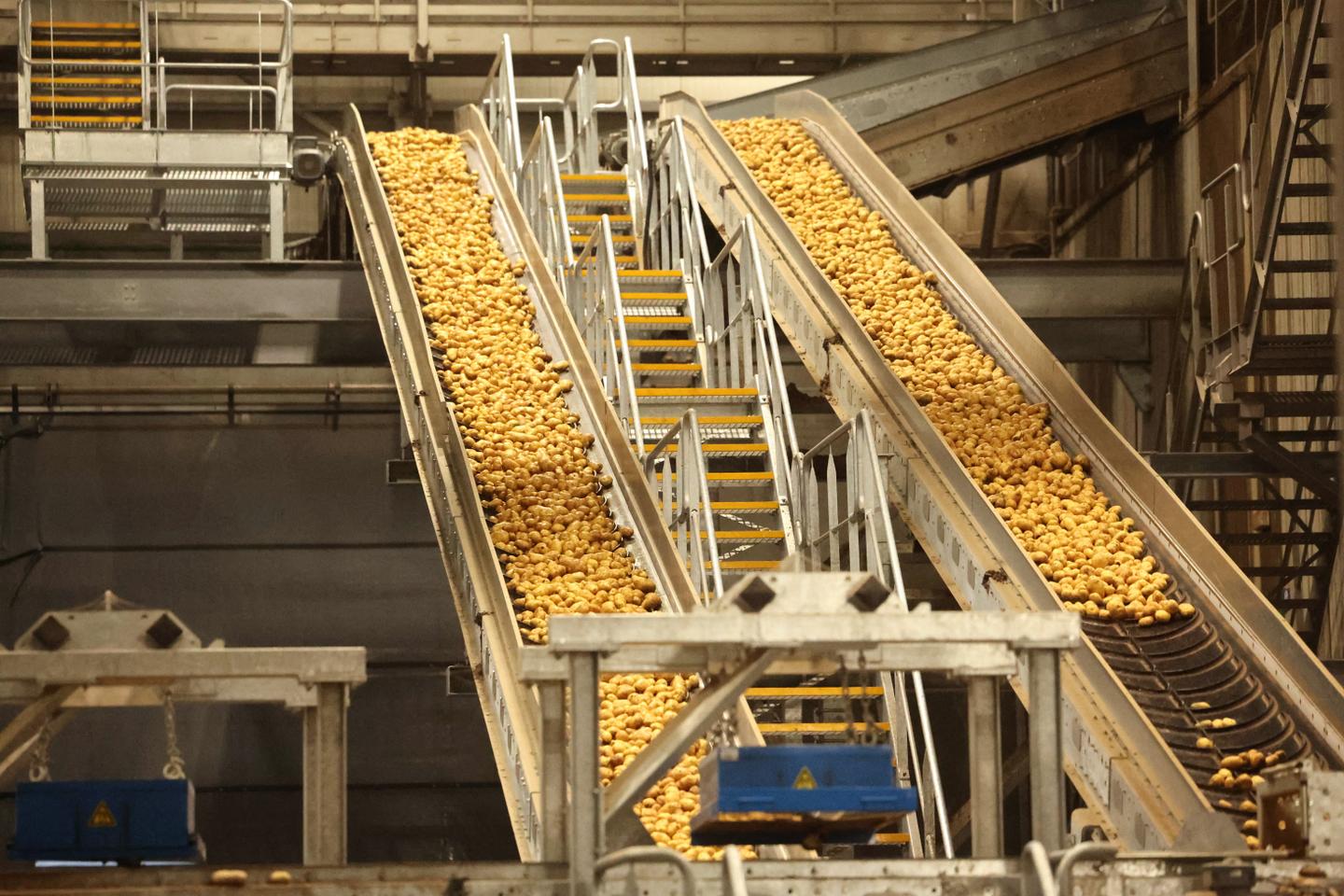
Des champs aux usines à frites, la crise de la pomme de terre frappe les Hauts-de-France
Alors que les agriculteurs doivent faire face aux conséquences du dérèglement climatique, l’usine Clarebout de Mouscron (Belgique), d’où sortent essentiellement des frites surgelées, va arrêter sa production, confrontée à des surcapacités de production, une concurrence accrue et une hausse continue des coûts.