


q: Turning theory into praxis - What’s the best steps forward?
The Myth and Magic of Generating New Ideas
A mathematician on how to get the mind into motion.

What Theory is Not, Theorizing Is
What Makes a Good Theory, and How Do We Make a Theory Good?
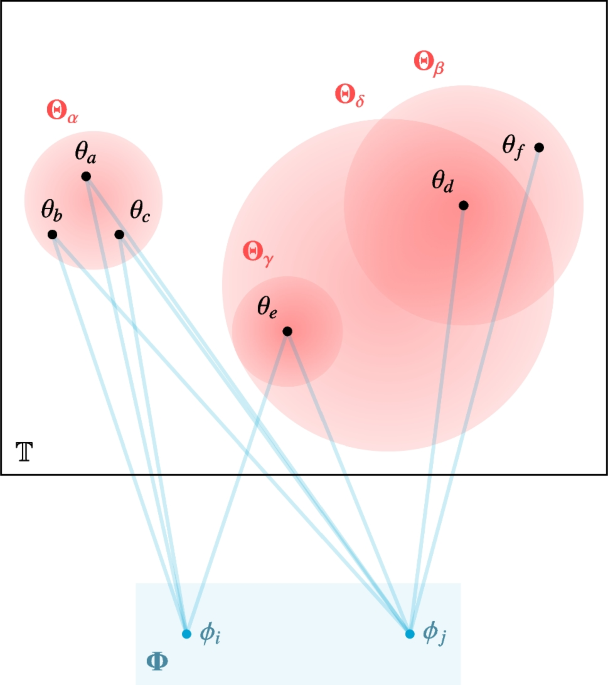
I present an ontology of criteria for evaluating theory to answer the titular question from the perspective of a scientist practitioner. Set inside a formal account of our adjudication over theories, a metatheoretical calculus, this ontology comprises the following: (a) metaphysical commitment, the need to highlight what parts of theory are not under investigation, but are assumed, asserted, or essential; (b) discursive survival, the ability to be understood by interested non-bad actors, to withstand scrutiny within the intended (sub)field(s), and to negotiate the dialectical landscape thereof; (c) empirical interface, the potential to explicate the relationship between theory and observation, i.e., how observations relate to, and affect, theory and vice versa; (d) minimising harm, the reckoning with how theory is forged in a fire of historical, if not ongoing, abuses—from past crimes against humanity, to current exploitation, turbocharged or hyped by machine learning, to historical and present internal academic marginalisation. This work hopes to serve as a possible beginning for scientists who want to examine the properties and characteristics of theories, to propose additional virtues and vices, and to engage in further dialogue. Finally, I appeal to practitioners to iterate frequently over such criteria, by building and sharing the metatheoretical calculi used to adjudicate over theories.
Weirding Diary: 9
I'm noticing a resurgence of interest in classical systems theory that mildly worries me. I suspect it is being driven by an infectious desire to theorize the…

Emily Riehl, A New Paradigm for Mathematical Proof? | Natural Philosophy Symposium 2025
Vector theory of change — a theory of change for complex systems - The Cynefin Co
We're launching a short explainer on vector theory of change, which describes how approaches to theory of change thus far have not been suitable for complex systems, and how vector theory of change helps to rectify these issues. It walks you through vector theory of change step by step: starting from where you are, setting direction and finding stepping stones, designing interventions, and monitoring continuous feedback as opposed to recklessly aiming for a fixed endpoint at any cost.

Guide to Incrementals | The Paper Pilot
The Paper Pilot's digital garden of thoughts on philosophy, politics, and sociology
Programming as Theory Building - Peter Naur
Programming as Theory Building - Peter Naur · GitHub

Guide to Incrementals/Balancing | The Paper Pilot
The Paper Pilot's digital garden of thoughts on philosophy, politics, and sociology
My Journey Back to Math: A Short Review of MathAcademy
Personal journey of rediscovering math through MathAcademy and learning in public

Crafting a good (reasoning) model
A recent talk I gave on model training, reasoning, and the next frontier.
Praxis Founder Dryden Brown’s Utopian Visions - The New York Times
archived 16 Dec 2023 00:13:09 UTC

"what if engineering a scientific revolution is, at least in part, a problem of organizing humans and coordinating effort?" uniconq.substack.com/p/the-ground-truth-institute h/t @ranganaut.bsky.social

The Ground Truth Institute
uniconq.substack.com