

Decidim helps citizens, organizations and public institutions self-organize democratically at every scale.
Decidim, a Technopolitical Network for Participatory Democracy
This Open Access book explains the philosophy, design principles, and community organization of Decidim and provides essential insights into the platform.

First steps | Decidim
Decidim is a digital platform fordemocratic participation andcommunity governance
Conclave Democracy
What divine authority can teach us about democratic principles.

Analytical Democratic Theory: A Microfoundational Approach
A prominent and publicly influential literature challenges the quality of democratic decision making, drawing on political science findings with specific claims about the ubiquity of cognitive bias to lament citizens’ incompetence. A competing literature in democratic theory defends the wisdom of crowds, drawing on a cluster of models in support of the capacity of ordinary citizens to produce correct outcomes. In this Letter, we draw on recent findings in psychology to demonstrate that the former literature is based on outdated and erroneous claims and that the latter is overly sanguine about the circumstances that yield reliable collective decision making. By contrast, “interactionist” scholarship shows how individual-level biases are not devastating for group problem solving, given appropriate conditions. This provides possible microfoundations for a broader research agenda similar to that implemented by Elinor Ostrom and her colleagues on common-good provision, investigating how different group structures are associated with both success and failure in democratic decision making. This agenda would have implications for both democratic theory and democratic practice.

Anti-democratic attitudes are highly contagious, new psychology study finds
The rise of anti-democratic sentiments might be driven by social contagion. Researchers have discovered that citizens often adapt their personal support for authoritarian rule to align with the political views of those around them.
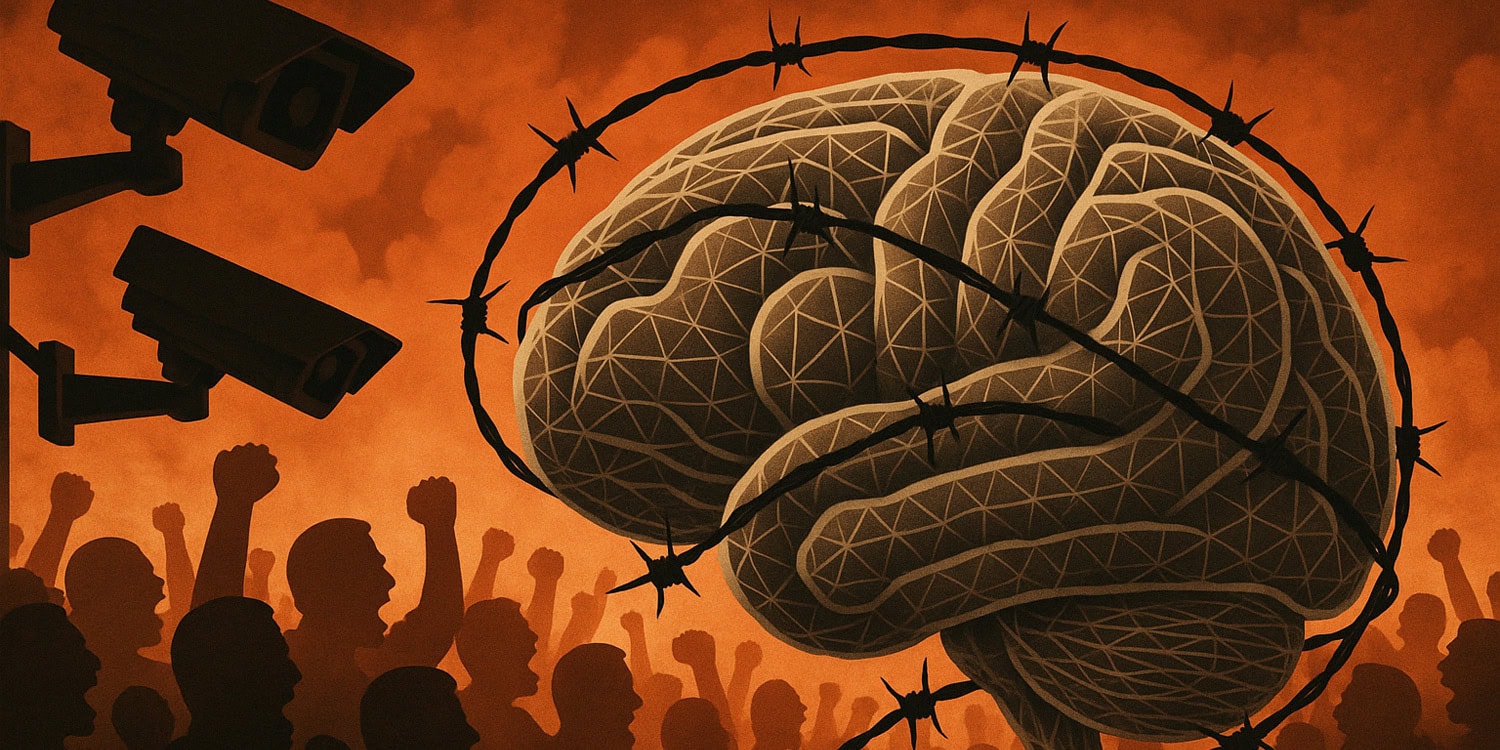
The Organization of Government in Metropolitan Areas: A Theoretical Inquiry
Allusions to the “problem of metropolitan government” are often made in characterizing the difficulties supposed to arise because a metropolitan region is a legal non-entity. From this point of view, the people of a metropolitan region have no general instrumentality of government available to deal directly with the range of problems which they share in common. Rather there is a multiplicity of federal and state governmental agencies, counties, cities, and special districts that govern within a metropolitan region.This view assumes that the multiplicity of political units in a metropolitan area is essentially a pathological phenomenon. The diagnosis asserts that there are too many governments and not enough government. The symptoms are described as “duplication of functions” and “overlapping jurisdictions.” Autonomous units of government, acting in their own behalf, are considered incapable of resolving the diverse problems of the wider metropolitan community. The political topography of the metropolis is called a “crazy-quilt pattern” and its organization is said to be an “organized chaos.” The prescription is reorganization into larger units—to provide “a general metropolitan framework” for gathering up the various functions of government. A political system with a single dominant center for making decisions is viewed as the ideal model for the organization of metropolitan government. “Gargantua” is one name for it.
New Project to Tackle the Challenge of Scaling Democratic Innovations | CoP CC on Participatory and Deliberative Democracy
The “Missing Link” between Research and Society
Democratic AI is Possible. The Democracy Levels Framework Shows How It Might Work
This position paper argues that effectively "democratizing AI" requires democratic governance and alignment of AI, and that this is particularly valuable for decisions with systemic societal impacts. Initial steps -- such as Meta's Community Forums and Anthropic's Collective Constitutional AI -- have illustrated a promising direction, where democratic processes could be used to meaningfully improve public involvement and trust in critical decisions. To more concretely explore what increasingly democratic AI might look like, we provide a "Democracy Levels" framework and associated tools that: (i) define milestones toward meaningfully democratic AI, which is also crucial for substantively pluralistic, human-centered, participatory, and public-interest AI, (ii) can help guide organizations seeking to increase the legitimacy of their decisions on difficult AI governance and alignment questions, and (iii) support the evaluation of such efforts.

The “De” In “Decentralization” Stands For “Democracy”
There’s a certain dark irony in watching tech billionaires who built their empires on the “democratizing power of technology” now actively working to dismantle democratic institut…

The Myth of Authoritarian Efficiency
When it comes to getting stuff done, democracies win every time.
From Fragments to Force: A Call to Unite the Pro-Democracy Movement
There is no shortage of organizations, campaigns, and visionary individuals working to defend and renew American democracy.

Emergence of integrated institutions in a large population of self-governing communities
Five Dimensions of Scaling Democratic Deliberation: With and Beyond AI
DemocracyNext's new paper on Five dimensions of scaling democratic deliberation: With and beyond AI
Liquid Democracy: True Democracy for the 21st Century
Liquid Democracy, a subset of Delegative Democracy, is a powerful voting model for collective decision making in large communities. Liquid…
Democracy is an epistemic discipline, it only works if truth can constrain power. Without a faster, more transparent architecture for shared reality, the arc of democracy bends away from substance, through simulation, and toward authoritarianism. Without major action, it's the inevitable end state.
Are there other ways to organize our economy? Economic democracy expands the ideal of "one person, one vote" into the economy. Democracy in our economy is the next step in realizing a society that features genuine self-determination for all people.

After Capitalism: A Cooperative Economy (Documentary)
youtu.be
