

I often struggle to explain what it means to be part of a high-functioning software team. Sure, there are mountains of literature, and an entire genre of LinkedIn thought leadership that professes all kinds of guidelines and heuristics about what makes teams work, but in my experience, it’s hard to internalize these ideas and follow someone else’s model if you’ve never seen what good looks like.
Adopt and scale Team Topologies: platform-as-a-product, templates, more. — Team Topologies - Organizing for fast flow of value
Accelerate value with Team Topologies: measure cognitive load, define team boundaries, apply inverse Conway, readiness assessments, and more for fast delivery.

Superteams
FEATURED ON THE COVER OF HARVARD BUSINESS REVIEW SHORTLISTED FOR THE SABEW 2026 BEST IN BUSINESS BOOK AWARDS “An outstanding book.” —NPR “A valuable guide for teams and managers seeking to improve performance.” —The Wall Street Journal “A rare read that introduces fresh ideas about how to make groups more than the sum of their parts.” —Adam Grant, bestselling author of Think Again “The ultimate playbook for how to build exceptional teams.” —Fast Company What do the best teams do differently? To find out, award-winning social psychologist Ron Friedman surveyed thousands of teams and pinpointed the precise habits that separate the best from the rest. The results upend everything we think we know about teamwork. It turns out that the most successful teams aren’t the ones that collaborate most, get along best, or put in the longest hours. What really sets them apart is the way they manage their energy and attention, bring out the best in one another, and keep improving over time. Blending eye-opening discoveries with unforgettable stories, Superteams takes you inside the writers’ room of Succession and Bridgerton, the recording studio of ABBA and Fleetwood Mac, the kitchens of Michelin-starred restaurants, the laboratories of Nobel Prize-winning scientists, the locker rooms of NBA and NFL teams, and the boardrooms of the world's most innovative companies. You will learn: - A simple rule that instantly cuts meeting time in half - Why the secret to better teamwork is less teamwork - The one question that makes team decisions up to 30% smarter - The only office perk that improves performance (spoiler: it’s not coffee) - How personal productivity hacks make teamwork harder - Why feeling like the smartest person in the room is a red flag - Why top performers care more about disappointing their peers than their boss - How the best teams avoid burnout without working fewer hours - The science of truly restorative breaks, evenings, and vacations - How to build a team that keeps getting better (even when you’re not in charge) Smart, insightful, and relentlessly practical, this is your science-backed guide to turning your team into a Superteam.

The New Science of Building Great Teams
Why do some teams consistently deliver high performance while other, seemingly identical teams struggle? Led by Sandy Pentland, researchers at MIT’s Human Dynamics Laboratory set out to solve that puzzle. Hoping to decode the “It factor” that made groups click, they equipped teams from a broad variety of projects and industries (comprising 2,500 individuals in total) with wearable electronic sensors that collected data on their social behavior for weeks at a time. With remarkable consistency, the data showed that the most important predictor of a team’s success was its communication patterns. Those patterns were as significant as all other factors—intelligence, personality, talent—combined. In fact, the researchers could foretell which teams would outperform simply by looking at the data on their communication, without even meeting their members. In this article Pentland shares the secrets of his findings and shows how anyone can engineer a great team. He has identified three key communication dynamics that affect performance: energy, engagement, and exploration. Drawing from the data, he has precisely quantified the ideal team patterns for each. Even more significant, he has seen that when teams map their own communication behavior over time and then make adjustments that move it closer to the ideal, they can dramatically improve their performance.
Theory and Memory: Two Forces Shaping Software Team Knowledge
How insights from cognitive science and social psychology explain why software knowledge is so hard to preserve
A Guide to Measuring Engineering Team Performance
“You can’t manage what you can’t measure.” While software development practices constantly change, there will always be a tier of truly top engineering teams who stand above…

What Google Learned From Its Quest to Build the Perfect Team (Published 2016)
New research reveals surprising truths about why some work groups thrive and others falter.

What Google Learned From Its Quest to Build the Perfect Team (Published 2016)
New research reveals surprising truths about why some work groups thrive and others falter.
TeamTopologies/Team-Topologies-Community-Materials
A list of materials relating to Team Topologies (articles, tools, canvases, etc.) generated by the community.
Leading the teams behind the world’s fastest AI | Jensen Huang | Strange Loop
The Strength of the Strongest Ties in Collaborative Problem Solving
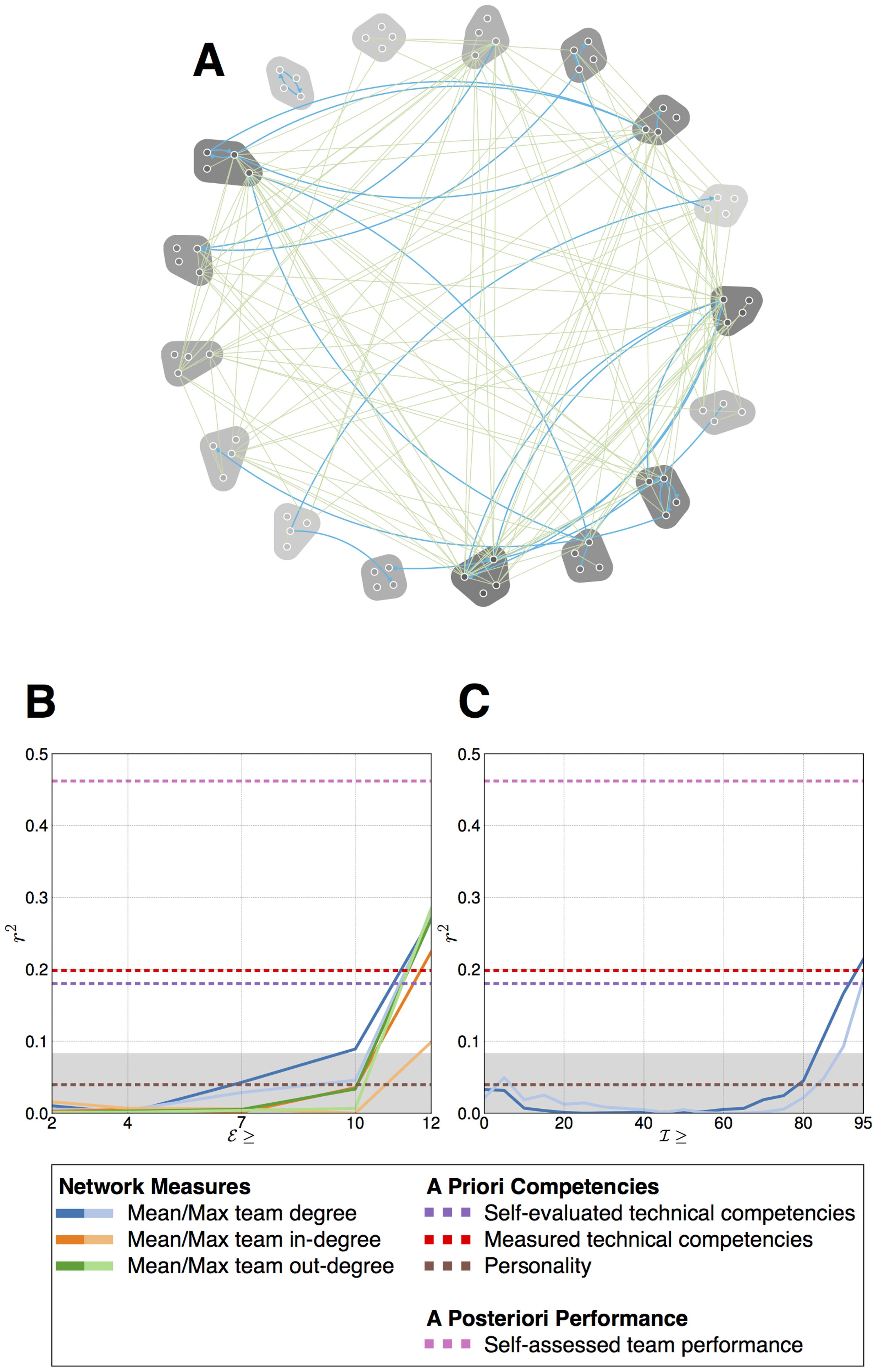
Complex problem solving in science, engineering and business has become a highly collaborative endeavor. Teams of scientists or engineers collaborate on projects using their social networks to gather new ideas and feedback. Here we bridge the literature on team performance and information networks by studying teams' problem solving abilities as a function of both their within-team networks and their members' extended networks. We show that, while an assigned team's performance is strongly correlated with its networks of expressive and instrumental ties, only the strongest ties in both networks have an effect on performance. Both networks of strong ties explain more of the variance than other factors, such as measured or self-evaluated technical competencies, or the personalities of the team members. In fact, the inclusion of the network of strong ties renders these factors non-significant in the statistical analysis. Our results have consequences for the organization of teams of scientists, engineers and other knowledge workers tackling today's most complex problems.
The Strength of the Strongest Ties in Collaborative Problem Solving
Complex problem solving in science, engineering and business has become a highly collaborative endeavor. Teams of scientists or engineers collaborate on projects using their social networks to gather new ideas and feedback. Here we bridge the literature on team performance and information networks by studying teams' problem solving abilities as a function of both their within-team networks and their members' extended networks. We show that, while an assigned team's performance is strongly correlated with its networks of expressive and instrumental ties, only the strongest ties in both networks have an effect on performance. Both networks of strong ties explain more of the variance than other factors, such as measured or self-evaluated technical competencies, or the personalities of the team members. In fact, the inclusion of the network of strong ties renders these factors non-significant in the statistical analysis. Our results have consequences for the organization of teams of scientists, engineers and other knowledge workers tackling today's most complex problems.
Is Your Team Caught in the Solution Fixation Trap?
In the face of escalating complexities, organizations are increasingly relying on teams to tackle these intricate issues and drive pivotal organizational decisions. To extract maximum value from team dynamics, leaders must remain mindful of potential biases that may impact team dynamics and to actively steer and fine-tune team processes. Specifically, the authors urge leaders to address a decision-making bias they call the solution fixation trap, which emerges when a team rushes into discussing possible solutions before fully understanding the problem at hand. The authors discuss the study that helped them uncover this bias, explain what the solution fixation trap looks like, and discuss what leaders can do to protect their teams from it.

The Value of Getting Closer to the Work
Scaling The core problem of scaling a team is that not everyone can know everything. Scaling is the work of systematizing that – so that things are understandable, knowable. It’s turnin…

Case Studies — Team Topologies - Organizing for fast flow of value
Examples of Team Topologies used in industry
Is Project Management Killing Good Products, Teams and Software? - Slashdot
New submitter mikeatTB writes: "For software development, no significant developer activity is predictable or repetitive; if it were, the developers would have automated it already," writes Steven A. Lowe, Principal Consultant Developer at ThoughtWorks, via TechBeacon. "In addition, learning is esse...
