

A Review of Language Machines by Leif Weatherby

Why Do Large Language Models (LLMs) Struggle to Count Letters?
Large Language Models (LLMs) have achieved unprecedented performance on many complex tasks, being able, for example, to answer questions on almost any topic. However, they struggle with other simple tasks, such as counting the occurrences of letters in a word, as illustrated by the inability of many LLMs to count the number of "r" letters in "strawberry". Several works have studied this problem and linked it to the tokenization used by LLMs, to the intrinsic limitations of the attention mechanism, or to the lack of character-level training data. In this paper, we conduct an experimental study to evaluate the relations between the LLM errors when counting letters with 1) the frequency of the word and its components in the training dataset and 2) the complexity of the counting operation. We present a comprehensive analysis of the errors of LLMs when counting letter occurrences by evaluating a representative group of models over a large number of words. The results show a number of consistent trends in the models evaluated: 1) models are capable of recognizing the letters but not counting them; 2) the frequency of the word and tokens in the word does not have a significant impact on the LLM errors; 3) there is a positive correlation of letter frequency with errors, more frequent letters tend to have more counting errors, 4) the errors show a strong correlation with the number of letters or tokens in a word and 5) the strongest correlation occurs with the number of letters with counts larger than one, with most models being unable to correctly count words in which letters appear more than twice.

Why Do Large Language Models (LLMs) Struggle to Count Letters?
Large Language Models (LLMs) have achieved unprecedented performance on many complex tasks, being able, for example, to answer questions on almost any topic. However, they struggle with other simple tasks, such as counting the occurrences of letters in a word, as illustrated by the inability of many LLMs to count the number of "r" letters in "strawberry". Several works have studied this problem and linked it to the tokenization used by LLMs, to the intrinsic limitations of the attention mechanism, or to the lack of character-level training data. In this paper, we conduct an experimental study to evaluate the relations between the LLM errors when counting letters with 1) the frequency of the word and its components in the training dataset and 2) the complexity of the counting operation. We present a comprehensive analysis of the errors of LLMs when counting letter occurrences by evaluating a representative group of models over a large number of words. The results show a number of consistent trends in the models evaluated: 1) models are capable of recognizing the letters but not counting them; 2) the frequency of the word and tokens in the word does not have a significant impact on the LLM errors; 3) there is a positive correlation of letter frequency with errors, more frequent letters tend to have more counting errors, 4) the errors show a strong correlation with the number of letters or tokens in a word and 5) the strongest correlation occurs with the number of letters with counts larger than one, with most models being unable to correctly count words in which letters appear more than twice.
Mixture-of-Experts (MoE): The Birth and Rise of Conditional Computation
What two decades of research taught us about sparse language models...
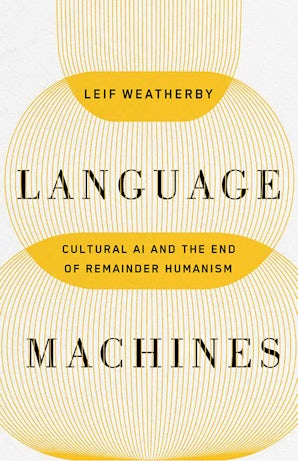
Language Machines
How generative AI systems capture a core function of language Looking at the emergence of generative AI, Language Machines presents a new theory of meaning i...
Aaron Steven White
computational semanticist. into modular synths and rum. https://aaronstevenwhite.io
Back-to-basics approach can match or outperform AI in language analysis
A new study led by Dr Andrea Nini at The University of Manchester has found that a grammar-based approach to language analysis can match or outperform advanced AI systems in identifying who wrote a text. The method, called LambdaG, uses patterns in grammar and sentence construction rather than large-scale AI models, offering comparable accuracy ...
Aaron Steven White
computational semanticist. into modular synths and tiki. https://aaronstevenwhite.io
Maite Taboada
Maite Taboada. Professor. Department of Linguistics, Simon Fraser University. Research: discourse analysis, computational linguistics
How Large Language Models Actually Work

Packrat parsing: | Proceedings of the seventh ACM SIGPLAN international conference on Functional programming
For decades we have been using Chomsky's generative system of grammars, particularly context-free grammars (CFGs) and regular expressions (REs), to express the syntax of programming languages and protocols. The power of generative grammars to express ...

The Lambek Calculus
There is a noticeable revival of categorial grammar these days, as a vehicle for linguistic description. The systems used differ somewhat from the original calculus of Ajdukiewicz and Bar-Hillel, however. In particular, there is a component of rules for ‘type change’ of expressions, making for greater flexibility and elegance. One fundamental system of this kind is the so-called ‘Lambek Calculus’, whose type-change rules show a close analogy with the inference rules of constructive propositional logic. In this paper, we present one calculus of this kind, and survey its theoretical properties as a device in linguistic semantics. Our two main new contributions are a new and complete semantics for this calculus, as well as a modest study of its language-accepting capacity. In this way, we hope to provide a better understanding of the background theory of flexible categorial grammar, in tandem with its descriptive uses.

Recursive Language Models: the paradigm of 2026
How we plan to manage extremely long contexts
.png?v=c8c07d4bf43b)
I'm creating a series of short form videos about how language models work technically. The goal is to be something in between "you know it's next token prediction" and "now you've taken a machine learning class." I'd love your thoughts so here are the first few! 🧵 youtube.com/shorts/VZB8XCcyllE

How does ChatGPT work? Or rather, language models in general- Part 1 attempting a lay explanation.
www.youtube.com