Design mediates so much of our realities and has tremendous impact on our lives, yet very few of us participate in design processes. In particular, the people who are most adversely affected by design decisions — about visual culture, new technologies, the planning of our communities, or the structure of our political and economic systems — tend to have the least influence on those decisions and how they are made.
About Us — Design Justice Network
The Design Justice Network is a home for people who are committed to embodying and practicing the Design Justice Network Principles.
Design Justice Principles Overview and Translations of the Principles in various languages — Design Justice Network
Any individual or organization who decides to sign on to the Design Justice Network Principles is a DJN Signatory.
Design Justice
An exploration of how design might be led by marginalized communities, dismantle structural inequality, and advance collective liberation and ecological survival.

Design Justice
An exploration of how design might be led by marginalized communities, dismantle structural inequality, and advance collective liberation and ecological survival.
Design Justice: Community-Led Practices to Build the Worlds We Need
An exploration of how design might be led by marginalized communities, dismantle structural inequality, and advance collective liberation and ecological su
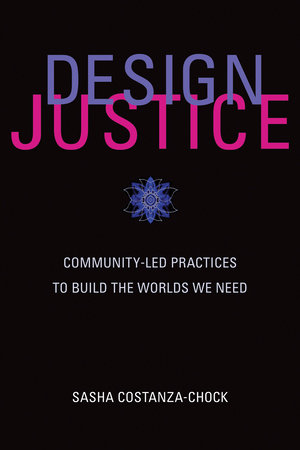
Design Justice: Community-Led Practices to Build the Worlds We Need
Community-Led Practices to Build the Worlds We Need
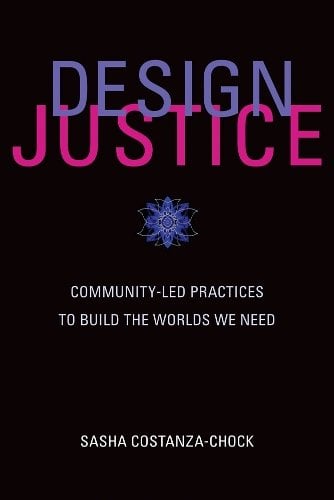
Design Justice: Community-Led Practices to Build the Worlds We Need
An exploration of how design might be led by marginalized communities, dismantle structural inequality, and advance collective liberation and ecological survival. What is the relationship between design, power, and social justice? “Design justice” is an approach to design that is led by marginalized communities and that aims expilcitly to challenge, rather than reproduce, structural inequalities. It has emerged from a growing community of designers in various fields who work closely with social movements and community-based organizations around the world. This book explores the theory and practice of design justice, demonstrates how universalist design principles and practices erase certain groups of people—specifically, those who are intersectionally disadvantaged or multiply burdened under the matrix of domination (white supremacist heteropatriarchy, ableism, capitalism, and settler colonialism)—and invites readers to “build a better world, a world where many worlds fit; linked worlds of collective liberation and ecological sustainability.” Along the way, the book documents a multitude of real-world community-led design practices, each grounded in a particular social movement. Design Justice goes beyond recent calls for design for good, user-centered design, and employment diversity in the technology and design professions; it connects design to larger struggles for collective liberation and ecological survival. The open access edition of this book was made possible by generous funding from Knowledge Unlatched and the MIT Press Frank Urbanowski Memorial Fund.
Designs for the pluriverse: radical interdependence, autonomy, and the making of worlds
"Arturo Escobar presents a new vision of design theory by arguing for the creation of what he calls 'autonomous design'--a design practice aimed at channeling design's world-making capacity toward ways of being and doing that are deeply attuned to justice and the Earth"--Publisher description

The De|Center | Justice, Human Rights, and Tech
The De|Center is the home of the Design from the Margins methodology. We do deep work with decentered communities to make concrete changes to technology tools that address systemic injustice and advance human rights.

Prosocial Design Network
The Prosocial Design Network advocates for prosocial design: evidence-based design practices that bring out the best in human nature online.
.png)
COMMUNITY-BASED, HUMAN-CENTERED DESIGN
We propose a radical change in design from experts designing for people to people designing for themselves, leveraging the creativity of communities to solve their own problems. People in communiti…

On Design Thinking | Maggie Gram
By embracing “design thinking,” we attribute to design a kind of superior epistemology: a way of knowing, of “solving,” that is better than the old and local and blue-collar and municipal and unionized and customary ways. We bring in “design thinkers” — some of them designers by trade, many of them members of adjacent knowledge fields — to “empathize” with Kaiser hospital nurses, Gainesville city workers, church leaders, young mothers, and guerrilla fighters the world over.

An introduction to radical participatory design: decolonising participatory design processes
Outside of community-led design projects, most participatory design processes initiated by a company or organisation maintain or even strengthen power imbalances between the design organisation and the community on whose purported behalf they are designing, further increasing the absencing experience. Radical participatory design (RPD) is a radically relational answer to the coloniality inherent in participatory design where the community members’ disappointment is greater due to the greater expectations and presencing potential of a ‘participatory design’ process. We introduce the term RPD to show how research and design processes can be truly participatory to the root or core. Instead of treating participatory design as a method, a way of conducting a method, or a methodology, we introduce RPD as a meta-methodology, a way of doing any methodology. We explicitly describe what participation means and compare and contrast design processes based on the amount of participation, creating a typology of participation. We introduce ‘designer as community member’, ‘community member as designer,’ and ‘community member as facilitator’ models and provide characteristics for the meta-methodology of RPD.

An introduction to radical participatory design: decolonising participatory design processes
Outside of community-led design projects, most participatory design processes initiated by a company or organisation maintain or even strengthen power imbalances between the design organisation and the community on whose purported behalf they are designing, further increasing the absencing experience. Radical participatory design (RPD) is a radically relational answer to the coloniality inherent in participatory design where the community members’ disappointment is greater due to the greater expectations and presencing potential of a ‘participatory design’ process. We introduce the term RPD to show how research and design processes can be truly participatory to the root or core. Instead of treating participatory design as a method, a way of conducting a method, or a methodology, we introduce RPD as a meta-methodology, a way of doing any methodology. We explicitly describe what participation means and compare and contrast design processes based on the amount of participation, creating a typology of participation. We introduce ‘designer as community member’, ‘community member as designer,’ and ‘community member as facilitator’ models and provide characteristics for the meta-methodology of RPD.
We need to talk about the social graph - Philip Sheldrake
Concepts are the fundamental building blocks of thinking, of designing. While there are plenty of things in the mix when it comes to contemplating system design, if the primary concepts remain unchallenged and unchanged from what came before, then the outcome will likely look very familiar.

Making the Case for Actionable Prosocial Design Research
Regulating harmful design is only half the equation — attention must also go toward how platforms can build prosocial design, and toward the research that shows them how.