

In my recent post on Rastair , we looked at some performance best-practices and optimizations for Rastair , a bioinformatics tool that I’m currently working on. One of the slowest parts of the tool is …
Modern GPU Programming For MLSys — Modern GPU Programming For MLSys
Machine learning systems sit at the heart of modern AI workloads. In these systems, performance often comes down to the quality of a small number of GPU kernels. Attention kernels, LLM prefill and decode kernels, low-precision block-scaled GEMMs, fused MoE layers, and other large fused kernels all directly shape end-to-end speed in both training and serving.
Modern GPU Programming For MLSys — Modern GPU Programming For MLSys
Machine learning systems sit at the heart of modern AI workloads. In these systems, performance often comes down to the quality of a small number of GPU kernels. Attention kernels, LLM prefill and decode kernels, low-precision block-scaled GEMMs, fused MoE layers, and other large fused kernels all directly shape end-to-end speed in both training and serving.
vik on Twitter / X
Photon, our inference engine, isn't fast just because of GPU kernels. A lot of the speedup comes from engine-level work: request scheduling, prefix caching, image processing, all tuned to keep the GPU saturated. https://t.co/3M7eFcFKo5— vik (@vikhyatk) May 2, 2026
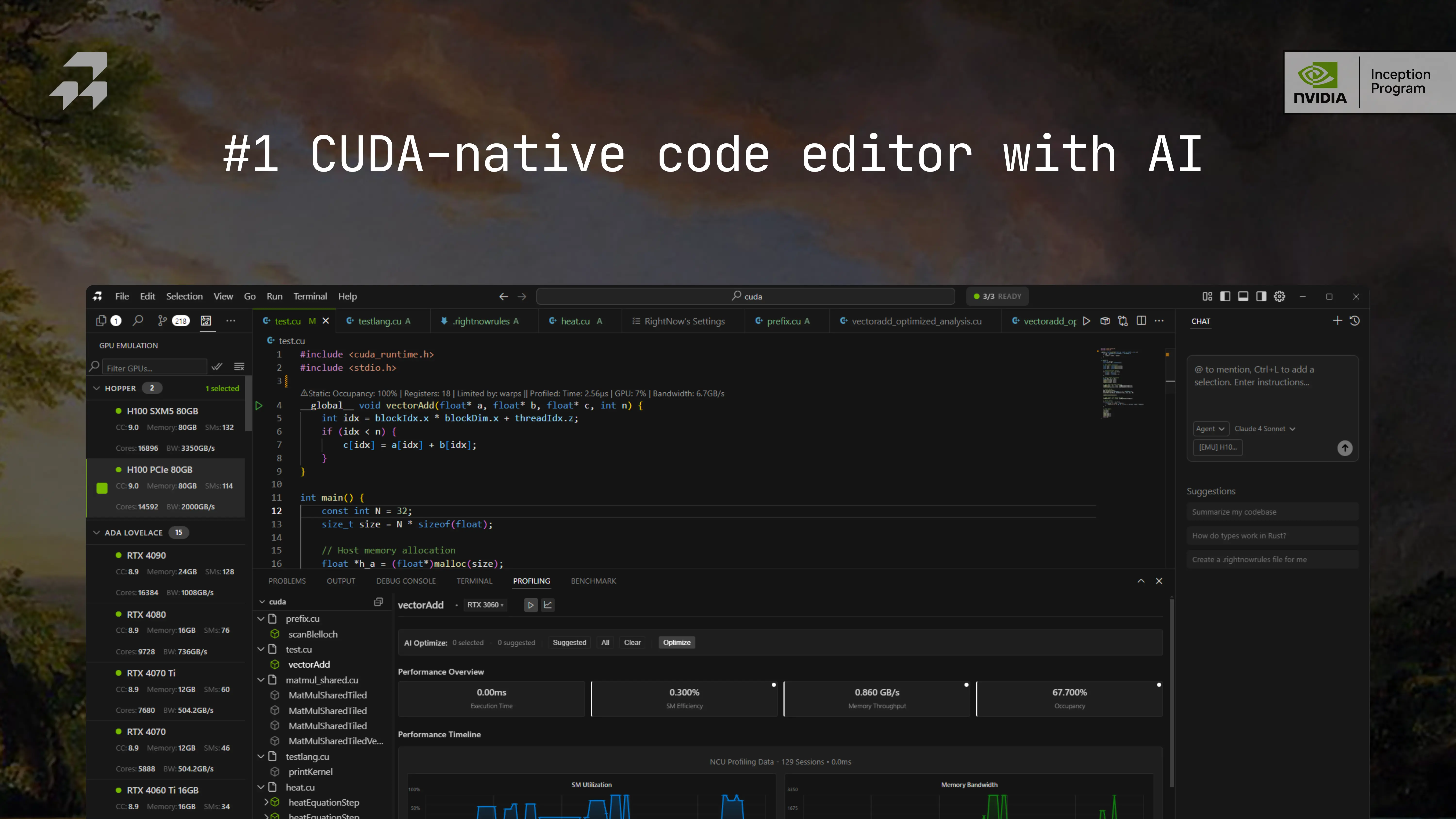
RightNow AI - YC-Backed GPU Research Lab
YC-backed GPU research lab building the RightNow CUDA editor, RunInfra inference infra, Forge kernels, and publishing AutoMegaKernel and related papers on arXiv.
Open Source AI Inference Benchmark | InferenceX
Compare AI inference performance across GPUs and frameworks. Real benchmarks on NVIDIA GB200, B200, AMD MI355X, and more. Free, open-source, continuously updated.
Accelerating GPT-5.6 Sol Ultrafast with OpenAI
Cerebras powers OpenAI’s GPT-5.6 Sol Ultrafast in the OpenAI API, delivering frontier intelligence at real-time speeds for critical AI work.
XiongjieDai/GPU-Benchmarks-on-LLM-Inference
Multiple NVIDIA GPUs or Apple Silicon for Large Language Model Inference?
LLMs Can Now Write GPU Kernels That Beat torch.compile - Break AI Scaling Limits in 7 Days
We're now seeing multi-agent systems that take your PyTorch code and produce CUDA or Triton kernels with 2x to 14x speedups over torch.compile(mode='max-autotune-no-cudagraphs'). Not on toy benchmarks. On real models like Llama-3.1-8B, Whisper, and Stable Diffusion. Learn proven techniques to shift the scaling law intercept and achieve 10-50% performance gains.
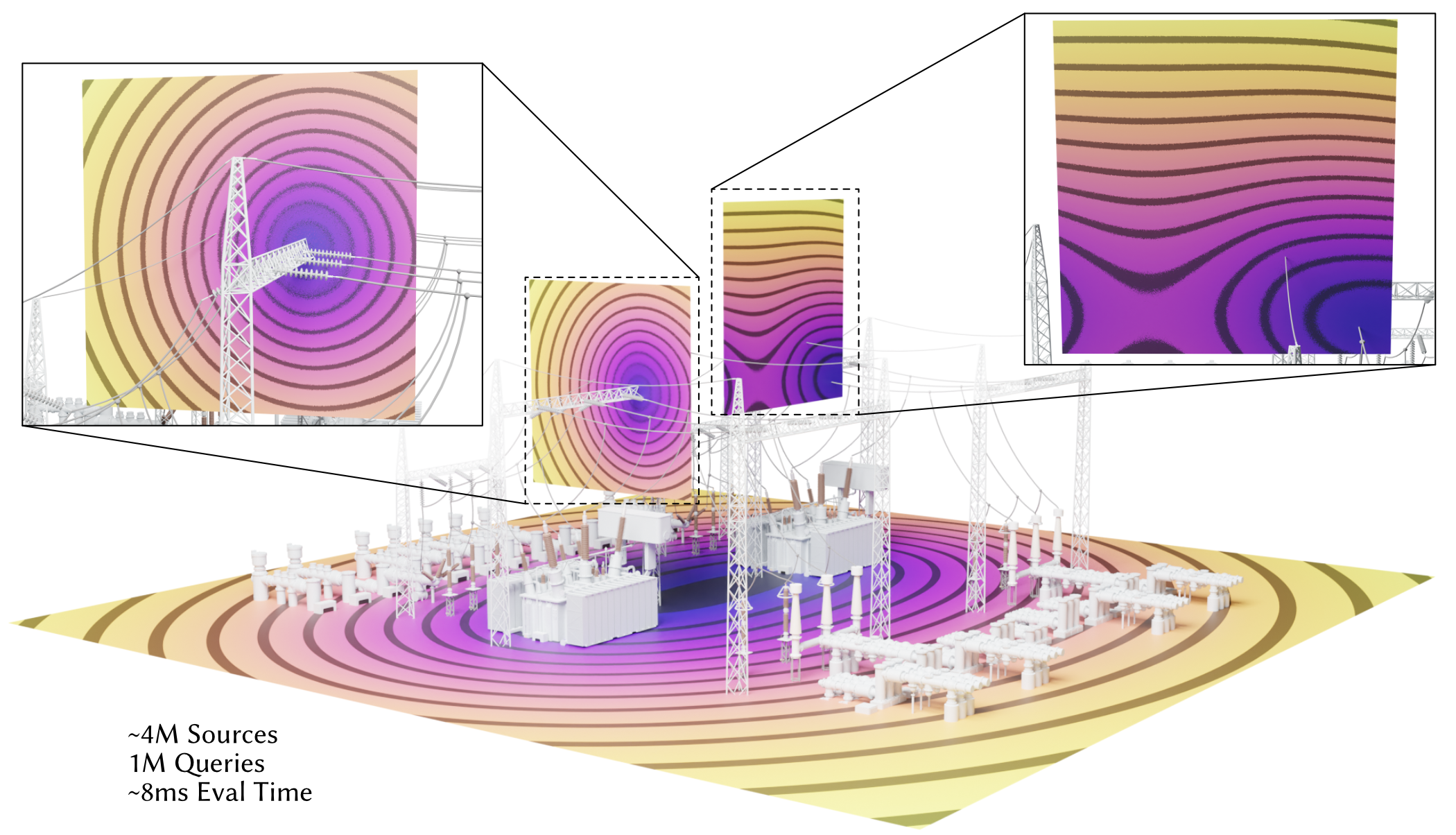
Stochastic Barnes-Hut Approximation for Fast Summation on the GPU
We present a novel stochastic version of the Barnes-Hut approximation. Regarding the level-of-detail (LOD) family of approximations as control variates, we construct an unbiased estimator of the kernel sum being approximated. Through several examples in graphics applications such as winding number computation and smooth distance evaluation, we demonstrate that our method is well-suited for GPU computation, capable of outperforming a GPU-optimized implementation of the deterministic Barnes-Hut approximation by achieving equal median error in up to 9.4x less time.
InferenceMAX™: Open Source Inference Benchmarking
NVIDIA GB200 NVL72, AMD MI355X, Throughput Token per GPU, Latency Tok/s/user, Perf per Dollar, Tokens per Provisioned Megawatt, DeepSeek R1 670B, GPTOSS 120B, Llama3 70B

Fast Embeddings on GPUs
Fast and accurate search is vital to all of Perplexity, from Search and Computer to our API Platform. Behind the scenes, the heavy lifting is done by embedding

Run any open model on any GPU - Muna
The Python-to-native compiler for AI. We remove everything between your model and the GPU.

Where AI Startups Scale to Production
Discover the most efficient way to build, tune and run your AI models and applications on top-notch NVIDIA® GPUs.

Introducing CUDA Rust: Two Tracks for Writing GPU Kernels | NVIDIA Technical Blog
In September 2026, NVIDIA announced it is leaning into native GPU programming in Rust. CUDA C++ and CUDA Python are mature, enterprise-grade toolchains, and NVIDIA will be growing and maturing CUDA…
