


The open() method of the Window interface loads a specified resource into a new or existing browsing context (that is, a tab, a window, or an iframe) under a specified name.
Document: requestStorageAccess() method - Web APIs | MDN
The requestStorageAccess() method of the Document interface allows content loaded in a third-party context (i.e., embedded in an <iframe>) to request access to third-party cookies and unpartitioned state. This is relevant to user agents that, by default, block access to third-party, unpartitioned cookies to improve privacy (e.g., to prevent tracking), and is part of the Storage Access API.
dietrich (@burrito.space)
A lot of Peek is window manager-y fun things, but with web pages, eg this design detail: - global hotkey -> cmd bar, doesn't take app focus - opening a URL there *does* take app focus, but *only* for the new/matching window, doesn't bring the rest along You get the page, but it *feels* in-place.

Web UI · Omnigent
The Omnigent web UI starts automatically with every session; open the printed URL in any browser to work with your agent.
Web UI · Omnigent
The Omnigent web UI starts automatically with every session; open the printed URL in any browser to work with your agent.
Dev Discussion: Open Frames for Bluesky & AT Protocol · Zoom · Luma
Open Frames is an extension of Open Graph that makes link previews interactive. Open Graph https://ogp.me/ is widely used by websites to add extra meta data,…

Web application manifest - Progressive web apps | MDN
A web application manifest, defined in the Web Application Manifest specification, is a JSON text file that provides information about a web application.
<dialog> HTML dialog element - HTML | MDN
The <dialog> HTML element represents a modal or non-modal dialog box or other interactive component, such as a dismissible alert, inspector, or subwindow.
AT Protocol Handler – Get this Extension for 🦊 Firefox (en-US)
Download AT Protocol Handler for Firefox. AT Protocol Handler This extension lets you handle and open at:// URLs seamlessly in your browser by listing compatible sites. Originally developed for Chrome, this version supports Firefox with full protocol handler integration.

AT Protocol Handler – Get this Extension for 🦊 Firefox (en-US)
Download AT Protocol Handler for Firefox. AT Protocol Handler This extension lets you handle and open at:// URLs seamlessly in your browser by listing compatible sites. Originally developed for Chrome, this version supports Firefox with full protocol handler integration.
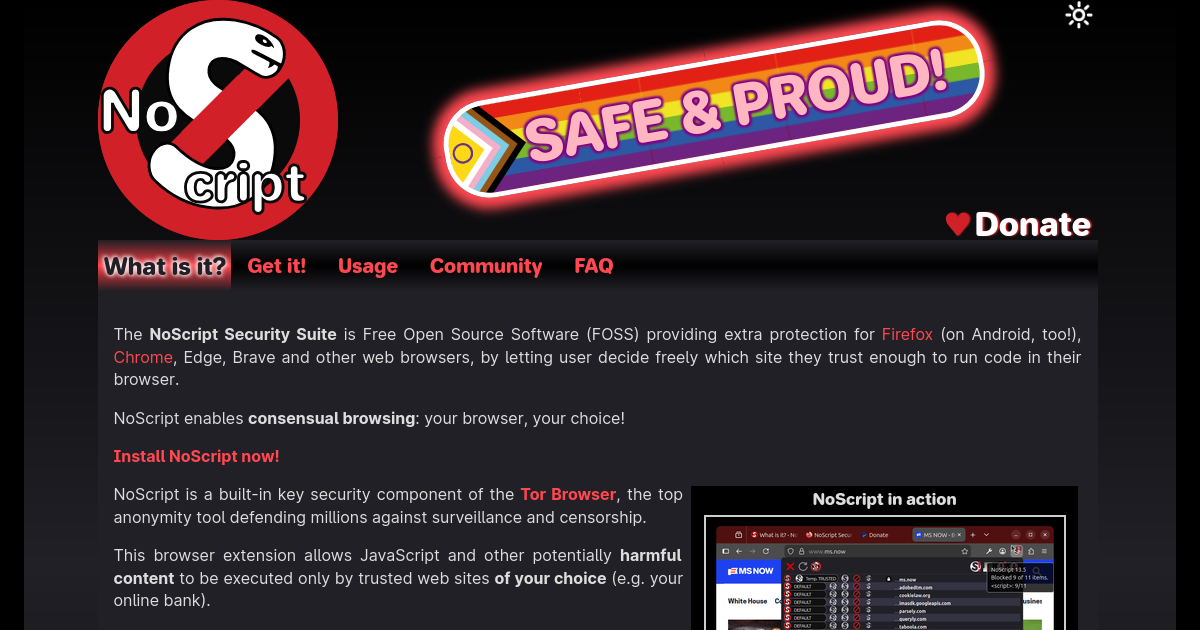
What is it? - NoScript: consensual browsing!
The NoScript Security Suite is Free Software protecting Firefox (on Android, too!), Chrome, Edge, Brave and other web browsers. Install NoScript now!
New Custom Handlers component for Chrome – make everything intensely
The HTML Standard section on Custom Handlers describes the procedure to register custom protocol handlers for URLs with specific schemes. When a URL is followed, the protocol dictates which part of the system handles it by consulting registries. In some cases, handlers may fall to the OS level and and launch a desktop application (eg. mailto:// may launch a native application) or, the browser may redirect the request to a different HTTP(S) URL (eg. mailto:// can go to gmail).
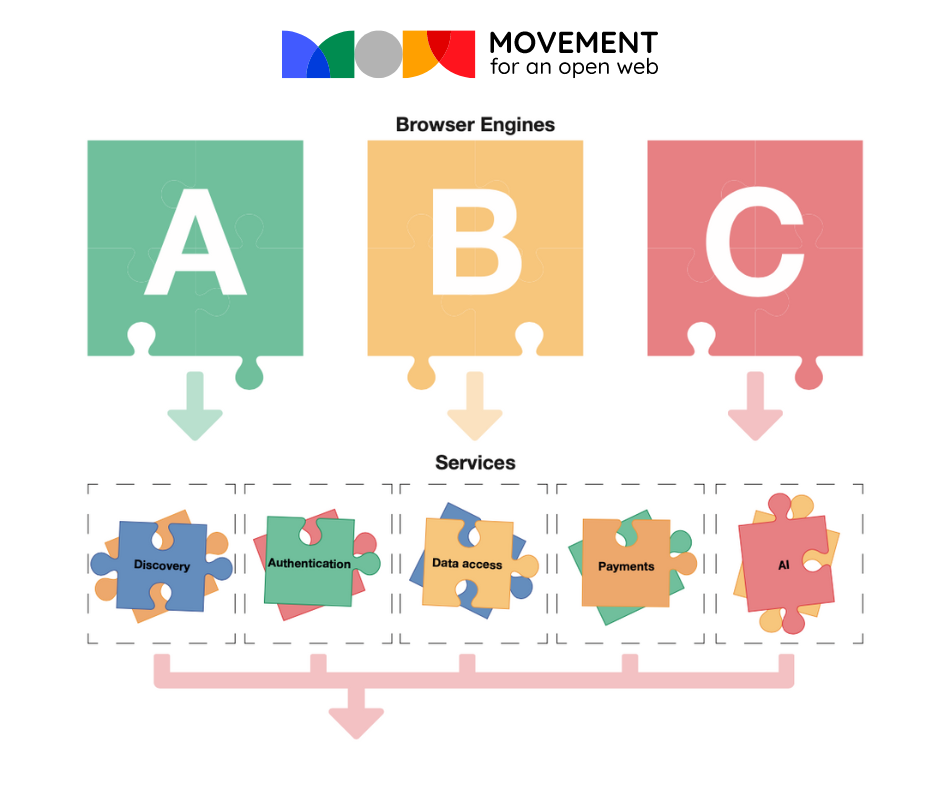
Break up the Browsers. A Proposal to Save the Open Web. - Movement For An Open Web
The Open Web is one of the world’s modern wonders. Based on core, universally recognised technical standards and owned and controlled by no one body, it is a unique structureRead More
Open Frames - Docs
An extension of Open Graph that makes link previews interactive.

Web Components - Web APIs | MDN
Web Components is a suite of different technologies allowing you to create reusable custom elements — with their functionality encapsulated away from the rest of your code — and utilize them in your web apps.
Protocol Handler Registration via Browser Extensions – make everything intensely
Custom URL schemes have traditionally served as an integration bridge between the browser and external capabilities. Schemes such as mailto: and tel: allow navigation to trigger actions beyond ordinary HTTP resource retrieval. The HTML Standard formalizes this mechanism through the Custom Scheme Handlers API, which enables websites to register themselves as handlers for specific URL schemes.
thanks @tokono.ma for asking some questions which got me hacking on this again can now open regular windows directly can register as default browser, paring nicely with @sindresorhus.com's Velja to route link clicks w/ a modifier key BUT MOST IMPORTANTLY... it animates the spinner when you type 😎

dietrich
friday hacking cleaned up a bit - the underlying bits function and the buttons say what they do can also pass --url on the command line to open no niceties yet like, uh... navigating back/forward, or most other stuff you'd expect from a browser