


Restrict a Workflow to a jurisdiction to control where its instances run and store data.
The Case for Co-Locating Workflow State with Your Data | DBOS
Keeping workflow state and application data in the same Postgres database lets one transaction update both, simplifying idempotency and atomicity.
Mapping the Data Ecosystem
We cannot hope to regulate the misuse of data without means to hold all interconnected parties accountable for the uses and flows of data.

Cloud Run locations | Google Cloud Documentation
Each Cloud Run resource resides in a region. Customer data associated with the Cloud Run resource is stored in the selected region. You can serve traffic from multiple regions by configuring external HTTP(S) Load Balancing. To learn about all Google Cloud locations and to find the region picker tool, see the Cloud locations page.

Data Supply Chains
Data is a critical resource. Like oil, gold, or lithium, both companies and countries covet data. Ultimately, like oil, data’s flow can enrich those that posses

Who the General Data Protection Law applies to
Find out who the data protection law applies to.

Decentralized Data Compliance Working Group
Working on clarifying decentralized storage compliance, shared ToS, code of conduct, and other public good outcomes - Decentralized Data Compliance Working Group

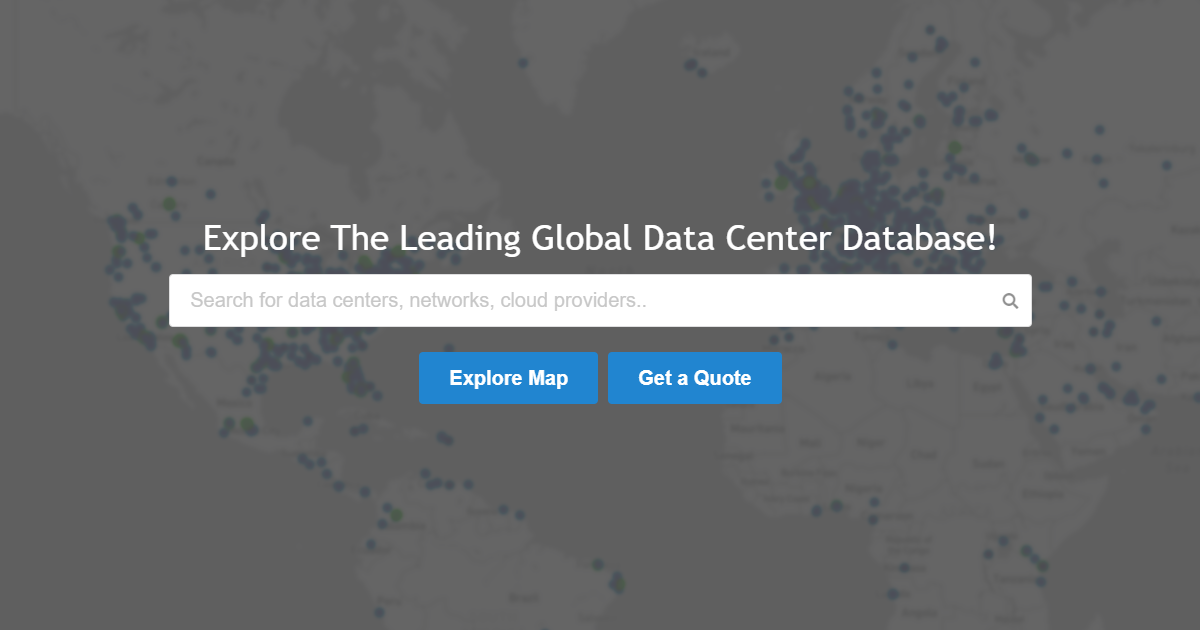
Data Centers - Database
Data Centers in Worldwide - List of Colocation and Cloud data facilities in Worldwide. Get Quotes and find Specs, Photos, Videos etc.
Permissioned Data Diary 2: Buckets - Daniel's Leaflets
The second in a series of posts building up a solution to permissioned data on atproto. We introduce buckets: a new protocol primitive for creating a shared social context.
Comment on: Permissioned Data Diary 2: Buckets - Daniel&#...
"a bucket doesn’t necessarily imply a physical container sitting on one PDS. Consider how threads ..." The distributed-vs-centralized storage question is where this gets really interesting. If buc...
Composing capability security and conflict-free replicated data types — Spritely Institute
In August, I attended the DWeb Seminar where a small group of builders gathered to discuss the state-of-the-art and open problems in the distributed web space. Some in the group are primarily concerned with distributed data and focus on sync algorithms and local-first use cases. I am mainly concerned with distributed behavior and focus on the object capability security model. Both areas of study are steeped in their own lore and research papers, which makes it difficult for the two camps to communicate effectively with each other.
Permissioned Data Diary 3: Your Bucket, My Data - Daniel's Leaflets
The third in a series of posts building up a solution to permissioned data on atproto. We look at two different models for where buckets live and why the simpler-looking one doesn’t work out.
continuing to build up our permissioned data protocol! this one asks what a bucket actually is and where the data that constitutes a bucket is stored. it argues for maintaining the atproto ethos in the permissioned data protocol as always, looking forward to hearing your thoughts!

Permissioned Data Diary 3: Your Bucket, My Data
dholms.leaflet.pubThere is one area with Permissioned Data Spaces that I haven't seen discussed. It reveals that data is currently stored in the (I think I'm coining a term here) *Public Space* on Personal Data Servers. Remember, most people on Bluesky aren't aware of where their data is stored, or what that means.
A deep dive on permissioned-data space access. The dials, policies, and the difference between handing out keys and revoking them.

Permissioned Data: Space Access
ngerakines.leaflet.pub

