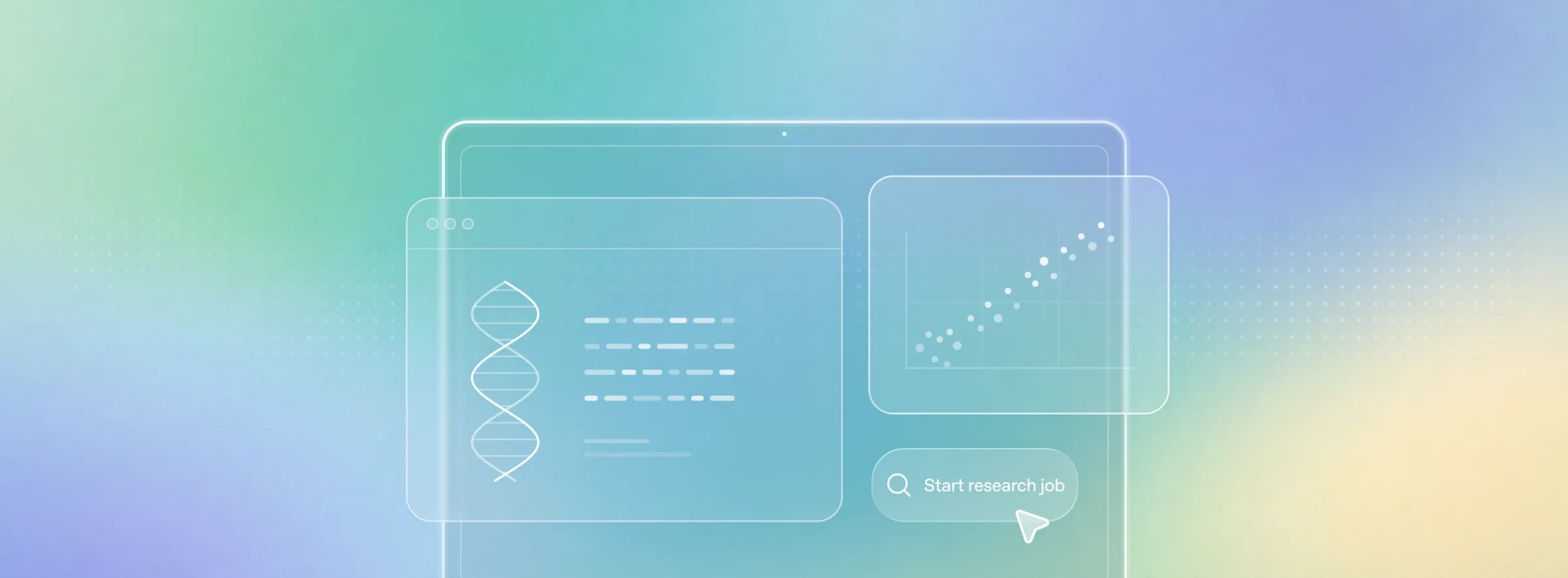
How guided tasks, scientific viewers, and sequencing analysis help researchers follow a question from data to evidence.
PRISM: Capturing the Invisible Art of Scientific Practice
A New Tool for Recording and Scaling Laboratory Expertise

Introducing GPT-Rosalind for life sciences research
OpenAI introduces GPT-Rosalind, a frontier reasoning model built to accelerate drug discovery, genomics analysis, protein reasoning, and scientific research workflows.
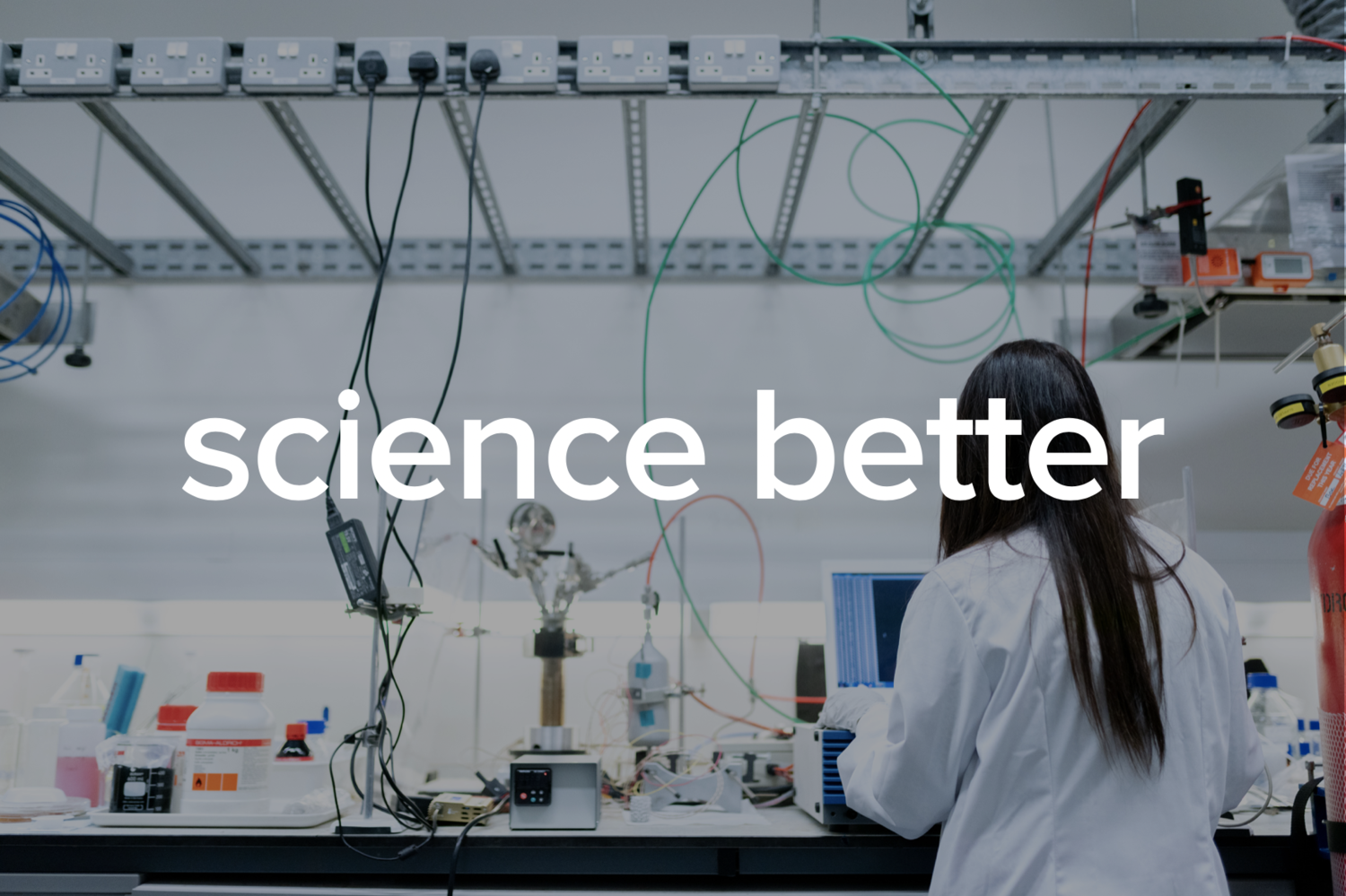
Improving scientific mentorship with "Open Labs" — science better
Open Labs would be a place for experienced scientists to post their open questions and curiosities — a list of the ideas they don't have time to pursue personally but wish someone would.
How and When to Involve Crowds in Scientific Research - The Book
This book explores how millions of people can significantly contribute to scientific research. Discover main elements, authors, and who this book is for and why.
Professionalising Community Management Roles in Interdisciplinary Research Projects
In this article we discuss community management in interdisciplinary research teams, focusing on recognising and professionalising roles referred to here as the Research Community Managers (RCM). Drawing insights and examples from research and data science projects, we discuss how RCM roles address some of the researchâs most pressing challenges, from promoting best practices for open research and reproducibility to engaging diverse stakeholders in community-led research and ensuring fair recognition for their contributions. We offer a Community Maturation Indicator and share examples of projects from The Alan Turing Institute, the UK's national institute for data science and Artificial Intelligence (AI), where institutionally supported RCM roles were established. With the aim to integrate RCM expertise in teams involved in data science and AI research, we provide an RCM Skills and Competencies Framework. We also propose a roadmap for professionalising RCM roles by improving recognition and rewards, potential career paths and organisational support structures. To systematically sustain and progress these roles, we recommend institutional investment in establishing RCM teams that are empowered to prioritise collaboration, transparency and community-based approaches in interdisciplinary projects, such as in data science and AI. As a team, RCMs are well placed to connect disparate teams, initiatives and resources across the organisation, building more resilient research communities that can achieve greater innovation, improved project outcomes and a strongly connected ecosystem, with impacts extending beyond their narrow contexts.

Demonstrating end-to-end scientific discovery with Robin | FutureHouse
Robin is the first multi-agent system for discovery in biology that integrates novel hypothesis generation with experimental data analysis in one continuous workflow.

Introducing Hypothesis commenting on bioRxiv and medRxiv: an updated way to engage with preprints - openRxiv
An important part of our mission at openRxiv is to collaborate with other organizations to improve science communication and promote interoperability. Preprints are just one part of the research workflow, and we want to ensure they are effectively integrated with the tools and communities that drive scientific progress. Today, we’re excited to share about another…
OpenScience.ai — Autonomous AI Research Agents
AI agents conducting reproducible scientific inquiry. Full provenance, executable notebooks, peer validation.

Center for Open Science
At the Center for Open Science, our mission is to increase openness, integrity, and reproducibility of scholarly research. Promoting these practices within the research funding and publishing communities accelerates scientific progress

How and When to Involve Crowds in Scientific Research | James Evans
The lone academic in a basement lab is an endangered species. Years ago I asked Paul Ginsparg, who founded arXiv, what features his machine-learning filter used to flag speculative submissions. The top three: single-authored, submitted on a weekend, and heavy citation of Newton and Einstein. Science is a contact sport now. Marion Poetz and Henry Sauermann's How and When to Involve Crowds in Scientific Research (https://lnkd.in/g5pwVbfD) is the field manual. What crowds can do: Volume. Zooniverse mobilizes 2.7 million people to classify galaxies and court records. Galaxy Zoo's co-founder hand-classified 50,000 galaxies in one week before concluding that isolation would break him. Reach. NASA spent years failing to predict solar flares, then broadcast the problem. The winner was a semi-retired radio engineer in rural New Hampshire who swapped satellite data for radio data. Experience. Patients and caregivers asked to generate research questions produced 826 that scientists had missed, including the link between aging and wound healing. Bench-to-bedside runs backward. One caution the book underplays: an open call is not an inclusive one. Participation costs in time, money, and access screen people out. Self-selection can narrow the very diversity that makes crowds thrive. As AI floods the labor supply of routine, homogeneous cognition, human crowds become more valuable, not less. Machines process. People notice what nobody thought to ask. Check out my review @ https://lnkd.in/gkzvWrRC and the book @ https://lnkd.in/g5pwVbfD!

Metagov x Future of Science Seminar - Discourse Graphs with Matt Akamatsu
Launching openRxiv Labs - openRxiv
Over the last thirteen years, bioRxiv and medRxiv have grown into widely used infrastructure for rapid research sharing in biology and medicine. The reliability and researcher-first values that have defined these platforms since their founding remain central to how we operate, and building on the trust, partnerships, and community relationships researchers worldwide depend on is…
swyx on Twitter / X
icymi, openai also open sourced how their deep research prompt rewriter works + the full prompts todayyou can now build your own deep research agent - with full o3/o4-mini deep research quality - in 20LOCif you're a fan of Claude Research they ALSO dropped how to add… pic.twitter.com/5moxXjzqTj— swyx (@swyx) June 27, 2025

OpenAI launches AI model GPT-Rosalind for life sciences research
OpenAI on Thursday introduced an artificial intelligence model touting increased biology knowledge and scientific research capabilities, as the startup deepens its push into the life sciences field.

Introduction to Open Science
This course introduces the principles and practices of open science, with an emphasis on reproducible research workflows, transparent reporting, and collaborative scholarship. Students will critically examine reproducibility, explore tools that support openness (such as Git, GitHub, and Quarto), and apply these tools in hands-on assignments and a final open project. Students will also explore how open science practices vary across disciplines, including education, humanities, social sciences, industry and government, and STEM contexts. This course emphasizes applying open science principles to real-world data problems in alignment with the principles of producing reproducible research.
A Research Lab for Open Source ✸ Software Stewardship Lab
Today, we're launching a world-class research lab dedicated to Open Source sustainability with a team of some of the most experienced people in the world.