

The DFC Standard makes it easier to share short foodchain systems data across platforms.
Data Governance for Sustainable Digital Food Systems | DigiFood
Explore our research on agricultural data governance in Kenya, India, and Colombia. We aim to support civil society with a human-rights based approach to digital food systems. Join us in promoting equitable practices for sustainable agriculture.
Driving Finance for Sustainable Food Systems: A Roadmap to Implementation for Financial Institutions and Policy Makers
Food systems play a central role in all societies and are fundamental to sustainable development. The environmental and social impacts of the global food system are interconnected and affect diverse...
The Food Surplus Network
Connect with Canada's largest food surplus platform. 1,500+ organizations, 46M+ kg diverted, 70M+ meals provided. Free to join for retailers, charities & more.
About GOAT
Information about our food system should be public or easy-to-share.Unfortunately, that is often not the case. Food is currently produced by a mix of private and public entities, and information about our food system can be opaque, hard-to-find, or proprietary and farmers may have limited control of the on-farm data they generate or ability to improve the tools they use.

Universal Basic Nutrient Income — Institutional Infrastructure for 2040 Food Preparedness?
This blog post marks the starting point of our work on the Universal Basic Nutrient Income (UBNI) policy instrument in Sweden. This…

Open Food Facts - world
A collaborative, free and open database of ingredients, nutrition facts and information on food products from around the world

Open Food Facts - world
A collaborative, free and open database of ingredients, nutrition facts and information on food products from around the world
Open Food Facts
A collaborative, free and open database of ingredients, nutrition facts and information on food products from around the world
did:web Method Specification
DIDs that target a distributed ledger face significant practical challenges in bootstrapping enough meaningful trusted data around identities to incentivize mass adoption. We propose a new DID method using a web domain's existing reputation.
A Nutrition Label, for Your PDS's Sake - Published Drafts
your data is yours now, which apparently means it's everyone’s
Jig - e-commerce for alternative food networks
A flexible platform empowering community supported food suppliers to sell online with a business model that works for them.

Living Systems Network – Living Systems Network
Holding space to build and celebrate community to #coGrow and #coCook. coFood Vancouver catalyzes neighbours and projects doing good work in our food communities. Together we practice collaborative urban farming through a #permaculture lens, and convene dinners & dialogues on #foodwaste - #foodsupply - #foodjustice - #foodtech - #foodeducation
Blockchain Governance: Programming Our Future
This post describes why blockchain governance design is one of the most important problems out there, its critical components, current…

The first map of America's food supply chain is mind-boggling - Fast Company
Most of our food is moved across great distances—and through many different forms of transit—before it reaches our plates.
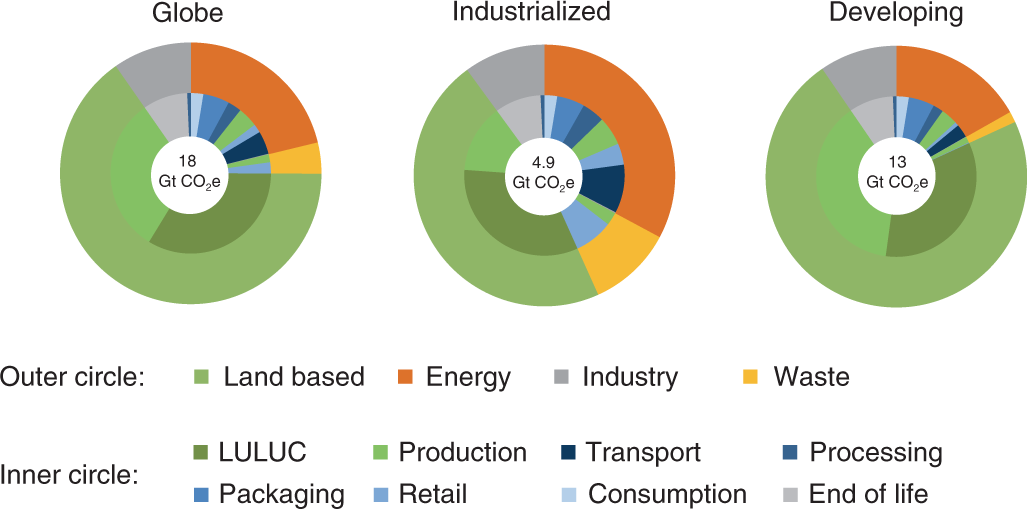
Food systems are responsible for a third of global anthropogenic GHG emissions
We have developed a new global food emissions database (EDGAR-FOOD) estimating greenhouse gas (GHG; CO2, CH4, N2O, fluorinated gases) emissions for the years 1990–2015, building on the Emissions Database of Global Atmospheric Research (EDGAR), complemented with land use/land-use change emissions from the FAOSTAT emissions database. EDGAR-FOOD provides a complete and consistent database in time and space of GHG emissions from the global food system, from production to consumption, including processing, transport and packaging. It responds to the lack of detailed data for many countries by providing sectoral contributions to food-system emissions that are essential for the design of effective mitigation actions. In 2015, food-system emissions amounted to 18 Gt CO2 equivalent per year globally, representing 34% of total GHG emissions. The largest contribution came from agriculture and land use/land-use change activities (71%), with the remaining were from supply chain activities: retail, transport, consumption, fuel production, waste management, industrial processes and packaging. Temporal trends and regional contributions of GHG emissions from the food system are also discussed.
Someone recently announced a “restaurant listings/menus on atproto so they can own their own data”, and as someone who used to do engineering for OpenTable, let me tell you that project is not solving a problem that restaurants actually have. Owning your own data is an anti-value prop for many orgs.

dame
hard pill to swallow for atproto developers/creators: 99% of potential users either do not care about, value, understand, or want to “own their own data” i see so many apps/projects lead with this “value prop”, but it’s not an important or meaningful consideration for most people
