

Leaving a platform should not mean losing your network. Builders' joint position paper on opening the social internet up to competition. Read it and sign on.
European Commission (@EUCommission@ec.social-network.europa.eu)
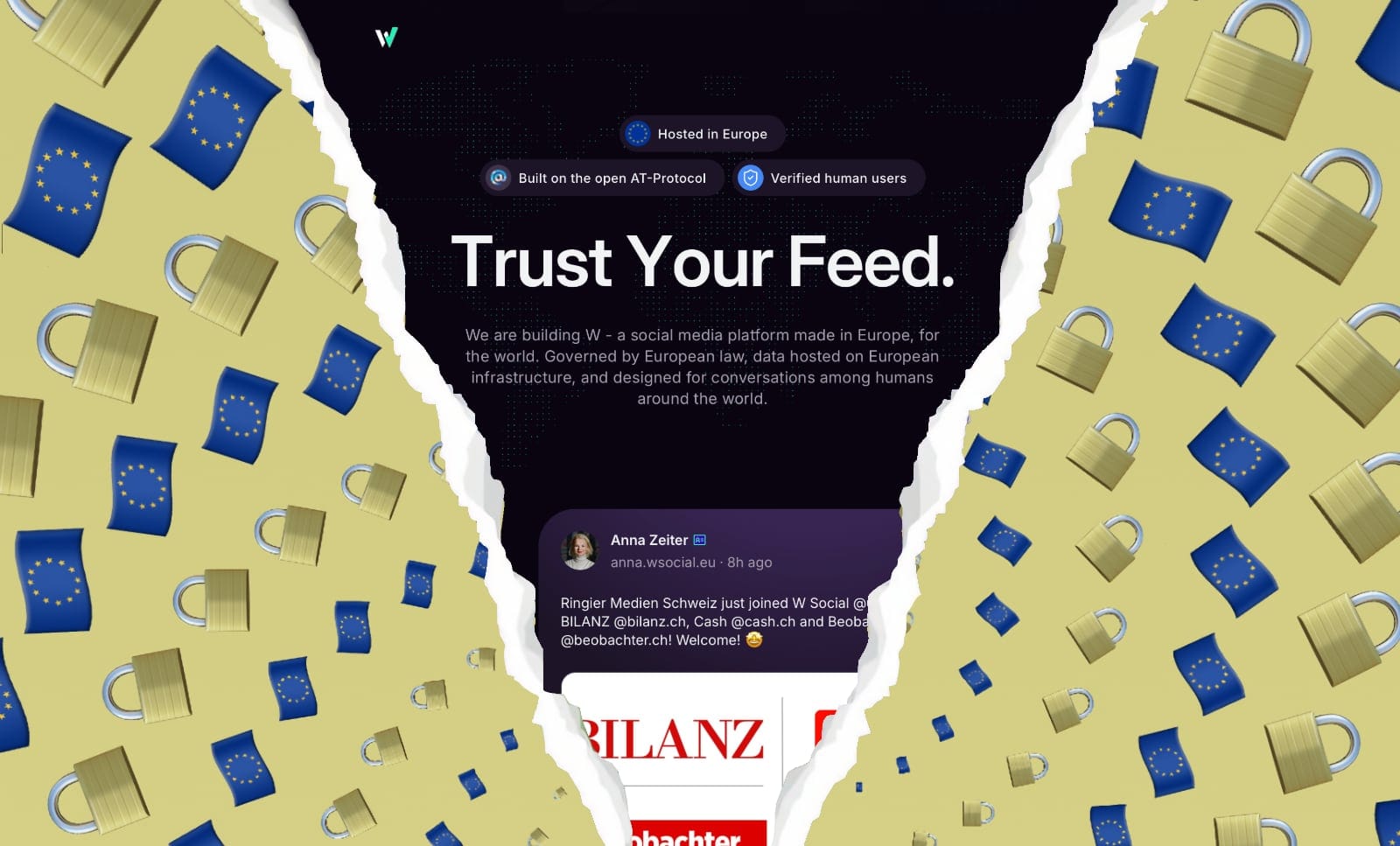
Attached: 1 image A strong Europe needs independent digital spaces. We believe true digital sovereignty thrives on a competitive, contestable, open ecosystem where diverse platforms co-exist. Today, we’re expanding our presence to W, the new social media. By being on W, we want to boost alternatives and support all efforts toward a decentralised web. And we continue to invest into our presence on the Fediverse!
Institute of Network Cultures | Ben Grosser: Planning the Exodus from Platform Realism
Thinking about the current state of platforms, I’m reminded of Mark Fisher’s articulation of capitalist realism, the idea that we don’t imagine or build alternatives to capitalism because we can no longer envision a world without it. Big tech, in a few short years, has managed to instill within the public a similar state of platform realism. So many are unable to imagine how global communication, media, search, etc. could ever function without the platforms. Despite a growing malaise, it’s become difficult for many to consider a world without big tech platforms as a viable conception of the future.

W Social is TruthSocial with a European accent. - We Can Just Do Things
Different politics, identical structure: wealthy insiders, community infrastructure they didn't build, and openness performed just long enough to matter. The establishment always wants its own internet.
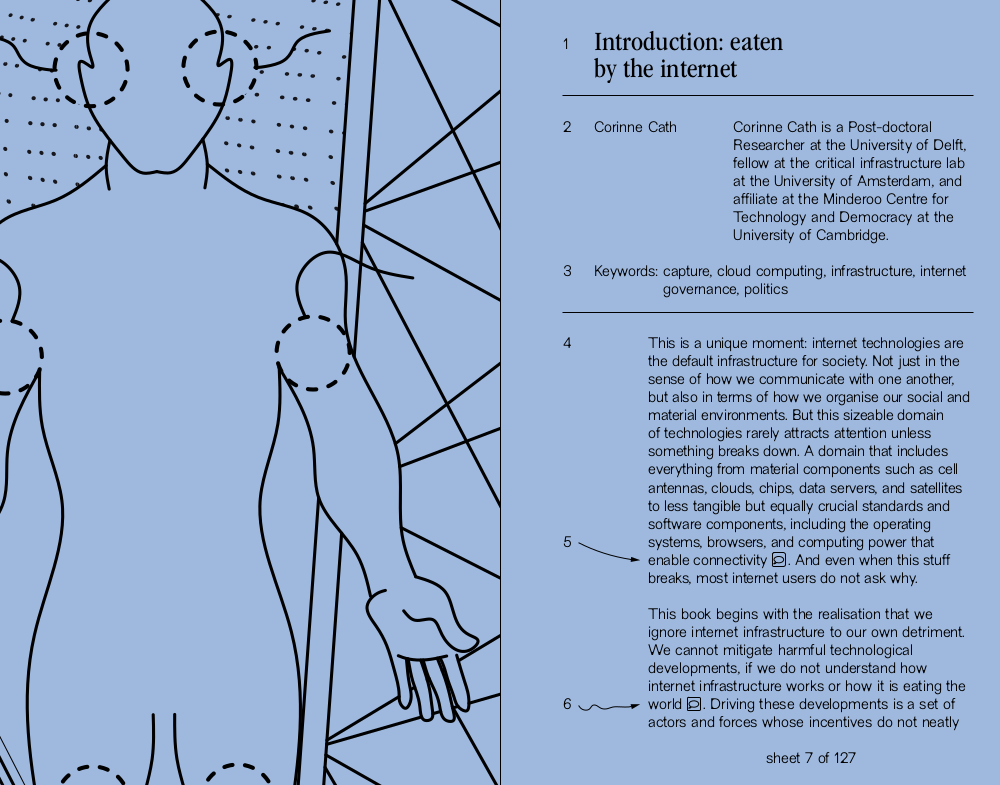
Eaten by the Internet
This book makes internet infrastructure visible as a force of political power, which is transforming the social world, from the bottom up—through fifteen chapters contributed by a global set of researchers, activists, and techies. We are living a unique moment: internet technologies are the default infrastructure for society, not just how we communicate but also how we organise our social life, politics, and economy, all the way down to our material environments, like cities. Our world is eaten by the internet. This means that those who control the internet control the bounds of public speech, economic production, social cohesion, and politics, making its infrastructure a core political terrain in the networked age. The book’s chapters cover a wide set of topics, spanning from the global politics of content moderation by internet infrastructure to the colonialism inherent in the race to plug the moon, from the harms wrought by blockchain companies in rural America to the particularities of online censorship across Asia. The chapters take on thorny topics, discussing power consolidation in the advertisement and cloud industry, the role of internet infrastructure in the war in Ukraine, and tech’s environmental impact—amongst others. In doing so, this book roots contemporary technology debates in the politics of internet infrastructure and urges us to ask how can we ensure our infrastructures sustain us, rather than consume us?
W-Social: What does sovereignty mean for social media? – Open Future
The European Commission’s move to W-Social frames it as a European alternative to X, but its closed-source code and reliance on Bluesky’s infrastructure show that sovereign social media requires open infrastructure—not European ownership alone.
The Case for Open Sovereignty in a Fragmenting Internet
Once, the Internet promised to dissolve borders. It was humanity’s great experiment in connection — a place where ideas, innovation, and communities could move freely, unburdened by geography or...

W Social, public institutions and the theater of European digital sovereignty | Hacker News
And weirdly, there was never a peep about this in the press - while the W Social launch was on national news and a bunch of high-profile EU politicians immediately joined. What's going on here?
How to fix the internet
If we want online discourse to improve, we need to move beyond the big platforms.

When, How, and Why to Abandon the Internet
Should we abandon the internet? Voice memos from Douglas Rushkoff, Bridget Todd, Robin Berjon, Janet Vertesi and more on leaving, rebuilding or saving it.
W Social, Public Institutions and the Theater of European Digital Sovereignty
European public institutions are betting big on digital sovereignty and open source software. And yet they recently moved their Bluesky accounts to W Social, a private, for profit network owned by Swedish entrepreneurs that has quietly gone closed-source.
Reclaiming Social Spaces: Are Open Source Platforms a Path for More Human Connection?
What if social media platforms were built to serve their communities, not billionaires? Join us with the founders of Blacksky as we explore the potential of open source social media.
A New Social
Our mission is to liberate people's networks from their platforms, enabling The Last Network Effect and leveling the playing field across the open social web.
A New Social
Our mission is to liberate people's networks from their platforms, enabling The Last Network Effect and leveling the playing field across the open social web.
All Internet Roads Lead Back to 2014
Ten years ago, developments in commerce, activism, and influencer culture coalesced, and our contemporary concept of “being online” was born

Please join this webinar on Moving from Harmful Platforms to Social Technologies, discussing how digital public goods and other open-source solutions can support the scaling of a more transparent, interoperable, and accountable social technology landscape. 📝 Register Here zoom.us/webinar/register/WN__IHGcRbVR…
What if you could leave a social platform without leaving your community? @brittanyellich.com explains how the AT Protocol lets you own your identity, your data, and your social graph, opening the door to a more open, portable, and developer-friendly web. 🌐 youtu.be/_ZrChpf8FZ8

