

DIDComm lets people and software use DIDs to communicate securely and privately over many channels: the web, email, mobile push notifications, QR codes, Bluetooth, message queues, sneakernet, and more.
DIDComm: The Future of Secure and Decentralized Communication
How the W3C-Defined DIDComm Protocol is Revolutionizing Digital Messaging
Decentralized Identifiers (DIDs) v1.0
Decentralized identifiers (DIDs) are a new type of identifier that enables verifiable, decentralized digital identity. A DID refers to any subject (e.g., a person, organization, thing, data model, abstract entity, etc.) as determined by the controller of the DID. In contrast to typical, federated identifiers, DIDs have been designed so that they may be decoupled from centralized registries, identity providers, and certificate authorities. Specifically, while other parties might be used to help enable the discovery of information related to a DID, the design enables the controller of a DID to prove control over it without requiring permission from any other party. DIDs are URIs that associate a DID subject with a DID document allowing trustable interactions associated with that subject.
did:dns Method Specification
Many early DID methods were based on distributed ledgers or other decentralized infrastructure, and some of those still remain popular. However, the DID community has also seen a lot of innovation and has come up with new types of DID methods. One of them is did:web, which is based on traditional DNS and web server infrastructure. The DID method presented here is did:dns, which follows a similar idea but offers several improvements over did:web.
High Assurance DIDs with DNS
This document outlines a method for improving the authenticity, discoverability, and portability of Decentralized Identifiers (DIDs) by utilizing the current DNS infrastructure and its technologies. This method offers a straightforward procedure for a verifier to cryptographically cross-validate a DID using data stored in the DNS, separate from the DID document.
Germ DM x ATProto is Now in Beta — Germ Network
Germ DM is now a Bluesky messenger. We’ve integrated AT Protocol into our iOS app, so E2EE DMs have come to the Atmosphere! Germ DM is the end-to-end encrypted messenger that lets you talk freely—without a your phone number. It’s powered by Messaging Layer Security (MLS) and now connects to your A

did-method-plc/did-method-plc
Public Ledger of Credentials: a cryptographic, strongly-consistent, and recoverable DID method
We oppose DRM. | Defective by Design
The Ethical Tech Giving Guide replaces DRM-laden software and devices that trample user freedom and privacy with products and programs that you can trust.
Signal Messenger: Speak Freely
Say "hello" to a different messaging experience. An unexpected focus on privacy, combined with all of the features you expect.

did:plc Specification v0.1
DID PLC is a self-authenticating DID which is strongly-consistent, recoverable, and allows for key rotation.
Signal Developer Explains Why Early Encrypted Messaging Tools Flopped
'The intuition was to take the complexity and push it onto the user,' Moxie Marlinspike says at Black Hat. 'We were just wrong.'

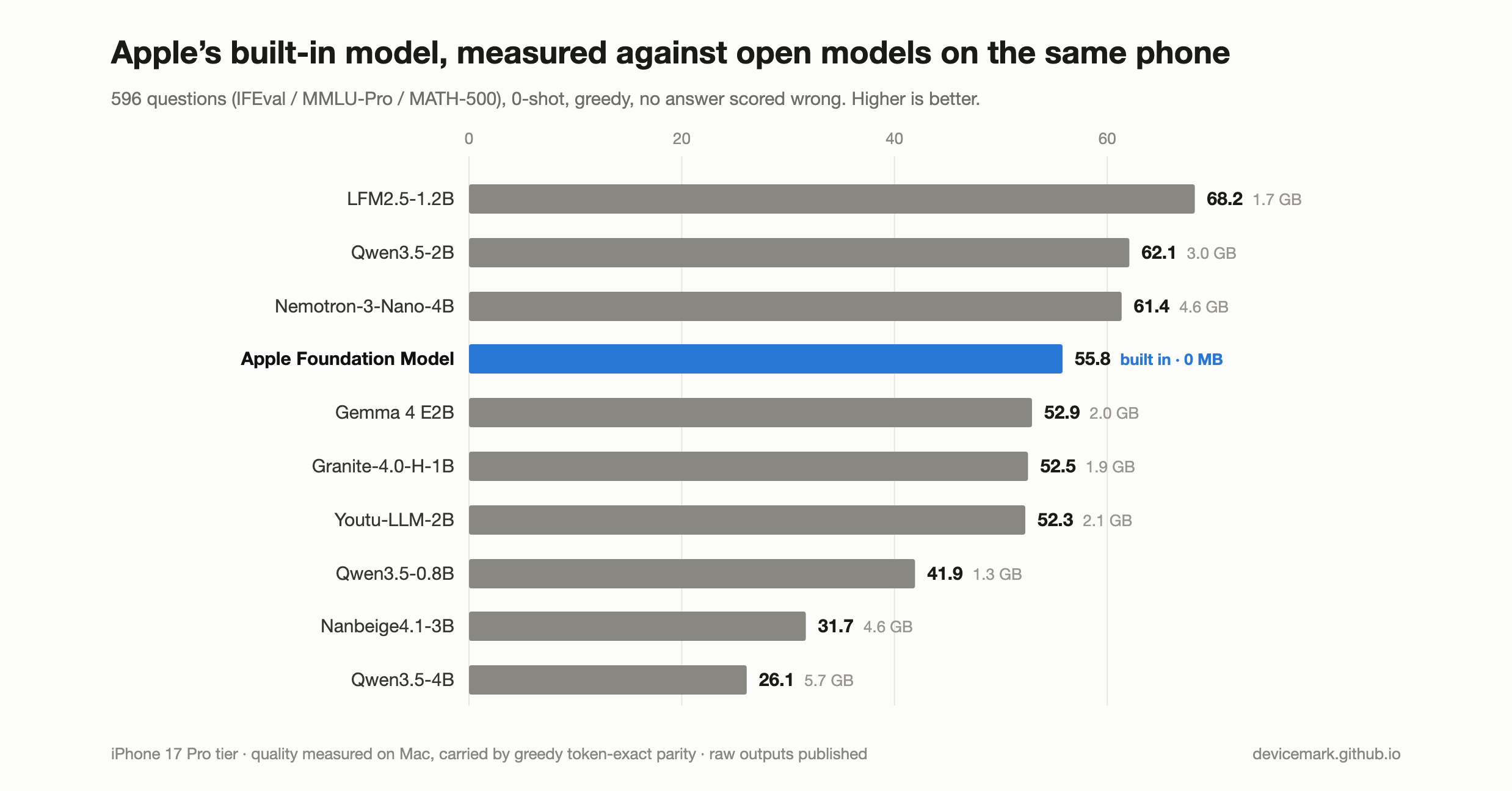
On-Device LLM Leaderboard
Intelligence × decode speed × memory × quantization retention, under real iPhone limits. Same protocol for every model; Apple's built-in FM on the board.
Reuse your existing hardware to run LLMs privately and securely.
Trellis lets you run large language models on your organization's compute. Scale and data privacy, choose both.

feynon/intent-router-blueprint
A hybrid LLM intent routing system for secure agent orchestration.
When Marko talks about a front door metaphor for operating system GUIs, i think of the DID/AT identity as a doorway out of the walled garden, into a cybernetic forest.

Christian
This talk was given at Copenhagen Design week. It’s called Patterns of Human Interaction. I encourage you to watch it. It is as relevant to the design of shared internet account UX patterns as it is to mobile device design. vimeo.com/28758945