

Deployers of generative AI systems can use the EU set of icons to label certain AI-generated content, in accordance with the AI Act transparency rules.
How Claude marks AI-generated content | Claude Help Center
Anthropic has signed the EU AI Act's Article 50(2) Code of Practice on Transparency of AI-Generated Content, as a provider of both generative AI models and generative AI systems. This article describes how we’re planning to put those commitments into practice, how marking works, and what its limitations are. We’ll update this article and publish more detailed technical guidance as it becomes available.

Code of Practice on Transparency of AI-generated Content
This code of practice supports compliance with the AI Act transparency obligations related to marking and labelling of AI-generated content.
EU Artificial Intelligence Act | Up-to-date developments and analyses of the EU AI Act
Browse the full AI Act text online. Search within the Act for parts which are relevant to you.
Artificial Intelligence
Europe is transforming into the AI continent by fostering the development and uptake of new AI applications while ensuring that AI remains safe and respect EU values.
Labeling AI-Generated Images on Facebook, Instagram and Threads
Nick Clegg offers a new approach to identifying and labeling AI-generated content.

Really, you made this without AI? Prove it
The quest to find the ‘Fair Trade’ logo for human-made content.

The EU AI Act Is Ready – Interdependent Thoughts
A final draft of the European AI Regulation is circulating (here’s an almost 900 page PDF). The coming days I will read it with curiosity.
The Omg Lol Times · We have to talk about AI “art”
Note: In this post I’m going to use the term “AI” as a lazy shorthand for “generative content creation via large-scale pre-trained models” because time is tight and I’ve got arthritis. I know it’s not really “AI”, but please, let me give my typing fingers a break here.
AImages
The HackerNoon AI Image Gallery is powered by human prompts entered into the most cutting edge AI image generation models, like Stable Diffusion, Midjourney, Dall-e, and more
Artificial Intelligence Act
The Artificial Intelligence Act is a European Union regulation concerning artificial intelligence (AI). It establishes a common regulatory and legal framework for AI within the European Union (EU). The regulation entered into force on 1 August 2024, with provisions that shall come into operation gradually over the following 6 to 36 months.
Guidelines on transparency obligations for providers and deployers of certain AI systems
These guidelines help providers and deployers of AI systems and competent authorities in ensuring compliance with the transparency obligations under Article 50 of the AI Act.
51 Ways to Spell the Image Giraffe: The Hidden Politics of Token Languages in Generative AI
Generative AI models don't operate on human languages – they speak in **tokens**. Tokens are computational fragments that deconstruct lan...

When online commenters 'detect' my art as AI
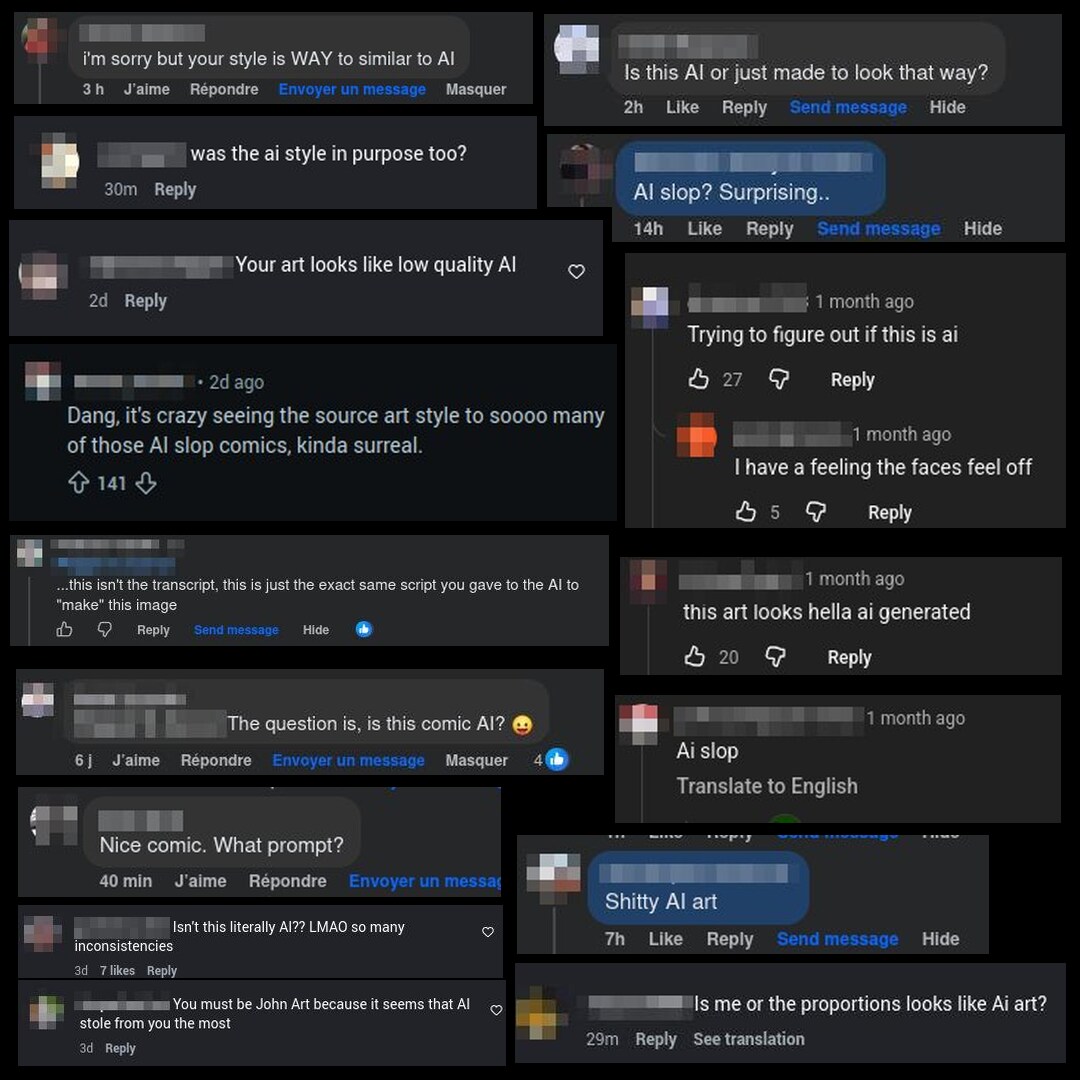
Here is a collection of screenshots (obfuscated) of dozens and dozens of online comments from many platforms (Reddit, YouTube, Instagram, Facebook) containing accusations or confusion that my artworks and comics are AI-generated. Despite creating every piece by hand, despite sharing timelapses, the comments keep coming, and they're getting stronger.
Identifying AI-generated images with SynthID
Today, in partnership with Google Cloud, we’re beta launching SynthID, a new tool for watermarking and identifying AI-generated images. It’s being released to a limited number of Vertex AI customers using Imagen, one of our latest text-to-image models that uses input text to create photorealistic images. This technology embeds a digital watermark directly into the pixels of an image, making it imperceptible to the human eye, but detectable for identification. While generative AI can unlock huge creative potential, it also presents new risks, like creators spreading false information — both intentionally or unintentionally. Being able to identify AI-generated content is critical to empowering people with knowledge of when they’re interacting with generated media, and for helping prevent the spread of misinformation.

AI Act Service Desk - AI Act Explorer
The official AI Act Explorer helps users search and browse Regulation (EU) 2024/1689, the EU Artificial Intelligence Act, by chapter, article, recital and annex.
