

Just the dino
dinoki-ai/osaurus
Contribute to dinoki-ai/osaurus development by creating an account on GitHub.
Oh, look, we're all pivoting to video again
Read to the end for a really good dinosaur thread
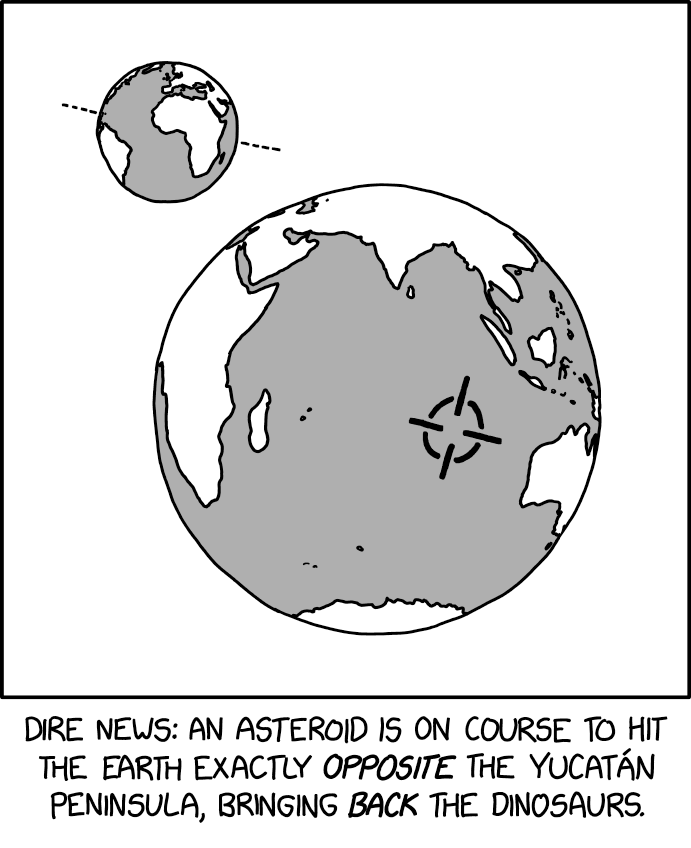
Asteroid Threat
Paleontologists have long worried that the dinosaurs blasted into space 66 million years ago will one day complete their orbits and fall back down.
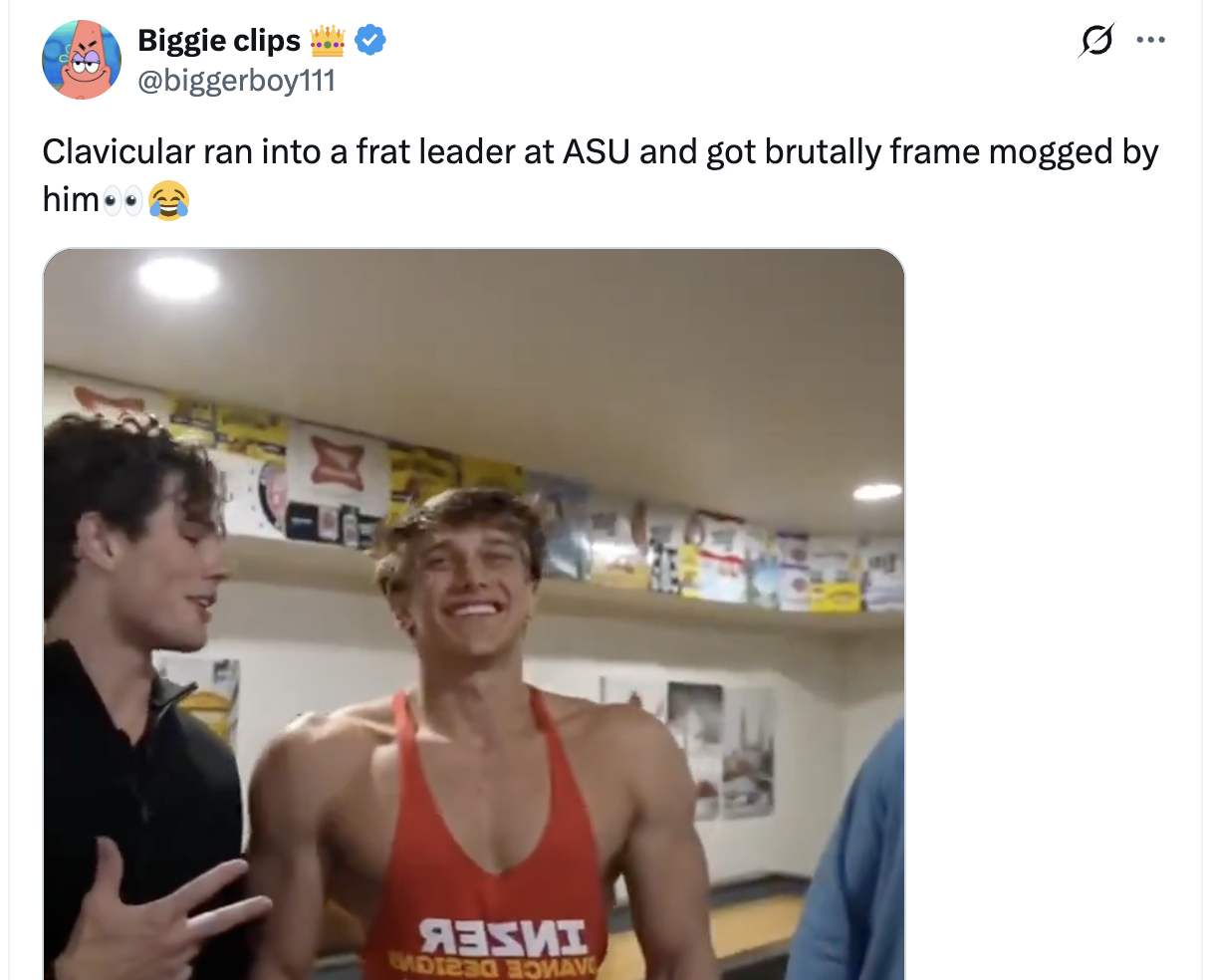
Don't you mean extinct?
In 1993, Jurassic Park came out and revolutionized the use of CGI in films[1]. To the public the experience was magic. But for some of the people in the movie industry, it was a rude awakening.

phylo — Mammalia — minomobi
phylo — Mammalia — minomobi
New perspectives on body size and shape evolution in dinosaurs
ABSTRACT Diversity in the body shapes and sizes of dinosaurs was foundational to their widespread success during the Mesozoic era. The ability to quantify body size and form reliably is therefore critical to the study of dinosaur biology and evolution. Body mass estimates for any given fossil animal are, in theory, most informative when derived from volumetric models that account for the three‐dimensional shapes of the entire body. In addition to providing estimates of total body mass, volumetric approaches can be used to determine the inertial properties of specific body segments and the overall distribution of mass throughout the body, each of which are essential for the modelling and interpretation of form–function relationships and their associations with ecology. However, the determination of body volumes in fossil taxa is often subjective, and may be sensitive to varied artistic inference. This highlights the need for an approach to body mass estimation in which body segment volumes are systematically constrained by quantitative scaling relationships between the hard tissues that fossilise and the soft tissues only observable in extant taxa. To this end, we used recently published skeletal to soft tissue volumetric scaling factors derived from CT data of extant sauropsids to estimate body segment mass properties from skeletal models of 52 non‐avian dinosaurs representing the majority of major clades and body plans. The body masses estimated by this study range from less than 200 g in the tiny avialan Yixianornis to over 60 tonnes in the giant sauropod Patagotitan , which is currently the largest dinosaur known from mostly complete skeletal remains. From our models, we infer that many previous reconstructions of soft tissue envelopes may be too small, and that many dinosaurs were therefore heavier than previous estimates. Our models generally overlap with the range of body mass estimates derived from limb bone shaft dimensions, but with considerable quantitative variability among major clades. This suggests that different taxa either differed in skeletal to soft tissue volume ratios, or that their limb bone dimensions varied relative to body mass, perhaps related to differences in locomotor dynamics and postural evolution. Our models also allowed us to investigate variation in mass distribution and body proportions across different dinosaurs from a perspective grounded in extant anatomical data, framing long‐standing hypotheses about their form, function, and behaviour in a quantitative context. For example, reconstructed disparity in whole‐body centres of mass reflects a broad array of postures in different dinosaur clades, while the lack of strong positive allometry in the dimensions of the weight‐bearing limb segments relative to total body mass corroborates previous studies suggesting an overall decrease in dinosaur locomotor performance as body size increased.

Tea Consent
A common red algal origin of the apicomplexan, dinoflagellate, and heterokont plastids
The discovery of a nonphotosynthetic plastid in malaria and other apicomplexan parasites has sparked a contentious debate about its evolutionary origin. Molecular data have led to conflicting conclusions supporting either its green algal origin or red algal origin, perhaps in common with the plastid of related dinoflagellates. This distinction is critical to our understanding of apicomplexan evolution and the evolutionary history of endosymbiosis and photosynthesis; however, the two plastids are nearly impossible to compare due to their nonoverlapping information content. Here we describe the complete plastid genome sequences and plastid-associated data from two independent photosynthetic lineages represented by Chromera velia and an undescribed alga CCMP3155 that we show are closely related to apicomplexans. These plastids contain a suite of features retained in either apicomplexan (four plastid membranes, the ribosomal superoperon, conserved gene order) or dinoflagellate plastids (form II Rubisco acquired by horizontal transfer, transcript polyuridylylation, thylakoids stacked in triplets) and encode a full collective complement of their reduced gene sets. Together with whole plastid genome phylogenies, these characteristics provide multiple lines of evidence that the extant plastids of apicomplexans and dinoflagellates were inherited by linear descent from a common red algal endosymbiont. Our phylogenetic analyses also support their close relationship to plastids of heterokont algae, indicating they all derive from the same endosymbiosis. Altogether, these findings support a relatively simple path of linear descent for the evolution of photosynthesis in a large proportion of algae and emphasize plastid loss in several lineages (e.g., ciliates, Cryptosporidium , and Phytophthora) .

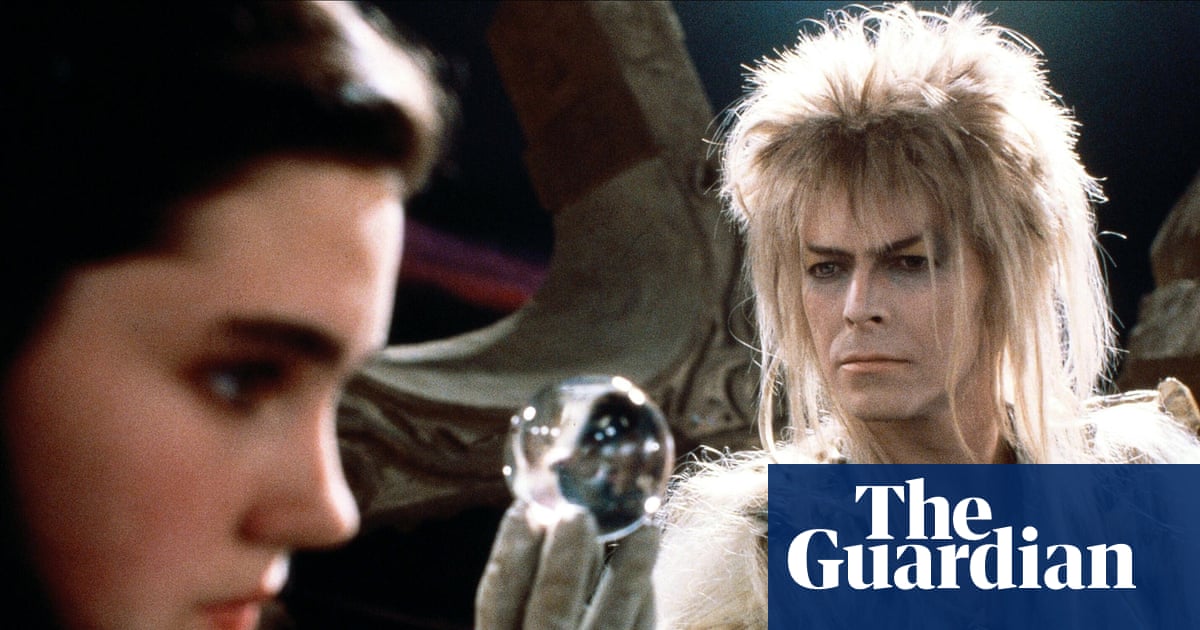
‘David Bowie was a crazy workaholic’: Labyrinth at 40 – an oral history
Today, Jim Henson’s dark fairytale is seen as a classic of 80s high camp. But on release, it bombed. Here, members of the cast and crew remember laughter, tricky puppets and Henson’s ‘joyful magic’
NOVA Talking Turtle 1983
Earliest octopuses were giant top predators in Cretaceous oceans
Top predators drive changes in ecosystem structure. For the last ~370 million years, large-sized vertebrates have dominated the apex of the marine food chain, while invertebrates have served as smaller prey. Here we describe invertebrate top predators ...


