


Over the past couple of months, AVN Stars and Switter announced that they were shutting down their platforms.
Shifts in U.S. Social Media Use, 2020–2024: Decline, Fragmentation, and Enduring Polarization
The social media ecosystem appears to be in flux. Twitter’s rebranding to X has come to symbolize a broader reorganization of online publics – political reshuffling, user attrition, and uncertainty over the role of legacy platforms. Simultaneously, the shift from text-based, networked feeds toward algorithmically curated, short-form video has accelerated, with TikTok setting the pace for the wider ecosystem [18, 14, 16]. At the same time, everyday communication increasingly migrates from large, open networks to semi-private spaces such as group chats and messaging apps. Commentators describe a digital public sphere in transition: smaller, more fragmented, less dominated by traditional social networking sites, and rise of more broadcast-oriented forms of media – with some even suggesting that we are seeing the beginning of the end of the social media era.
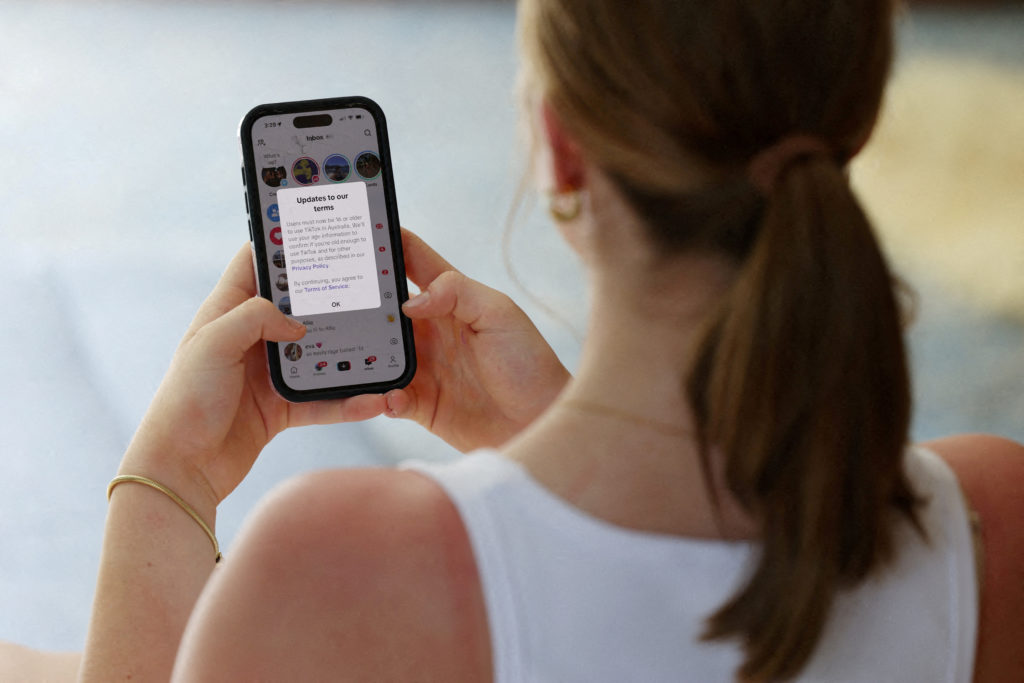
Social media platforms removed 4.7 million accounts after Australia banned them for children younger than 16
The figures, reported to Australia's government by 10 social media platforms, were the first to show the scale of the landmark ban since it was enacted in December over fears about the effects of harmful online environments on young people.
Free Our Feeds
Social media is broken: controlled by a handful of billionaires who shape what people see, say, and believe. These platforms profit from division, exploit user data, and lock people into closed systems.
Facebook and Instagram losing users, with signs pointing to low-quality feeds
Anecdotally, I’ve been hearing for a very long time that Facebook and Instagram users are growing ever more dissatisfied with...

The Future of Sex Work Slams Up Against Big Tech
As influencers peddle more sexually explicit content, Big Tech's biggest platforms—Facebook, Instagram, and Twitter—are increasing restrictions.
It's obvious why we hate social media
We need better internet platforms. We're already building them.

My 2024 thoughts on the state of social media
I see a continued fragmentation of social media as people leave X(Twitter).

Custodians of the Internet
A revealing and gripping investigation into how social media platforms police what we post online—and the large societal impact of these decisions Most use...
Shifts in U.S. Social Media Use, 2020–2024: Decline, Fragmentation, and Enduring Polarization
Using nationally representative data from the 2020 and 2024 American National Election Studies (ANES), this paper describes how U.S. social media use has shifted across platforms, demographics, and politics. Overall platform reach declined, driven by growth in the share of Americans — especially the youngest and oldest cohorts — who report using no social media. Visiting and posting activity on Twitter/X and Facebook have fallen by nearly 50% since 2020, with the decline on Twitter/X driven primarily by reduced participation among Democratic users. While Facebook, YouTube, and Twitter/X lost ground, TikTok and Reddit grew modestly, consistent with a more fragmented digital public sphere. Platform audiences aged and became slightly more educated and racially diverse. Politically, most platforms shifted toward Republican users while remaining, on balance, Democratic-leaning. Twitter/X experienced the largest change: among posters, the partisan balance swung over 70 percentage points from Democrats to Republicans. Across platforms, political posting remains closely tied to affective polarization, as the most partisan respondents are also the most active. As casual users disengage while polarized partisans remain vocal, online discourse becomes narrower and more ideologically extreme.
AVN Stars will stop paying sex workers for their content starting Jan. 1
The company announced this week that monetization will no longer be available after December 31 due to “banking discrimination.”
How Bluesky, Alternative to X and Facebook, Is Handling Explosive Growth (Published 2024)
The fledgling social media site has been flooded with new users since the election. It hasn’t all been easy.

These Adult Sites Are the Latest to Close Down Because of Big Banks
Queer and trans sex workers are losing yet another way to get paid.

How Instagram's moderation rules are made
The Weird, Fragmented World of Social Media After Twitter
The common forum that Elon Musk destroyed will never be replaced—and that’s okay.
Social Media Is Now Parasocial Media
When practitioners used the term “social media” to describe the internet tools that emerged in the mid-aughts, they were giving a name to the kinds of platforms and protocols that allowed people to socialize with friends and communities of interest by using digital technologies. Twenty years later, users of social media are far more likely to scroll than post – and the content that they consume is often strategically produced and algorithmically curated. In this essay, I argue that the very essence of social media has changed. To more effectively interrogate what we are witnessing, we need to stop presuming that these tools are “social media” and begin recognizing that they are now “parasocial media.” Doing so raises new questions about digitally mediated sociality, not to mention the politics and governance of these platforms.

Babesky - App

Full suite of social media management tools for adult creators on Bluesky and the wider web (WIP)
Trending Tags – Babesky

Babesky 💖 (@babesky.com)
Babesky Creator Dashboard