
I’m pretty frustrated by some of the discussion around the recent relicensing decisions by commercial open source companies. A fair bit of it seems confused to me, and I think this is mostly …
Introducing the Permissive License Stack
We believe open-source values are critical to free societies, especially in the digital age. To that end, we’ve created a new approach to licensing invoking the principles of the Default Open Pledge

In 2019, multiple open source companies changed course—is it the right move?
We have to draw a line between open source and the right to make money with open source."
Sustaining Open Source Software
The ‘open source sustainability’ debate continues with yet-another-company relicensing their product away from an open source license to…

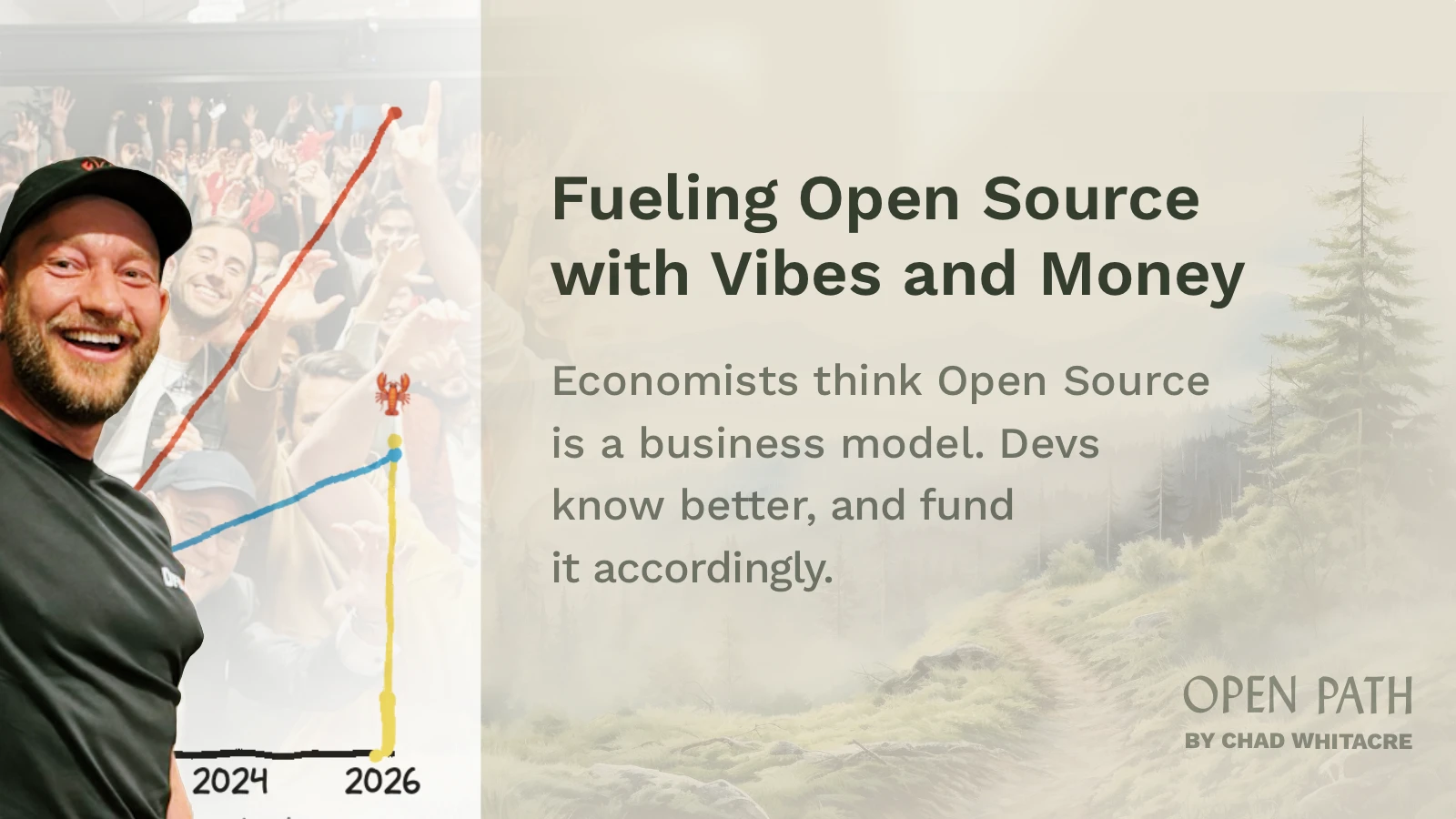
Fueling Open Source with Vibes & Money
Economists think Open Source is a business model. Devs know better, and fund it accordingly.
I hate the term “open source”
It doesn’t accurately reflect how people are building today anymore.

The Great Open Source Shake-up
The past year and a half has seen a number of open source and open source-ish companies like Elastic, Confluent, and MongoDB change licenses on certain products, moving away from traditional open s…

Why open source: 25 reasons to embrace it | Ben Balter
Open source isn't a fad. Here are twenty-five economic, moral, and personal reasons your organization should embrace it.
One Startup's Heretical Plan to Turn Open Source Code Into Cash
With a new kind of license, open sourcers are trying to strike a balance between getting paid and preserving their values.

Katerina Marchán (@zkat@toot.cat)
Open source maintainers of major projects (hi) are not ready to accept and talk about how the cultural insistence on permissive licensing is just straight up labor exploitation taking advantage of our addiction to popularity (also hi). We’re doing this to ourselves too, you know.
Some startups are going ‘fair source’ to avoid the pitfalls of open source licensing | TechCrunch
New alternative category to 'closed source' could help companies monetize software in the open -- without going all-in on open source.

Is This the End of Open-Source? | Built In
Open-source licensure empowers governments and moneyed interests over devs. A reckoning might be on the horizon.

Coraline Ada Ehmke: The Rising Ethical Storm in Open Source
In the twenty years since the term “open source” was coined by Christine Peterson, our community has grown astronomically, all the while learning from its successes and failures. A lot has changed for open source developers in the past two decades. But the political and technological landscape has also changed.
The emerging economic paradigm of Open Source
The following commentary is part of First Monday's Special Issue #2: Open Source. Open Source developers have, perhaps without conscious intent, created a new and surprisingly successful economic paradigm for the production of software. Examining that paradigm can answer a number of important questions. It's not immediately obvious how Open Source [1] works economically. Probably the worst consequence of this lack of understanding is that many people don't understand how Open Source could be economically sustainable, and some may even feel that its potential negative effect upon the proprietary software industry is an overall economic detriment. Fortunately, if you look more deeply into the economic function of software in general, it's easy to establish that Open Source is both sustainable and of tremendous benefit to the overall economy. Open Source can be explained entirely within the context of conventional open-market economics. Indeed, it turns out that it has much stronger ties to the phenomenon of capitalism than you may have appreciated.
The Asymmetry of Open Source - Matt Holt
A comprehensive guide to funding open source software projects

Single-Vendor Open Source Firms (and Their Intellectual Property Strategies)
Dirk Riehle, dirk@riehle.org An edited version was published in Computer magazine, April 2020 Abstract This article present a particular business model for commercial open source firms, called the …