


Helloo! With few Bluesky clients implementing Bluemoji, there has been conversation around emoji reactions on posts. I feel like standardizing here or having some discussion around it might be worth it. This topic has been touched on before on GitHub, but has been lost during the move to Tangled, so more reasons to restart it. Here’s my rough vision as a conversation starter: { "lexicon": 1, "id": "community.lexicon.interaction.reaction", "defs": { "main": { "type": "record", ...

Emoji Stats for Bluesky 🦋
Live counters and stats on emoji usage on Bluesky, broken down by language.

Emoji Stats for Bluesky 🦋
Live counters and stats on emoji usage on Bluesky, broken down by language.
Bluemoji! 💙 (@moji.blue)
Work-in-progress idea to bring custom emoji to Bluesky and other ATProto-based platforms Another silly free-time project by @aendra.com This bot account will repost new emoji that've been uploaded, so you can add them to your own collection! ✨
circmoji - Bluesky Emoji Circles
bluemoji/IMPLEMENTATION_GUIDE.md at main · aendra-rininsland/bluemoji
Monorepo for the Bluemoji Bluesky emoji project. Contribute to aendra-rininsland/bluemoji development by creating an account on GitHub.
bluemoji/RENDERING.md at main · aendra-rininsland/bluemoji
Monorepo for the Bluemoji Bluesky emoji project. Contribute to aendra-rininsland/bluemoji development by creating an account on GitHub.
The Conservatism of Emoji
Emoji offer you new possibilities for digital expression, but only if you’re speaking their language

Funny but not Credible? Why Using (Many) Emojis Decreases Message Credibility and Source Trustworthiness
Emojis are paralinguistic elements that are used in computer-mediated communication to express emotions, convey tone, or simply depict objects or statements. This study examines how the (excessive) use of emojis affects knowledge, message credibility, and source trustworthiness. To this end, we conducted three online experiments using social media posts, in which we systematically varied the number of emojis and the source of the message. The results show that displaying many emojis decreases message credibility and source trustworthiness. As a mechanism explaining this effect, we also demonstrate that displaying many emojis is perceived as a persuasive attempt, triggering affective and cognitive reactance, and ultimately reducing message credibility. Moreover, the study shows that using (a large amount of) emojis in a message negatively affects factual knowledge.

I made another lexicon, this time for representing plurality
After success with the pronoun lexicon, I wanted to build on that with something to try to address something that’s been difficult for me (us) personally on social media particularly: did/plurality representation. Like when switching fronts, posting, interacting, etc, especially on bsky and other variants. Some plural systems use emojis to designate alters or members, and we’ve largely used those too. But it still felt limited in expression, and we believed there could be more for it, like avat...

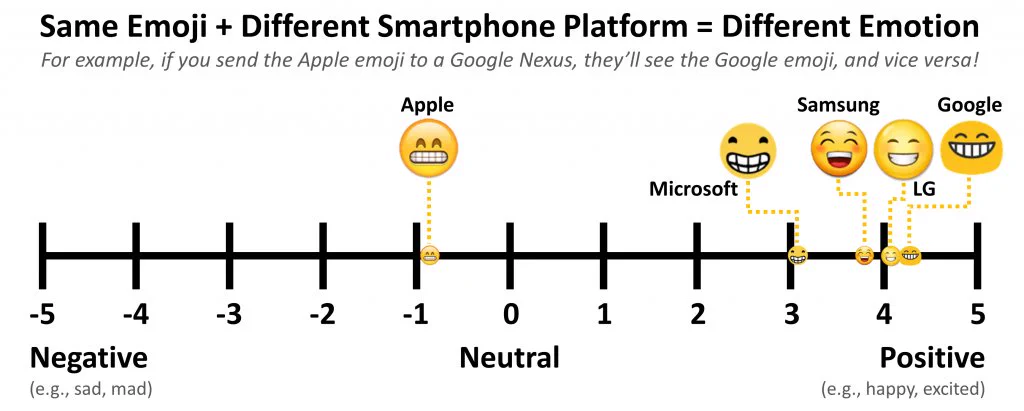
today in post-structural emoji and unicode standards studies https://t.co/YepxBxAhfV 😁
today in post-structural emoji and unicode standards studies https://t.co/YepxBxAhfV 😁 pic.twitter.com/9T1gLSK6Zz— Sara M. Watson (@smwat) April 12, 2016
We need to come up with some fun interactive experiments with the firehose. Seriously, back in 2013 Emojitracker was big news. Today, I asked Opus to create a clone and a couple minutes later: artifacts.vza.net/emojihose
emojihose — realtime emoji on Bluesky
artifacts.vza.net
Ronen Tamari
The AI community is SLEEPING on atproto's potential. With all the "on-tap intelligence" we have these days you'd think they'd be faster to figure that out
