


I’d like to use this thread to riff on a community practice of mapping web pages to their canonical AT record. This is something that standard.site already does as a way to verify publications and their documents using <link> tags. Unfortunately Rich Harris pointed out that this isn’t technically valid, so there is discussion for a breaking change for standard site to use the <meta> tag. Making this work with any lexicon/record has quite important ramifications for the entire ecosystem (I’m writ...
Mapping web pages to canonical AT records
I’d like to use this thread to riff on a community practice of mapping web pages to their canonical AT record. This is something that standard.site already does as a way to verify publications and their documents using <link> tags. Unfortunately Rich Harris pointed out that this isn’t technically valid, so there is discussion for a breaking change for standard site to use the <meta> tag. Making this work with any lexicon/record has quite important ramifications for the entire ecosystem (I’m writ...
Connecting records, web pages and apps
This is a bit of a follow-up to Mapping web pages to canonical AT records We’re continuing to work on making the Bluesky app more Atmospheric, building on features like the Germ, Streamplace, and Standard Site integrations. This leads to some common questions that have cropped up before, like: what’s the best way to link an atproto record and a web page, and how does it know which app someone is using? This is relevant to a few proposals and other conversations and I want to try to tie them tog...
Publishing My Eleventy Blog to the ATmosphere with Standard.site
A walkthrough of how I wired up Standard.site AT Protocol lexicons into this 11ty blog: from writing a custom publish script to migrating to Sequoia, with code for the link tags, and handle verification.

Web Tiles as the base for Lexicon Embeds
Yeah this would be absolutely fantastic. I don’t see yet how the Bsky app would discover which embed to use for a linked record but I assume some sort of definition in the actual record? Anyway, hope to read more about this

Jared Goering on Twitter / X
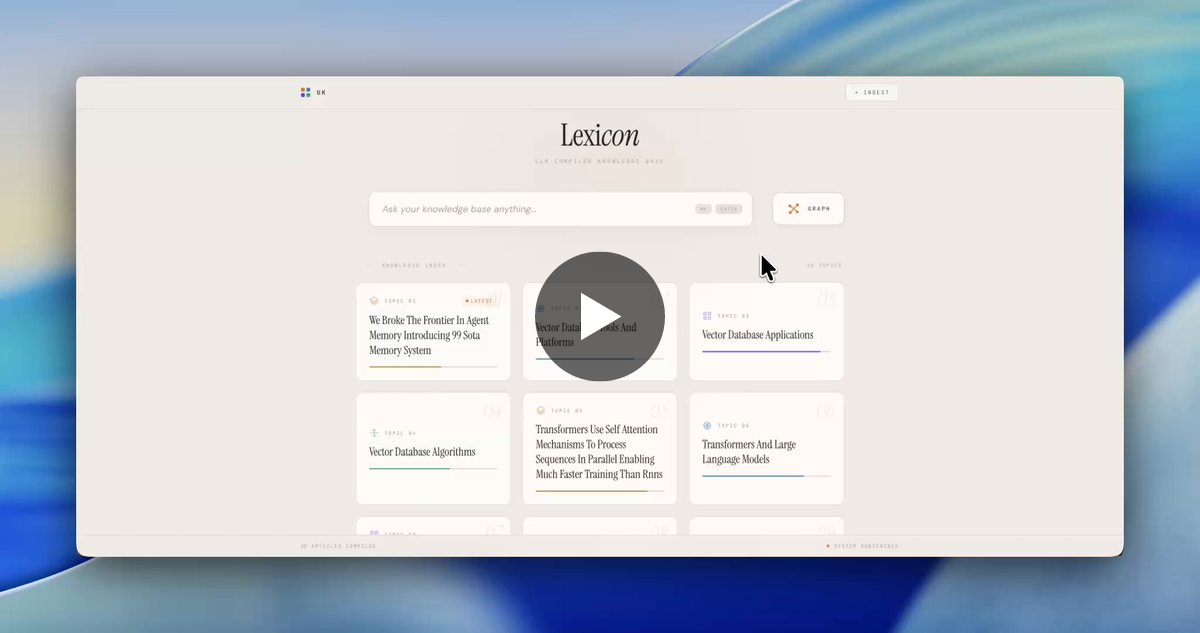
Saw this and immediately built it. Open-sourced the whole thing:Ingest URLs, PDFs, tweets, images → LLM compiles a linked markdown wiki → Q&A with citations, knowledge graph, contradiction linting, auto-research, export to HTML/PDF/slides.Been using it nonstop as a personal… https://t.co/ypaXlEA7pn pic.twitter.com/8Z2DLAyQjH— Jared Goering (@jaredgoering) April 4, 2026
Becoming a better atproto citizen
The blog's standard.site records now carry cover images, a publication icon and theme, and the strongRefs Bluesky uses for enhanced link cards.
Websites change. Perma Links don't.
Perma.cc helps scholars, journals, courts, and others create permanent records of the web sources they cite.

Manuscript submission systems and metadata completeness in Crossref: Patterns and associations
The importance of open research information, particularly publication metadata, is widely recognised. Crossref is one of the most important infrastructures for registering open metadata as part of DOI record registration. It is widely known, however, that the metadata of many publications is far from complete, with many publishers making certain metadata openly available, but failing to do so for other metadata elements. Publishers’ ability to register this metadata with Crossref depends on their capacity to capture and retain this data in their production workflows. Manuscript submission systems are an important, yet largely overlooked, factor in the extent to which publishers make metadata available through Crossref. In this paper, we present the results of an analysis investigating the relation between the level of metadata that publishers deposit with Crossref and the submission systems that they deploy for their journals. We have looked at the 153 publishers with the largest amounts of publications in Crossref and concentrate on the four most commonly used systems: Editorial Manager, ScholarOne, Open Journal Systems (OJS) and eJournalPress. We show that some submission systems appear better suited to capturing certain metadata elements. However, there are always cases where publishers using the same system differ widely in the level of metadata they register, suggesting that technology is not the only prohibiting factor and other considerations are at play.
I think this breaking change for standard.site needs to become an ecosystem-wide conversation and convention. Any web page that represents a corresponding AT record needs to include a meta tag that includes that record. <meta name=“at:uri” content=“at://…” \>

rich harris
atproto/@standard.site friends: any thoughts on this issue? This... <link rel="site.standard.publication" href="at://..."> ...is invalid HTML, per html.spec.whatwg.org/multipage/semantics.html#the-…, because DIDs aren't hostnames. This causes problems with some tools. Issue here: github.com/sveltejs/kit/issues/15935
What are you’re thoughts on making this breaking change more inclusive to any AT URI? Like for @semble.so it would be very useful to have this mapping or any webpage that has a corresponding AT record (e.g. microblogging, standard.site, steamplace videos)
If you're an #atprotodev I'd love your thoughts on this short proposal. I think we'd all benefit from a way to tag our HTML to reference the at:// uris they're derived from! @popfeed.social, @bookhive.buzz, @sifa.id, @leaflet.pub, @pckt.blog, @offprint.app and many more — penny for your thoughts?

Atproto markup for HTML
byjp.leaflet.pubHi Sergio, cool! If that’s done I can maybe link to it from the kipclip tools page 👍 for tags I opted to keep it super simple. Since I can’t extend the bookmark record without changing it and the tags are one-to-many which makes direct references impractical tags are just standalone records in ..


