

Statewide data showing Lower House boundaries and names...
Lower House overall results
2022 State election overall results for the Lower House.
Legislative Council Preview - VIC Election 2026
Victoria Legislative Council Preview - VIC Election 2026
State regions
Information about Victoria's State regions, including results, historical pattern and maps.
HF 1606 2nd Engrossment - 94th Legislature (2025 - 2026)
John L. Edwards House, 55 South Second West, Willard, Box Elder County, UT
Photo(s): 4 | Color Transparencies: 1 | Measured Drawing(s): 3 | Data Page(s): 8 | Photo Caption Page(s): 2
Electoral regions of Victoria
Members of the Victorian Legislative Council, the upper house of the Parliament of the Australian State of Victoria, are elected from eight multi-member electorates called regions. The Legislative Council has 40 members, five from each of the eight regions.

National Zoning Atlas
The National Zoning Atlas is digitizing, demystifying, and democratizing information about zoning conditions in more than 33,000 jurisdictions in the U.S. — empowering advocates, revealing insights, and driving research.

Victorian Electors by Locality, Postcode and Electorates - DataVic
Count of persons by Municipality, Municipal Ward, Locality, Postcode, District of the Legislative Assembly and Region of the Legislative Council currently enrolled on the Victorian register of...
More Housing is Possible: a National Town Hall · Burhan for State Senate
Join Vice Mayor Burhan Azeem and the people behind the Montana Miracle, California’s SB79, and the ROAD to Housing Act to discuss recent wins and what comes next for the housing movement. Speakers will dig into the policy that's moving the needle, the campaigns and organizing that got us here, and how local leadership can turn big ideas into more homes. Expect sharp takes, lively panels, and the collective brainpower of the country's most effective housing advocates in one (virtual) room.

SMP-Maine-Senate-Aug-6.pdf
The Organization of Government in Metropolitan Areas: A Theoretical Inquiry
Allusions to the “problem of metropolitan government” are often made in characterizing the difficulties supposed to arise because a metropolitan region is a legal non-entity. From this point of view, the people of a metropolitan region have no general instrumentality of government available to deal directly with the range of problems which they share in common. Rather there is a multiplicity of federal and state governmental agencies, counties, cities, and special districts that govern within a metropolitan region.This view assumes that the multiplicity of political units in a metropolitan area is essentially a pathological phenomenon. The diagnosis asserts that there are too many governments and not enough government. The symptoms are described as “duplication of functions” and “overlapping jurisdictions.” Autonomous units of government, acting in their own behalf, are considered incapable of resolving the diverse problems of the wider metropolitan community. The political topography of the metropolis is called a “crazy-quilt pattern” and its organization is said to be an “organized chaos.” The prescription is reorganization into larger units—to provide “a general metropolitan framework” for gathering up the various functions of government. A political system with a single dominant center for making decisions is viewed as the ideal model for the organization of metropolitan government. “Gargantua” is one name for it.

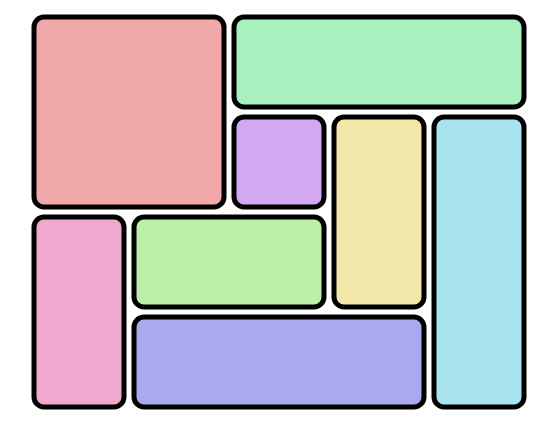
Exploring Rectangle Subdivisions
Last week, I saw a talk on Vuntra City, a procedurally generated city with a fully explorable city. Developer Larissa Davidova explained that she settled on using Recursive Subdivision for the city…
Protest at One Nation fundraiser after Vic leader, candidates announced
One Nation reveals its upper house candidates for Victoria, with army veteran and party state president Warren Pickering set to lead the party to the upcoming state election.