Discover the unique and delicious food offerings from Texas' Black, Indigenous, and People of Color owned farms & ranches. Show your support by learning more about these businesses today!
Home | Texas Historical Commission
Read the latest issue of our magazine to learn more about the THC's updated Washington-on-the-Brazos historic site and new cookbook.

Where to Find Great Community Gardens in Houston
These thriving places allow you to grow your own food.
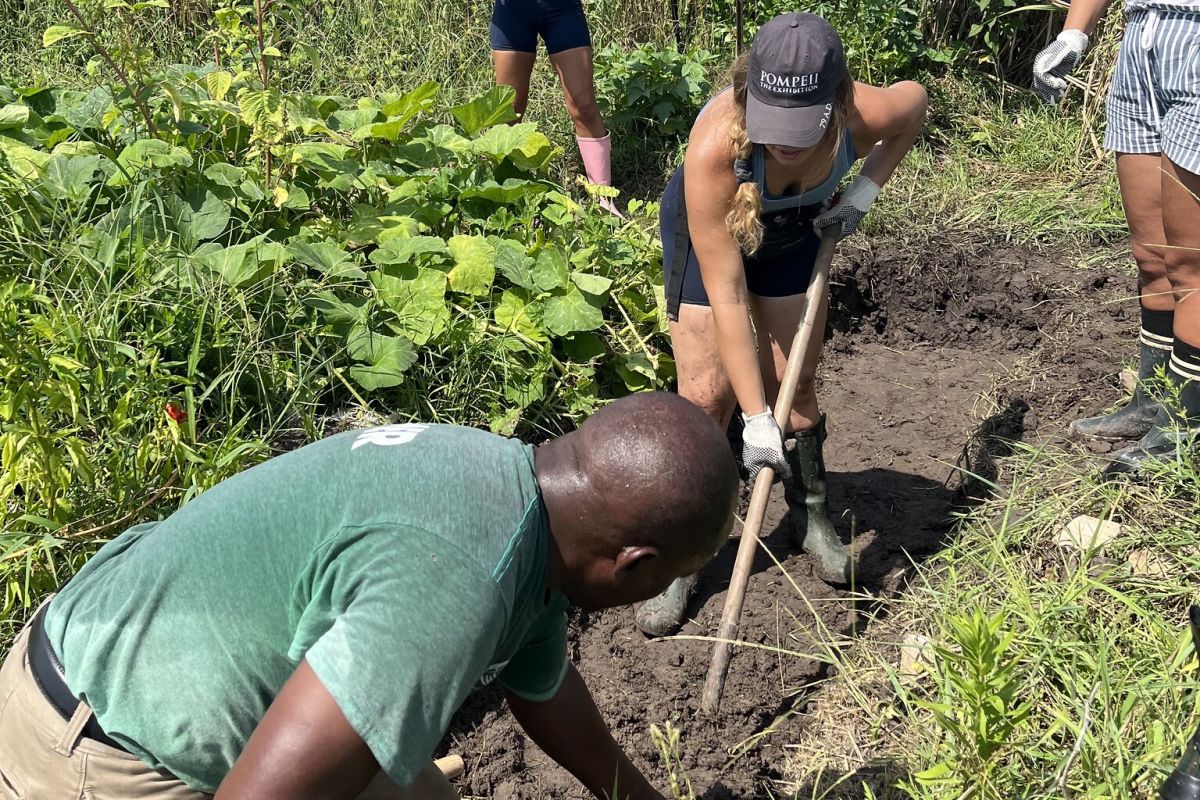
Houston Board of Food Security
Empowering Houstonians with knowledge, resources, and connections for food security in their own neighborhoods and backyards.

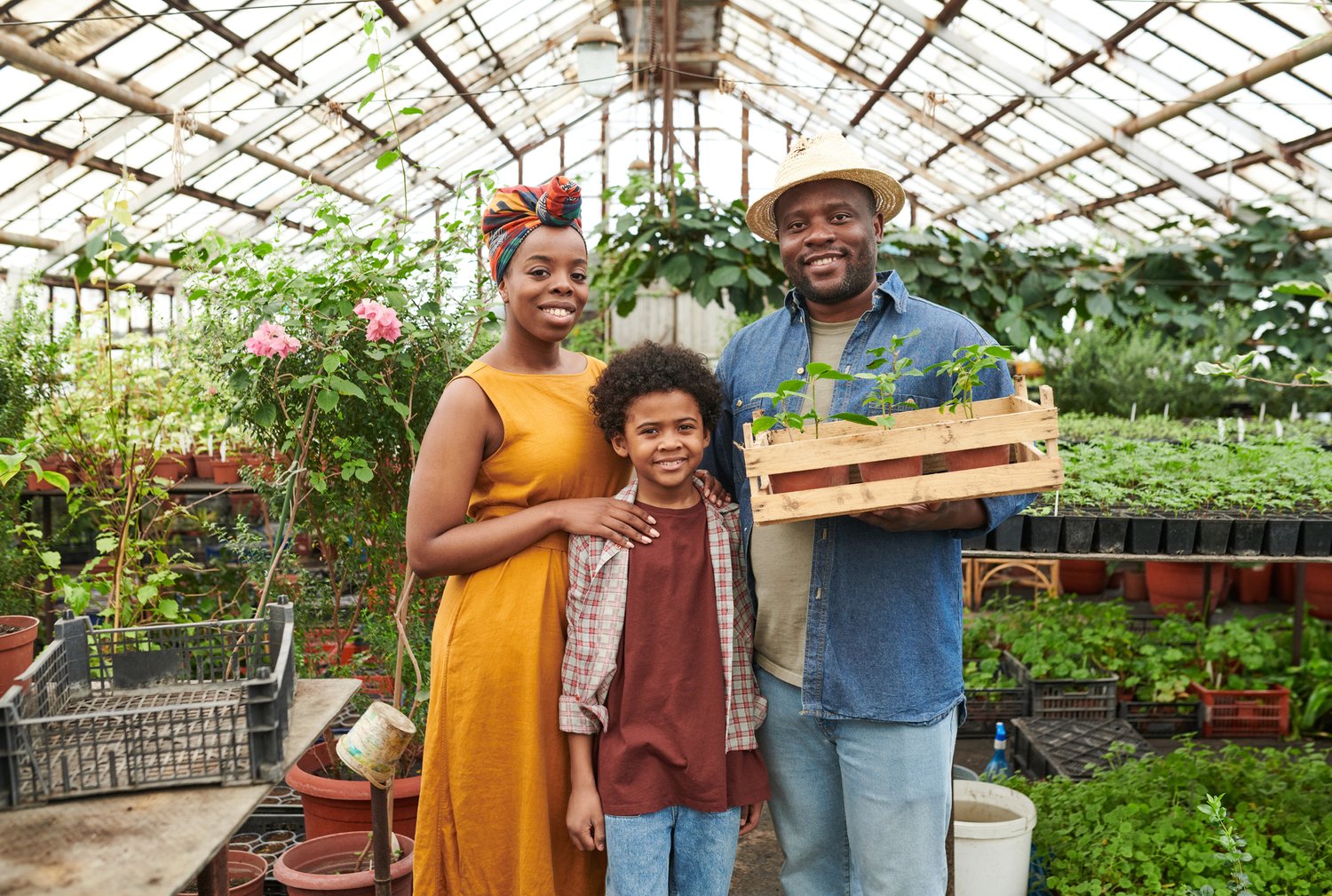
Black Farmer Box | Fresh Produce | Houston
The Black Farmer box is a Farm Fresh Produce Box Harvested for you by Farmers & Growers in your area

Crop–livestock integration beyond the farm level: a review
AbstractParadoxically, the number of crop–livestock farms is declining across Europe, despite the fact that crop-livestock farms are theoretically optimal to improve the sustainability of agriculture. To solve this issue, crop–livestock integration may be organized beyond the farm level. For instance, local groups of farmers can negotiate land-use allocation patterns and exchange materials such as manure, grain, and straw. Development of such a collective agricultural system raises questions, rarely documented in the literature, about how to integrate crops and livestock among farms, and the consequences, impacts, and conditions of integrating them. Here, we review the different forms of crop–livestock integration beyond the farm level, their potential benefits, and the features of decision support systems (DSS) needed for the integration process. We identify three forms of crop–livestock integration beyond the farm level: local coexistence, complementarity, and synergy, each with increasingly stronger temporal, spatial, and organizational coordination among farms. We claim that the forms of integration implemented define the nature, area, and spatial configuration of crops, grasslands, and animals in farms and landscapes. In turn, these configurations influence the provision of ecosystem services. For instance, we show that the synergy form of integration promotes soil fertility, erosion control, and field-level biological regulation services through organizational coordination among farmers and spatiotemporal integration between crops, grasslands, and animals. We found that social benefits of the synergy form of integration include collective empowerment of farmers. We claim that design of the complementarity and synergy forms of crop–livestock integration can best be supported by collective participatory workshops involving farmers, agricultural consultants, and researchers. In these workshops, spatialized simulation modeling of crop–livestock integration among farms is the basis for achieving the upscaling process involved in integrating beyond the farm level. Facilitators of these workshops have to pay attention to the consequences on governance and equity issues within farmers groups.
A Selection of Los Alamos Rolodex Business Cards | The Center for Land Use Interpretation
Alliance of Native Seedkeepers
Discover unique heirloom and non-GMO seeds at Alliance of Native Seedkeepers. As a Native American-led store, we specialize in over 1,500 varieties, preserving the rich heritage and biodiversity of indigenous agriculture. Shop now to contribute to sustainable, community-focused farming practices.
Plan Your Next Getaway to These Texas Waterfalls
Ditch the country roads and cattle for these swimming holes.

Homegrown | Magnolia Network
Agriculture research summaries
Read short summaries of agricultural studies tailored to B.C. farmers and producers.
Diversification and ecosystem services for conservation agriculture: Outcomes from pastures and integrated crop–livestock systems | Renewable Agriculture and Food Systems | Cambridge Core
Diversification and ecosystem services for conservation agriculture: Outcomes from pastures and integrated crop–livestock systems - Volume 28 Issue 2
Slow Food Cycle Sunday Video Series - Helmer's Organic Farm & Pemberton Valley Supermarket
A social-ecological framework for analyzing and designing integrated crop–livestock systems from farm to territory levels
Integrated crop–livestock systems are often considered a promising way to address agricultural sustainability issues. Many authors claim that complementarities and synergies between crops and livestock can improve nutrient cycling and delivery of ecosystem services (ES) in agricultural systems. They have analyzed effects of interactions at the farm level and affirmed the potential advantage of developing crop–livestock interactions at the territory level. However, potential benefits of developing synergies beyond the farm level have not been clearly identified. Thus, we developed a conceptual framework that can be used to analyze, design and perform integrated assessment of crop–livestock systems at the territory level. To address crop–livestock interaction issues, we define it as a social-ecological system called the territorial crop–livestock system (TCLS). The ecological system is represented as three interacting components, crops, grasslands and animals, allowing description of various land uses and their potential effects on nutrient cycling and ES. The social system, represented as farmers interacting with natural-resource managers and agro-food chain actors, determines land use and the nature and intensity of ES delivered. We highlight the importance of coordination and learning among actors to support implementation of complex adaptive systems such as TCLSs. We illustrate the expressive power of our conceptual framework through development of a generic typology of crop–livestock systems. Then we show how our conceptual framework can be used as an intermediary object with stakeholders in participatory design approaches. We illustrate this process by representing four archetypal TCLSs. We provide an example of the design approach implemented in Southwestern France to address severe recurrent water shortages, which includes analysis of land use in the current crop–livestock system and the associated key metabolic and ES issues, identification of options for change and multi-criteria analysis of these options. We conclude that this framework shows great potential to support development of sustainable farming systems at the territory level.
Rado Market | Cafe market in Houston | 2310 Elgin Street, Houston, TX, USA
Rado Market is a all-day cafe & neighborhood market for the Third Ward community bringing culturally-conscious prepared foods, fresh groceries, locally-sourced products and a bistro-inspired menu. Created by Lucille’s Hospitality Group, Rado is on a mission to feed the future while serving the past

Mo' Brunch and Brews - Houston Museum District, Houston, TX
Come out and enjoy the best Vegan Brunch in Texas!...